Five Tonnes of Cannabis Straight Through Customs: A Medical Licence as Cover, at Least Five Runs
18.08.2026


18.08.2026
18.08.2026

18.08.2026
18.08.2026

18.08.2026

18.08.2026

18.08.2026
17.08.2026

16.08.2026

18.08.2026

18.08.2026

17.08.2026

18.08.2026

18.08.2026

18.08.2026

18.08.2026

17.08.2026

16.08.2026

18.08.2026

18.08.2026

18.08.2026

18.08.2026

17.08.2026
17.08.2026

09.03.2026

27.02.2026

19.02.2026

18.08.2026
17.08.2026

16.08.2026

23.04.2026

23.04.2026

12.04.2026
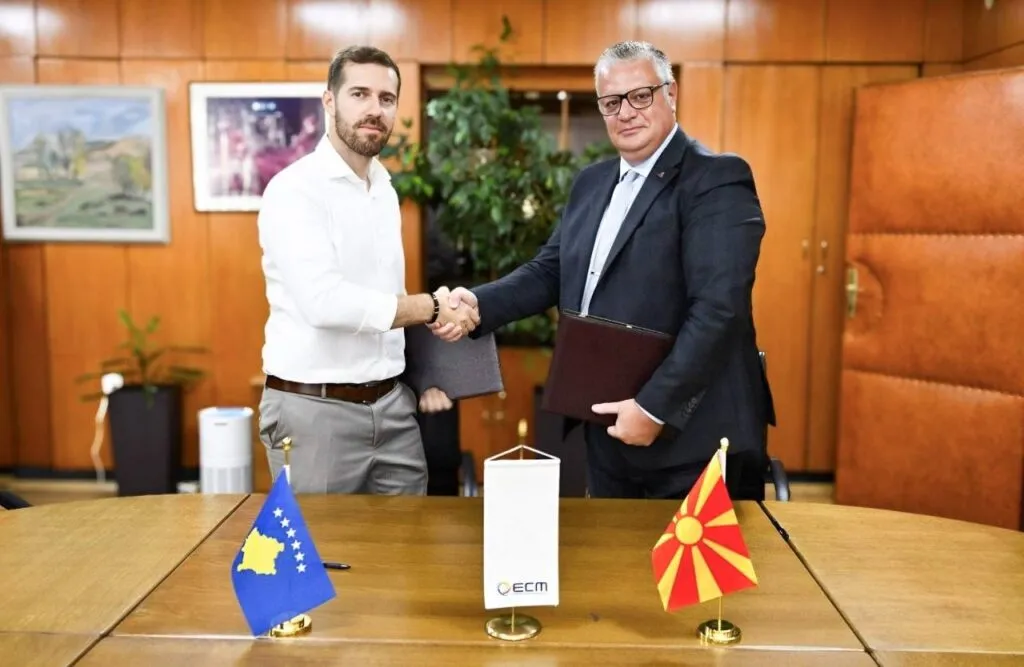
The state power utility ESM has signed a three-year contract with Kosovo's state energy corporation KEK, giving it a concession at the Obilic mine and the right to extract around three million tonnes of coal over the next 36 months. The contract was signed by ESM director general Lazo Uzuncev and KEK director general Gramos Hasani.
The key number is the fixed price - 24.4 euros per tonne for the whole duration of the contract, with precisely defined quality parameters. A fixed price in energy means one thing: protection from market swings, at the cost of gaining nothing if prices fall.
What ESM promised
The company's calculation is specific. Burning Kosovo coal will increase the efficiency of the thermal power plants and deliver an additional 800 gigawatt-hours of electricity a year and revenue of around 57 million euros. Further savings are expected from a reduced need for heavy fuel oil.
There is an environmental calculation too. An annual reduction in CO2 emissions of 923,000 tonnes thanks to less coal burned, plus another 55,980 tonnes from lower fuel oil use.
That is the paradox worth naming: importing better coal is being sold as an environmental gain. Technically it is true - higher-quality coal means less mass burned for the same electricity. But it is still a calculation inside coal, not a way out of it.
70 percent of the electricity comes from thermal plants
Uzuncev gave the figure that explains the whole operation. Around 70 percent of total annual electricity production - now and for the next three years - comes from the thermal power plants.
Estimated annual coal purchasing needs, topping up domestic production, come to around 1.4 million tonnes: 600,000 tonnes for the Oslomej plant and 800,000 tonnes for the Bitola plant.
The constraint is called Blace
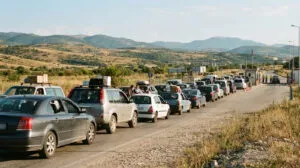
This is where the contract collides with geography. The Blace border crossing allows a daily transit of at most 120 lorries, or around 3,000 tonnes of coal a day. The realistic maximum annual quantity that can arrive from KEK is around 800,000 tonnes.
So: the requirement is 1.4 million tonnes, the maximum flow is 800,000. The contract covers a good part of the gap, but not all of it - and not because of the price or the quantity in the mine, but because of one border gate.
The coal and what is in it
The Kosovo basin at Obilic ranks among Europe's largest deposits of high-quality lignite. Laboratory testing showed low sulphur and ash content and an average calorific value of around 1,950 kilocalories per kilogram.
That fits the range the boilers at the Bitola and Oslomej plants were designed for - a calorific value of 1,800 to 2,400, sulphur below one percent and ash below 20 percent. In other words, this is not coal that will have to be adapted to, but coal that matches the existing equipment.
The contract is not in force yet
By the end of August at the latest, ESM has to publish a tender under the public procurement law to select the economic operator that will carry out the extraction, quality analysis, loading, transport, freight forwarding and unloading at the storage yards of both power plants.
Only once that selection is finalised and the operator is brought into work does the contract with the Kosovo partner formally enter into force. In other words - the signature is on paper, but execution depends on a tender that still has to be issued.
That is the point where contracts like this usually slow down. It is worth watching whether the tender really is published by the end of August.
The latest 10 news from this category
325 denars more for a tank of diesel. On 10 August the energy regulator cut prices; on 17 August it...
Formetanate above the permitted level, the third such alert in the European system since 2023. The question is not who...

Over 50 outbreak sites, 40 families with no income, dead animals lying in yards for weeks. Farmers want vaccination now;...

Apple sent warnings to 110 countries, and researchers say they have never seen numbers like these. One of those targeted...
Same company, half the valuation in twelve months. Nvidia first took the founder and the team, now it comes in...

No acquisition, no technology taken over, no service continued. Google is taking only the people, and the paying customers get...

What cost 1,000 denars in 2022 costs 1,300 today. Inflation measures speed, not distance - and the household budget feels...

It is not a cryptocurrency - it is central bank money in digital form. Macedonia is not in the eurozone,...
Parts suppliers are shedding jobs fastest - 7.6 percent in a single year. That is precisely the link in the...

An investor told the Anthropic chief executive to be a „more positive advocate” for his industry. The answer was sharper...
This site uses cookies - is that okay? Learn more
Be the first to know when Metla launches something new
Leave your email and we will write when there is a new guide or something new on Metla.