

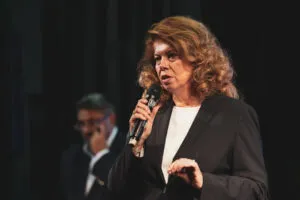
Jotova to Mickoski: Talks "Without Ultimatums" - but First Skopje Must Forget the Issue Is Bilateral
05.10.2026


05.10.2026

05.10.2026
05.10.2026

05.10.2026
05.10.2026
05.10.2026

05.10.2026

05.10.2026
04.10.2026

05.10.2026
05.10.2026

04.10.2026
05.10.2026

05.10.2026

05.10.2026

05.10.2026

04.10.2026
03.10.2026
05.10.2026

05.10.2026

05.10.2026
05.10.2026

05.10.2026

05.10.2026

09.03.2026

27.02.2026

19.02.2026

05.10.2026

04.10.2026
04.10.2026
05.10.2026
04.10.2026

02.10.2026

23.04.2026

23.04.2026

12.04.2026

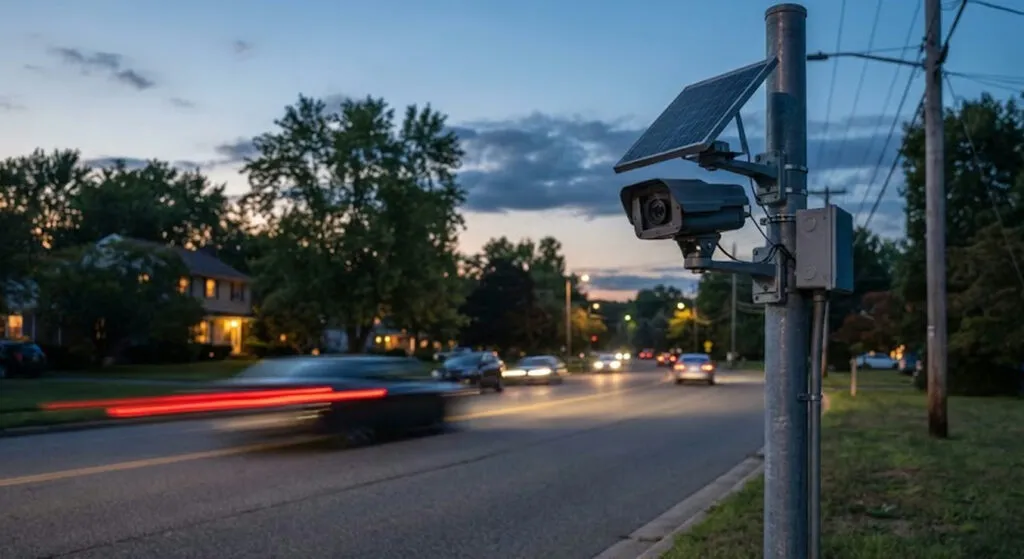
US federal judge Sara Hill ruled that a sheriff's deputy in Tulsa, Oklahoma, violated a woman's Fourth Amendment rights when he searched her licence plate in the Flock Safety database without a warrant. There was no reason for the search, according to the judge - "other than the fact that [the woman's vehicle] had California licence plates".
The deputy then used her travel history from Flock as part of the justification for searching the car, where he allegedly found 91 pounds (around 41 kilograms) of methamphetamine. The judge ruled that all evidence gathered after the Flock search "must be suppressed as fruit of the poisonous tree". The Constitution didn't ask how much meth there was.
Hill didn't stop at one case. "This is a form of indiscriminate mass surveillance," she wrote. "It is not targeted at one individual. It is a tool that collects information on every vehicle passing any camera connected to the network, at all times, and serves it up to police on request." Tracking people, even in public places, becomes constitutionally problematic in her view when police can passively and indiscriminately record someone's movements over a long period and then use that data for whatever they want, whenever it suits them.
The ruling doesn't create binding precedent, but it's one of the first in which a federal judge says a Flock search is unconstitutional. It comes at a time when the system is being criticised from both left and right. Several local and state authorities, among them Florida and Texas, have announced they will stop using the technology, and Senator Bernie Sanders on Friday proposed a law, the Block Flock Act, under which federal agencies would not be allowed to use automatic licence plate readers.
Cameras that read licence plates aren't just an American story. The question the Oklahoma judge raised applies everywhere: how long is data about where we've driven kept, and who is allowed to search it without a warrant? If a system like this spreads where we live, will anyone ask that question before the cameras go up?
The latest 10 news from this category
By executive order, artificial intelligence became "superintelligence", and the safety pledge tech companies signed at the White House binds no...

A nine-metre catamaran, a motor the company builds itself and off-the-shelf batteries. Hydrofoils have been around for more than a...
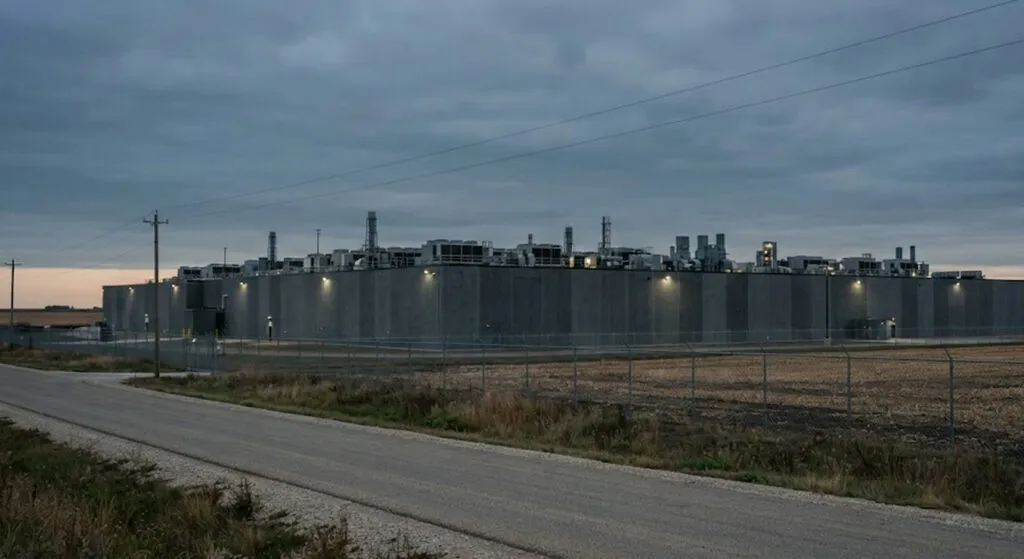
The head of AWS claims data centres don't use much water, don't push up electricity prices and barely pollute. One...

The pope isn't talking about style but about substance: the machine calculates on top of other people's images. The industry...
A setting created for backups now hands AI agents the keys to the whole computer - messages, mail, browsing history....
The cheaper SUV lifted deliveries by around 45 percent. Since June it has had two recalls, the latest over battery...
Some MyChart settings reportedly allowed outsiders to access records without leaving a single trace in the logs. Few companies stop...
OpenAI says the three broke rules on confidential information. It comes two days after it emerged that leadership had ignored...
Meta sold more than 7 million pairs of smart glasses last year alone, and the law meant to ban secret...
Google says it has the most powerful model, and the yardstick comes from a startup on whose index it ranks...
This site uses cookies - is that okay? Learn more
Be the first to know when Metla launches something new
Leave your email and we will write when there is a new guide or something new on Metla.