Sixteen Arrests in Twenty-Four Hours, All for Drugs: The Police Are Working - But Where Are All These People Coming From?
20.09.2026


20.09.2026

20.09.2026

20.09.2026
20.09.2026

20.09.2026
20.09.2026

20.09.2026

20.09.2026

20.09.2026

20.09.2026

20.09.2026

19.09.2026

20.09.2026

20.09.2026

20.09.2026

20.09.2026

19.09.2026

18.09.2026
20.09.2026

20.09.2026

20.09.2026
20.09.2026

20.09.2026

20.09.2026

09.03.2026

27.02.2026

19.02.2026

20.09.2026

19.09.2026

18.09.2026

23.04.2026

23.04.2026

12.04.2026

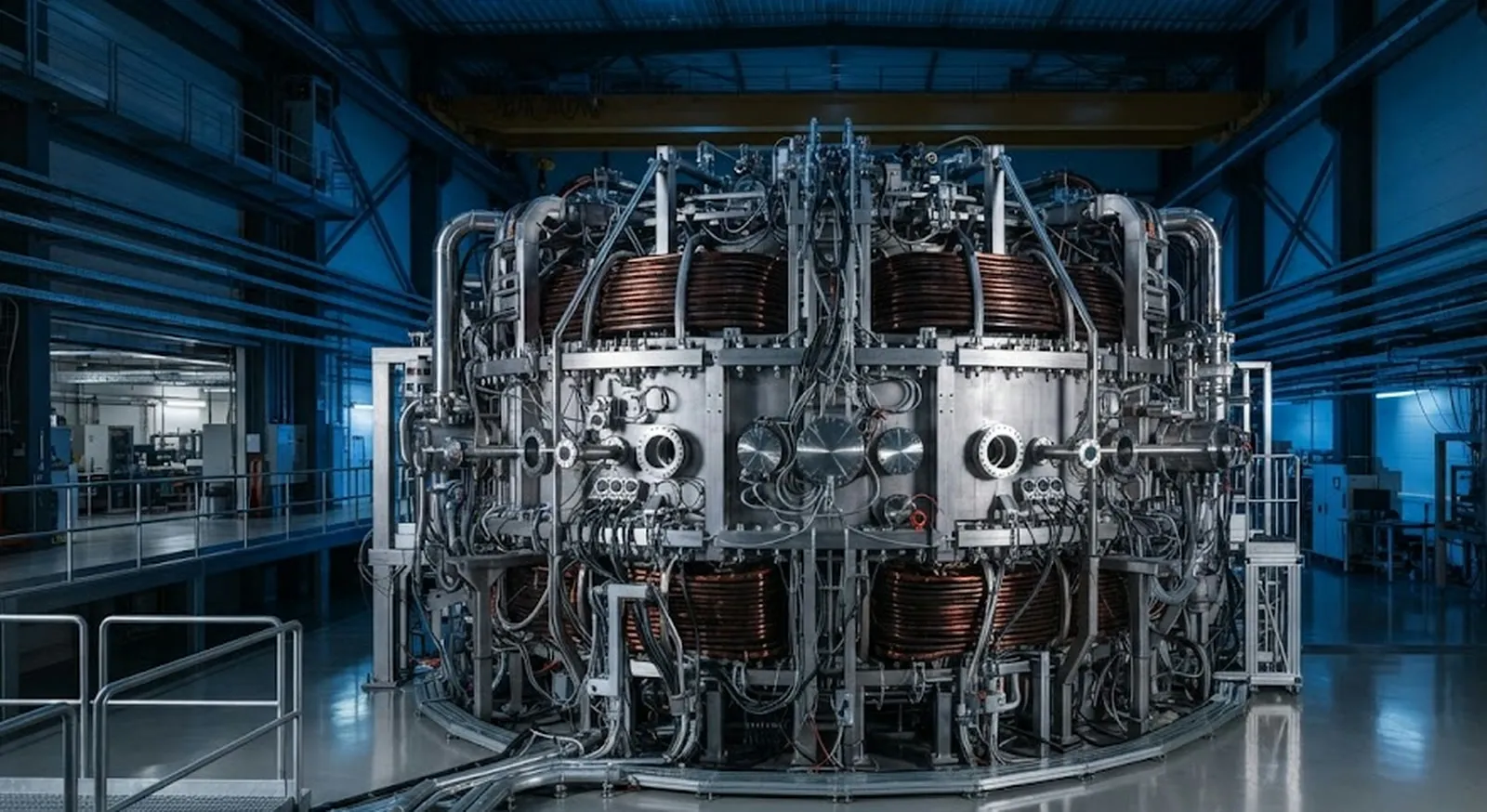
Germany has decided where it will build its four fusion energy research centres. The sum: up to nine of a total 18 billion euros from the so-called High-Tech Agenda. The goal: electricity at two to nine cents per kilowatt-hour. For comparison, the average household price worldwide is around 17 cents.
Federal research minister Dorothee Bär said the thing that usually does not get said this openly: the US and China have had an unassailable lead in this field so far, and the new agenda gives Germany a "real chance" to be competitive. So Berlin is admitting it is behind. That is more honest than most announcements about new technologies.
What fusion is and why the difference matters
Fusion joins light atomic nuclei into heavier ones. Fission, the process in existing nuclear plants, splits atoms. The difference is not academic: fusion carries a minimal risk of catastrophic failure. It is the principle by which the Sun makes heat.
The scientific proof that it works came in 2022 in California, when lasers produced more energy than was put into the reaction itself. The race has been open ever since. There are nearly 80 private startups in this field worldwide.
Three models, three strategies
The US leads with over 40 private companies and more than six billion dollars in capital, leaning on tech giants such as OpenAI, Microsoft and Google and on cooperation with national laboratories. America's Helion Energy already has a signed commercial contract with Microsoft to deliver fusion power, with a target of around 2028.
China is running a state model - fusion has been declared a national priority. It holds world records for sustaining stable ultra-dense plasma in its "artificial sun", the EAST reactor, and last year it founded a national consortium working on an industrial prototype, with commercial application announced for the 2030s.
The EU hosts the largest scientific project in the world - the ITER reactor being built in southern France, funded by a consortium of 35 countries including the US, China, Russia, India, Japan and South Korea. The United Kingdom has invested 2.5 billion pounds in its own national fusion programme.
Where the German money goes
The first of the four centres is dedicated to magnetic technology, testing tritium as fuel. The research reactors are in Garching and Greifswald, run by the Max Planck Institute for Plasma Physics. The second centre focuses on laser technology - on the tiny fuel pellets ignited during fusion, which is both the heart of the process and one of the biggest technical challenges. The third, at the Karlsruhe Institute of Technology, works on materials and fuel, because the reactor has to withstand temperatures above 100 million degrees.
It has not yet been established which fuel is most suitable, which means nobody knows how much radioactive waste fusion will create, or how long its half-life will be. Those unknowns are not a footnote - whether the public accepts the technology depends on them.
The promises and what sits beneath them
Bavarian premier Markus Söder promised 400 million euros - on condition that his state gets the project. At the same time he is urging chancellor Friedrich Merz's government to invest more by saving on "excessive social spending".
There is the real price in this announcement, and it is not expressed in cents per kilowatt-hour. Fusion is still far from a realistic alternative, Berlin will not even decide on the technological approach until the mid-2030s - and the savings bill has already been addressed to the social budget. Companies are lobbying for support, promising enormous domestic investment.
If it works, this is clean and practically unlimited energy for all of Europe - including a region that imports electricity at prices someone else dictates. If it does not, someone will take the nine billion anyway. Worth watching which of the two happens.
The latest 10 news from this category
Two prime ministers in the same Union, the same month, completely opposite diagnoses of who is provoking whom. There is...
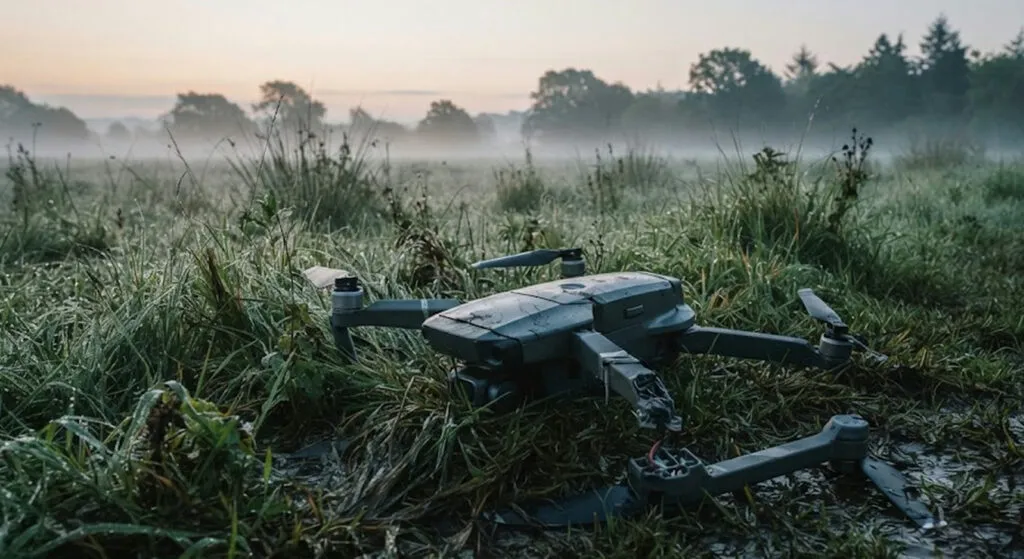
A broken aircraft in a field usually ends up in a police note. This one ended up with federal investigators,...

Beijing will easily find another supplier. The harder question is what Washington is actually testing: whether private Chinese companies will...
The law lets Washington hit the five biggest buyers of Russian oil with tariffs of up to 100 per cent....
Measures imposed over the war in Ukraine are now being offered as currency in an entirely different dispute. If the...

A smaller dose and more needles does not mean a safer vaccine, it means an ineffective one. Science has had...
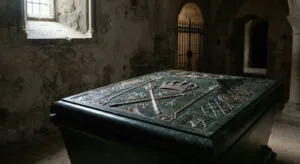
Harald designed the sarcophagus himself, and it is shaped like a ship. The stone is 400 million years old and...

Von der Leyen proposed a status that does not exist in European law, the Canadians distanced themselves, and Washington announced...
The French candidate called the war in Ukraine a slaughterhouse and pointed out it has already lasted longer than the...
Four decades in politics, but the headline the world wrote was about her brother and his sixteen wives. When the...
This site uses cookies - is that okay? Learn more
Be the first to know when Metla launches something new
Leave your email and we will write when there is a new guide or something new on Metla.