Sixteen Arrests in Twenty-Four Hours, All for Drugs: The Police Are Working - But Where Are All These People Coming From?
20.09.2026


20.09.2026

20.09.2026

20.09.2026

20.09.2026

20.09.2026

20.09.2026

20.09.2026

20.09.2026

20.09.2026

20.09.2026

20.09.2026

19.09.2026

20.09.2026

20.09.2026

20.09.2026

20.09.2026

19.09.2026

18.09.2026

20.09.2026

20.09.2026

20.09.2026
20.09.2026

20.09.2026

20.09.2026

09.03.2026

27.02.2026

19.02.2026

20.09.2026

19.09.2026

18.09.2026

23.04.2026

23.04.2026

12.04.2026


Japan's parliament this Friday voted through a historic revision of the Imperial House Law - 184 votes for, 57 against, after it had passed the lower house the week before. The reform changed everything about the status of women in the imperial family, except the one thing everyone was waiting for: a woman still cannot sit on the Chrysanthemum Throne.
The figures are what tell the story. The imperial family today numbers just 16 members, eleven of them women. Emperor Naruhito, 66, has exactly three possible heirs - his brother, Crown Prince Fumihito (60), his grandson Prince Hisahito (19), and his uncle Prince Masahito (90). In other words, the continuity of the world's oldest monarchy hangs on whether a single 19-year-old will have a male child. When a state reduces the survival of its own institution to the biology of one teenager, that is no longer tradition - it is a gamble.
The 1947 law, in fact written during the American occupation, set up a strict system: only male descendants through the male line inherit, princesses who marry a commoner must leave the institution, and the eleven collateral branches of the family abolished after the Second World War were thrown out of the line of succession.
What actually changed
Two things. First, women of the imperial family can now keep their status even if they marry outside the court - but with one decisive caveat: neither their husbands nor their children will be part of the imperial family. This directly hits Princess Aiko, the only daughter of Naruhito and Masako. At 24, she can remain a princess even if she marries a commoner, but her children stay outside the imperial line, with no right whatsoever to the throne.
Second, adoption of male descendants through the male line is allowed from the eleven abolished collateral branches. Candidates must be over 15, unmarried and childless. The adoptees cannot become emperors, but their own future male sons can enter the line of succession. The logic is to widen the male base so that continuity does not depend on Hisahito alone.
Here lies the paradox even the foreign press noticed: if Aiko one day has a son, that son could only become eligible for the throne if he were adopted into the imperial house through precisely this new system. So - her son, but not as her son. Kinship logic worthy of a textbook on the absurd.
The reform passed with a broad majority, but not with consensus. Voting against were the Constitutional Democratic Party, the communists and Reiwa Shinsengumi, mainly over the adoption clause and the absence of any progress toward equality in succession. And here comes the figure that stings most: according to Kyodo polls, up to 80 percent of Japanese support a woman becoming empress. The people are ready. Parliament - is not. When an institution so stubbornly refuses to hear its own people, the old Balkan question arises - who is it actually working for?
The latest 10 news from this category

Two prime ministers in the same Union, the same month, completely opposite diagnoses of who is provoking whom. There is...

A broken aircraft in a field usually ends up in a police note. This one ended up with federal investigators,...

Beijing will easily find another supplier. The harder question is what Washington is actually testing: whether private Chinese companies will...

The law lets Washington hit the five biggest buyers of Russian oil with tariffs of up to 100 per cent....

Measures imposed over the war in Ukraine are now being offered as currency in an entirely different dispute. If the...

A smaller dose and more needles does not mean a safer vaccine, it means an ineffective one. Science has had...
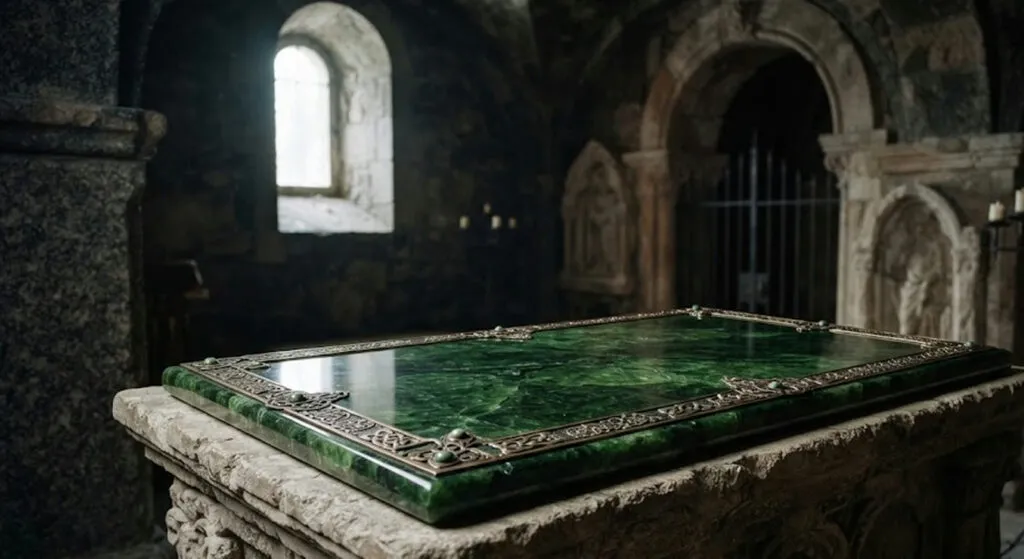
Harald designed the sarcophagus himself, and it is shaped like a ship. The stone is 400 million years old and...

Von der Leyen proposed a status that does not exist in European law, the Canadians distanced themselves, and Washington announced...

The French candidate called the war in Ukraine a slaughterhouse and pointed out it has already lasted longer than the...
Four decades in politics, but the headline the world wrote was about her brother and his sixteen wives. When the...
This site uses cookies - is that okay? Learn more
Be the first to know when Metla launches something new
Leave your email and we will write when there is a new guide or something new on Metla.