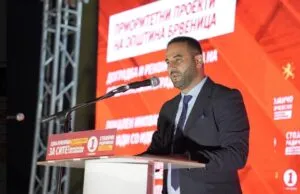
Mickoski celebrates a 4-to-1 win over SDSM in Brvenica, but his candidate got 445 fewer votes than a year ago
19.10.2026


19.10.2026
19.10.2026
19.10.2026
19.10.2026

19.10.2026
19.10.2026
19.10.2026
19.10.2026
18.10.2026

19.10.2026
19.10.2026

18.10.2026
19.10.2026

19.10.2026

19.10.2026

19.10.2026

18.10.2026
17.10.2026
19.10.2026

19.10.2026
19.10.2026

19.10.2026

19.10.2026

19.10.2026
19.10.2026
18.10.2026
18.10.2026
19.10.2026
17.10.2026
15.10.2026

23.04.2026

23.04.2026

12.04.2026

Ratko Mladic died on 27 August in the detention unit in The Hague, where he was serving a life sentence. The 2021 final judgment of the International Residual Mechanism for Criminal Tribunals found him guilty of genocide in Srebrenica, of crimes against humanity and of violations of the laws and customs of war. That is not a contested thesis, nor anyone's opinion. It is a verdict upheld on appeal.
Almost immediately afterwards, Serbian Justice Minister Nenad Vujic announced that Mladic would be buried with the highest state honours. Not with a family ceremony. Not quietly. With the honours a state gives its most deserving citizens.
When the state picks a side
"We are ready, if they tell us to come tomorrow morning, to be in The Hague and collect the body of General Mladic," Vujic told a Banja Luka television station. Note the word: general. Not convicted war criminal, but general.
Lawyer and war crimes legal expert Mihailo Pavlovic says that with moves like this Serbia wants "to cement its role in the genocide committed in Srebrenica". He recalls that the International Court of Justice ruled that Serbia did not commit the genocide and was not an accomplice, but ruled at the same time that it failed to prevent it. "It is hard to escape the impression that we are doing everything we can to take on a role in the gravest possible crime committed in Europe since the Second World War," Pavlovic says.
Olga Manojlovic Pintar, senior research associate at the Institute for Recent History of Serbia, goes a step further. In her view the minister's statement is the logical continuation of a policy built for years on ignoring verdicts, glorifying the convicted and denying the genocide. "We all know that societal values cannot be built on lies, and especially not on monstrous lies like these, nor can a lawful and accountable state," she says.
Brussels responded, Belgrade did not back down
The European Commission stated that glorifying war criminals is "contrary to the most basic European values and that there is no place for it either in the EU or in candidate countries". A formulation everyone in the Balkans recognises: strict in tone, non-binding in consequence.
President Aleksandar Vucic was more restrained than his minister, but did not distance himself from the announcement of military honours. Instead he condemned The Hague, which in his view wanted "Mladic's death behind bars". Interior Minister Ivica Dacic wrote on Instagram that the court had shown an "anti-civilisational face" because it refused to let Mladic spend his final days in Serbia. The dead man became the victim, and the court that convicted him of genocide - the criminal.
The numbers nobody disputes
Mladic was arrested in Serbia in 2011, after 15 years in hiding. The trial began in 2012, and the first-instance verdict was reached on the basis of almost 10,000 pieces of evidence and the testimony of 591 witnesses. The appeals chamber upheld the verdict in 2021. Anyone who wants to argue that this was a political process should first explain what they did with those ten thousand pieces of evidence.
The opposition in Serbia is split. The Party of Freedom and Justice said that "nobody who has committed a crime can be an example for future generations". On the other side, the president of New Democratic Party of Serbia Milos Jovanovic said Mladic had led a fight for the freedom of the Serbian people. The "We - Power of the People" movement called him a hero.
What is left of all this
Pavlovic believes there is no solid basis for legal proceedings against Serbia, but that the families of the victims could bring a case over acts that glorify a war criminal - a violation of the right to life and of the prohibition of discrimination. His impression is that this currently does not mean much to Belgrade.
For a region where almost every country has its own unsettled accounts with the nineties, this is not an internal Serbian matter. A funeral with state honours is not a rite for a dead man - it is a message to the living about what it is permitted to celebrate. The question that remains is whether anyone in Brussels will carry that message further than a press release.
The latest 10 news from this category

Less than a week before the vote, the Slovak prime minister climbed onto Vučić's stage, while N1's journalists are packing...
Zagreb had the deadlines struck out and set eight demands, including one about a training ship. Macedonia knows first-hand what...
Eight Croatian conditions, 2.7 billion euros for military property from the former Yugoslavia and the name of a swimming pool...
A Russian military blogger, his wife and three others expelled from Montenegro - and Moscow is already talking about a...
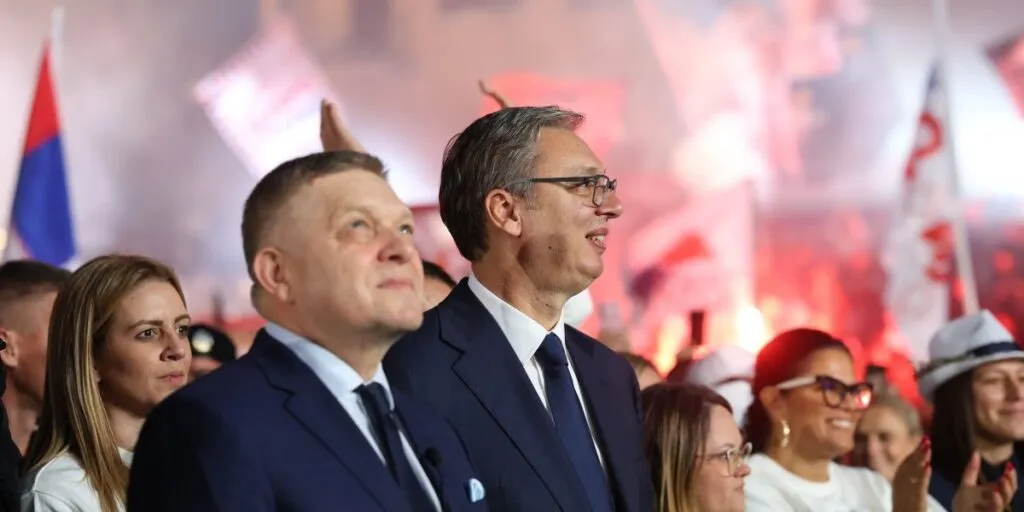
The prime minister of an EU and NATO country climbed onto a campaign stage in Serbia and declared that foreigners...
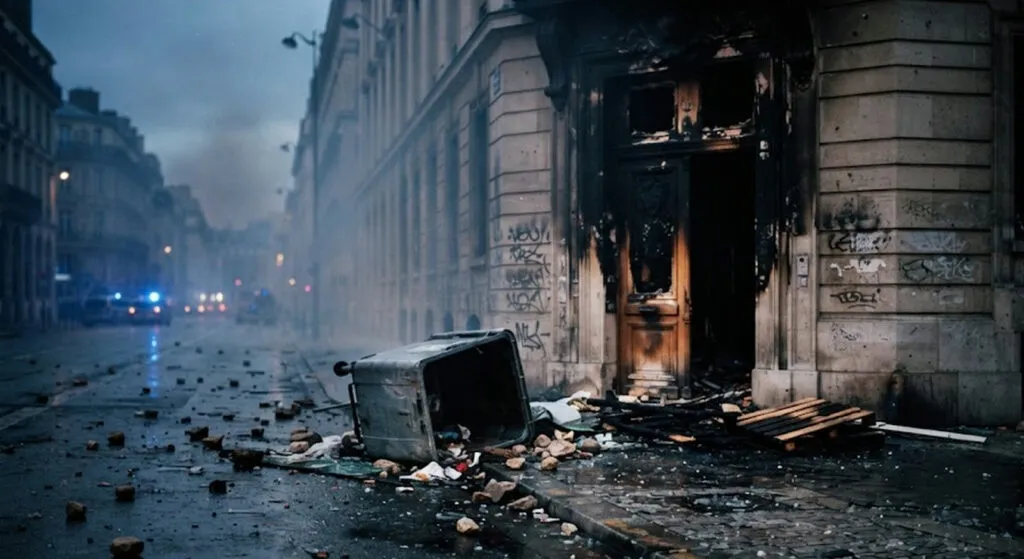
It started with expensive degrees and poor conditions at universities, and has reached burning ministries and 55 arrests. Is the...

Serbia accuses Zagreb of "the grossest interference in the electoral process" over newspaper articles, and Croatian reporters are bracing for...
Belgrade counted Croatian articles about Vučić and declared election interference. Meanwhile Vučić's campaign ad is almost a copy of a...
Batons, pepper sprays, balaclavas and a hundred-odd revolvers in Ćacilend, a salary for no work and cash from the city...
From November 1, Russians will no longer enter Montenegro on a passport alone, and Moscow immediately answered with visas for...
This site uses cookies - is that okay? Learn more
Be the first to know when Metla launches something new
Leave your email and we will write when there is a new guide or something new on Metla.