

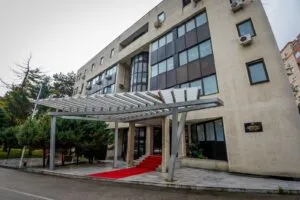
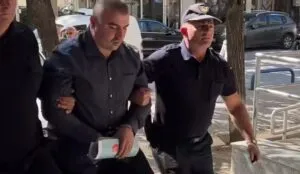
Two young men say police officers beat them while they were tied up: the investigation is being run by the Interior Ministry itself
10.10.2026


10.10.2026
10.10.2026
10.10.2026

10.10.2026
10.10.2026

10.10.2026
10.10.2026
10.10.2026
09.10.2026

10.10.2026

10.10.2026

09.10.2026
10.10.2026

10.10.2026

10.10.2026
10.10.2026

09.10.2026
08.10.2026
10.10.2026

10.10.2026
10.10.2026

10.10.2026

10.10.2026

09.10.2026
09.10.2026

08.10.2026

07.10.2026
10.10.2026

08.10.2026
06.10.2026

23.04.2026

23.04.2026

12.04.2026

Seven times since 2015. That is how often Slovenian President Nataša Pirc Musar appeared on the same passenger lists as her closest friend on trips to Russia. One of those journeys ran from 26 December 2021 to 7 January 2022 - less than two months before Russia launched its full-scale invasion of Ukraine.
The story was broken by Slovenia's „Dnevnik” and the Austrian news agency APA, then picked up by Germany's „Frankfurter Allgemeine Zeitung”, which asked outright what Pirc Musar was looking for in Russia so often. The president's office replied that these were private tourist trips and pointed out that before her term she had visited more than 80 countries. The answer is accurate and entirely legal. The question still stands.
A friend with Russian citizenship and one former intelligence officer
The real knot is not the trips themselves but who travelled with her. Viktorija Krivolucka, a Russian-Slovenian citizen and, by the president's own description, her closest friend for nearly twenty years, was for years in a relationship with Roman Jeglič - a man who in the early 1990s was deputy director of Slovenia's Security and Intelligence Service, the predecessor of today's SOVA.
According to the investigation, Krivolucka and Jeglič were registered at the same address in Krasnoyarsk, Siberia, in 2009. Krivolucka confirmed they were a couple while both worked for representative offices of Slovenian companies there, but says she knew nothing at the time about his intelligence past and has had no contact with him for at least fifteen years. „Dnevnik” also found that in 2010 she became authorised representative of the company „Ruska dača”, owned by Aleš Musar, the president's husband.
The service calmed things down but explained nothing
SOVA spoke up in concrete terms for the first time, stating that during the 2016 security vetting of Krivolucka, when she received Slovenian citizenship, it found no security-relevant circumstances. It added that it had not subsequently become aware of any additional circumstances that would change that assessment.
With that, the service confirmed the key part of the presidential office's defence - that Pirc Musar received no warning at any point since her term began in December 2022. But note exactly what SOVA said: that in 2016 it found nothing. Not that there is nothing to find, but that it did not find anything then. The difference between those two formulations is an entire intelligence service wide.
Who the man at the centre of all this is
Jeglič is not a random name in Slovenian public life. As head of the crime suppression service in 1988 he signed the criminal complaint that led to the arrest of today's Prime Minister Janez Janša in the JBTZ affair - a case that became one of the events around which the Slovenian public mobilised against the Yugoslav authorities of the time. From 1991 to 1993 he was deputy director of the VIS, and after clashes within the service in the mid-1990s he left for Russia, where he worked as a representative of Slovenian companies, including Gorenje.
Data from flight bookings in 2007 and 2008 suggests he also held Russian citizenship. „Dnevnik” nonetheless stresses that available databases contain no direct evidence linking him to Russian intelligence services, and his one-time superior Miha Brejc said such a possibility does not strike him as likely.
From a car crash to a constitutional indictment
The whole story did not start with a journalistic investigation but with a road accident. On 31 July, returning from Croatia, the vehicle carrying the president crashed in the Kastelec tunnel. Pirc Musar broke her collarbone, one of her travelling companions was more seriously injured - and Krivolucka was one of the two friends in the police vehicle. That is where the question arose of whether a close friend with Russian citizenship constitutes a security risk.
Former constitutional judge Peter Jambrek spoke of possible constitutional questions and of a constitutional indictment, but then explicitly denied that he was drafting one himself. Such a procedure would require a motion from at least 30 MPs and then a parliamentary majority - which means that for now this is a political topic, not a legal one.
And what is left at the end
The FAZ concludes that nothing published so far suggests Pirc Musar did anything unlawful. There is no published evidence that Jeglič was linked to Russian services, nor that Krivolucka posed a security risk to Slovenia. That matters and has to be said loudly, because the difference between suspicion and evidence is what separates a journalistic investigation from a witch hunt.
But there is a second thing that also has to be said. The head of state, private trips to Moscow in the months before the largest war in Europe since 1945, and a service that says it checked once, ten years ago. None of those three things is a crime. Together, though, they are reason enough for someone to ask - and the Slovenian public asked. The question now is not whether the president broke a law, but whether a security check from 2016 is still a measure of anything at all in 2026.
The latest 10 news from this category
His bandmates spent years trying to convince him to get treatment. At the end of September a concert in Makarska...
More than 50 people at the entrance, children and folk dancers inside, shouts of "Kill the Serb" as they left....
Twelve people from the Novi Sad group and eleven who took part in incidents against protesters - pardoned four weeks...
At a dinner in Athens, while Romania was sinking into political crisis, the US ambassador reportedly said America could do...
The European average is 26.3 years, the Finnish one is 21. And they are not students - more than half...
The first police investigation found no irregularities. The second established unlawful and disproportionate force. The difference was made by footage...
The domestic regulator found the irregularities first, and then the story stopped. It took crossing a border for the same...
Two million people stood against twenty-seven states and the text never came out. A reminder that EU membership does not...
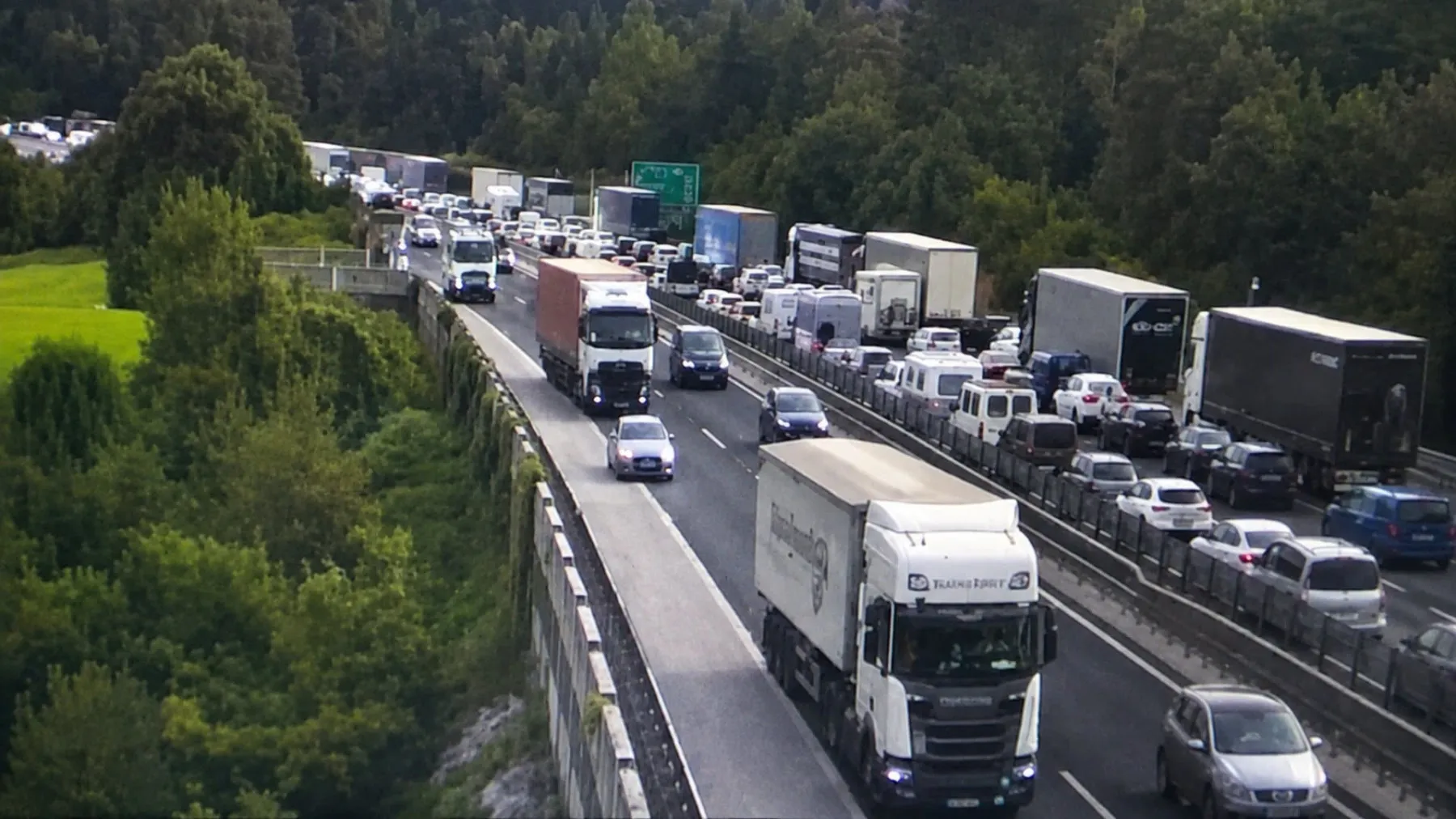
A lorry stopped in the hard shoulder with a breakdown, a car with five passengers and one impact in the...
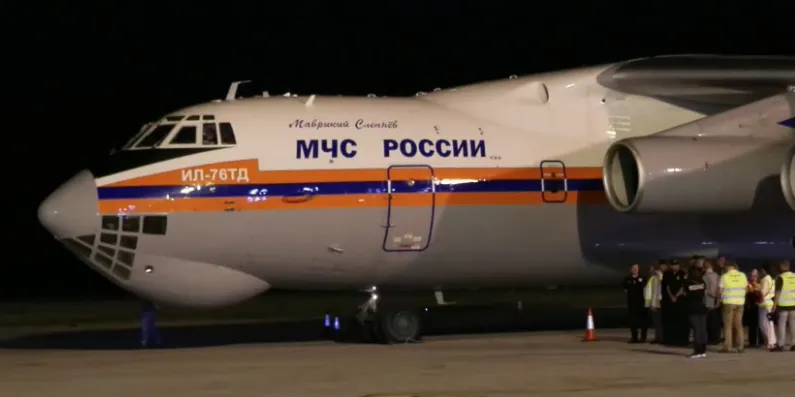
Forty-two tonnes of water per flight and one well-organised welcome on the runway in Niš. The fire in the Deliblato...
This site uses cookies - is that okay? Learn more
Be the first to know when Metla launches something new
Leave your email and we will write when there is a new guide or something new on Metla.

