

Police officer from Drachevo drove without ever passing a driving test: Who checks the people who check everyone else?
18.10.2026


18.10.2026
18.10.2026
18.10.2026
18.10.2026
18.10.2026

18.10.2026
18.10.2026

18.10.2026
18.10.2026

18.10.2026

18.10.2026

17.10.2026

18.10.2026

18.10.2026

18.10.2026

18.10.2026

17.10.2026

16.10.2026
18.10.2026

18.10.2026

18.10.2026

18.10.2026

18.10.2026

18.10.2026
18.10.2026

18.10.2026

17.10.2026

17.10.2026

15.10.2026

13.10.2026

23.04.2026

23.04.2026

12.04.2026

Ratko Mladic died in The Hague, aged 84, in the United Nations detention unit. He died a convicted man - a life sentence for genocide, for crimes against humanity and for violations of the laws and customs of war. That is nobody's interpretation. It is a final judgment, upheld on appeal in June 2021.
And yet, only hours after the news, the region split again along the same lines it has split along for thirty years. Some write "the general has died". Others write "the man convicted of genocide has died". The same man, two entirely different sentences - and in the gap between them sits everything the Balkans has failed to close.
Eight thousand names, not a figure
As commander of the Main Staff of the Army of Republika Srpska, Mladic led the forces that took Srebrenica in July 1995. After the town fell, more than 8,000 people were executed en masse, mostly Bosniak men and boys. International courts classified this as genocide - not as an allegation, but as a fact established in a judgment.
The director of the Srebrenica Memorial Centre, Emir Suljagic, responded with a sentence that needs nothing added to it. "The people he sent to their deaths never got the chance to grow old. That is the only fact about his death that means anything to me," he said.
No burial erases a judgment
Mladic was arrested in Serbia on 26 May 2011, after sixteen years on the run. Five days later he was transferred to The Hague. In 2017 he received a life sentence at first instance; in 2021 the appeals chamber upheld it. Of that life sentence he served a little over fifteen years.
He spent his final months in serious ill health. His defence and family sought early release on humanitarian grounds. The president of the International Residual Mechanism, Graciela Gatti Santana, rejected the request - reasoning that the mere expectation of imminent death is not in itself automatic grounds for release. The Mechanism then confirmed that Mladic died while hospitalised in The Hague and that Dutch authorities had begun the standard procedures set out in their law.
Serbia's Justice Ministry has already announced it will organise the transfer of the body to Serbia.
The reaction that says more than the news
What followed in parts of the Serbian media space was not an obituary but a campaign. The editor-in-chief of a Belgrade tabloid said live on air that the real news was not that Mladic had died, but that he had been "killed at the Hague Tribunal", which he called a terrorist organisation. In a single move, the court that handed down the sentence was declared guilty of the death of the man it convicted.
Why does this matter to a reader in Skopje? Because rhetoric does not stop at the border. For years the region has watched final war crimes judgments treated as a question of political affiliation rather than as fact. When the court that established the crimes becomes the enemy and the convict becomes the victim, then no judgment in future carries any weight.
What remains
Thirty-one years after Srebrenica, the remains of more than 1,000 people have still not been found. In July this year, ten more newly identified victims were buried at Potocari. That is the one part of this story that does not depend on how the news of one man's death gets written - the search continues regardless of the headlines.
Mladic died in prison, which means the court held to what history rarely holds to - it saw the conviction through. The question that remains is not about him. The question is whether the region will ever agree that a final judgment is a fact and not an opinion.
The latest 10 news from this category
Eight Croatian conditions, 2.7 billion euros for military property from the former Yugoslavia and the name of a swimming pool...

A Russian military blogger, his wife and three others expelled from Montenegro - and Moscow is already talking about a...
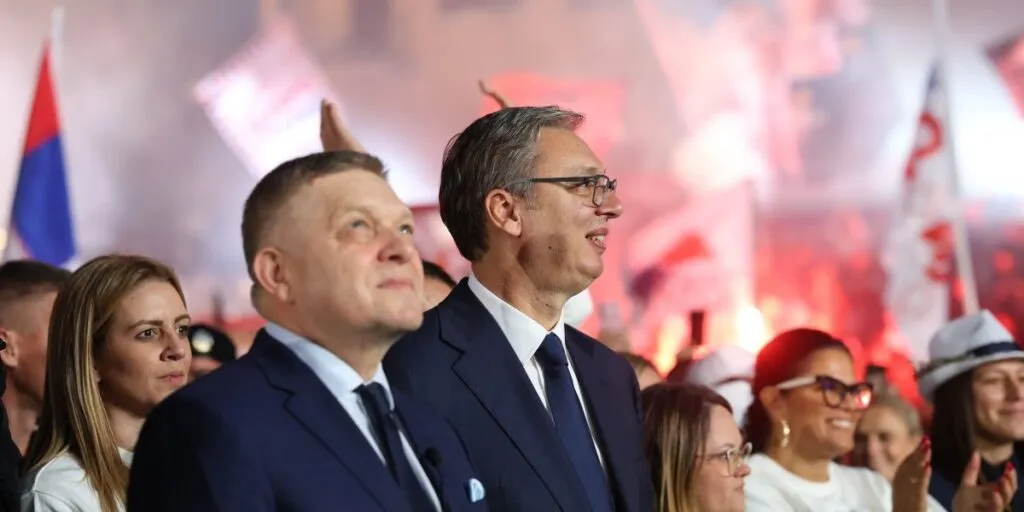
The prime minister of an EU and NATO country climbed onto a campaign stage in Serbia and declared that foreigners...
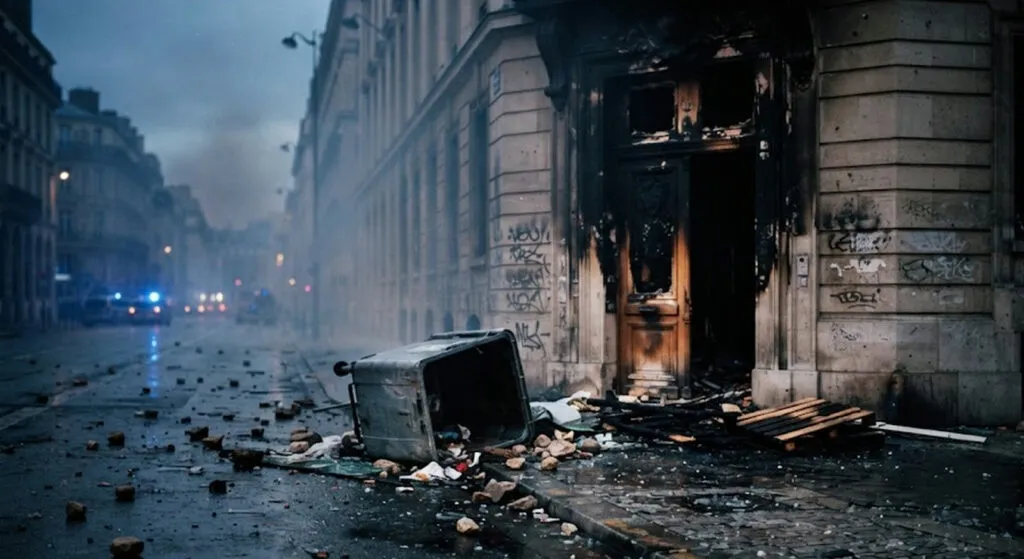
It started with expensive degrees and poor conditions at universities, and has reached burning ministries and 55 arrests. Is the...

Serbia accuses Zagreb of "the grossest interference in the electoral process" over newspaper articles, and Croatian reporters are bracing for...
Belgrade counted Croatian articles about Vučić and declared election interference. Meanwhile Vučić's campaign ad is almost a copy of a...
Batons, pepper sprays, balaclavas and a hundred-odd revolvers in Ćacilend, a salary for no work and cash from the city...
From November 1, Russians will no longer enter Montenegro on a passport alone, and Moscow immediately answered with visas for...

Belgrade has refused to sanction Moscow for years, and now Vučić claims even the US no longer fully enforces sanctions....
Of the four questions only one is binding, and the one that matters most to people from the former Yugoslavia...
This site uses cookies - is that okay? Learn more
Be the first to know when Metla launches something new
Leave your email and we will write when there is a new guide or something new on Metla.