

Police officer from Drachevo drove without ever passing a driving test: Who checks the people who check everyone else?
18.10.2026


18.10.2026
18.10.2026
18.10.2026
18.10.2026
18.10.2026

18.10.2026
18.10.2026

18.10.2026

18.10.2026

18.10.2026
18.10.2026

17.10.2026

18.10.2026
18.10.2026

18.10.2026

18.10.2026

17.10.2026

16.10.2026
18.10.2026

18.10.2026
18.10.2026
18.10.2026

18.10.2026

18.10.2026
18.10.2026
18.10.2026

17.10.2026
17.10.2026

15.10.2026

13.10.2026

23.04.2026

23.04.2026

12.04.2026

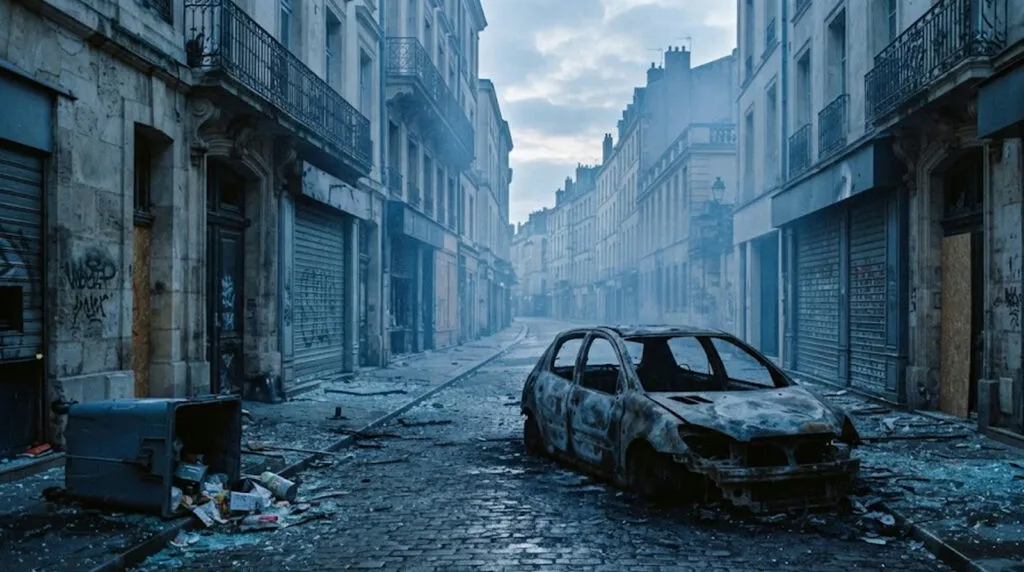
France woke up to 1,200 detained and at least 150 injured police officers and gendarmes. Those are the numbers announced by Prime Minister Sébastien Lecornu after a day in which mass protests against the high cost of living turned into arson, looting and street battles. In Limoges the city hall burned almost completely. In Paris whole streets were left devastated.
Between 550,000 and 800,000 people took part in the protests - the first figure is the interior ministry's, the second the unions'. Most of the rallies passed peacefully. But peaceful marches rarely make the headlines: those went to the masked groups that attacked shops, public buildings and police vehicles.
Organised looting, not spontaneous rage
In Paris the clashes moved from the protest rallies to the shopping streets. According to reporters on the ground, some groups acted in an organised way: masked men first disabled the CCTV cameras, then smashed the shop windows and went inside. Targets included the Galeries Lafayette department store, Lacoste and SFR shops, banks, and even the luxury Céline boutique on Avenue Montaigne. Cars, bins and makeshift barricades burned, and broken glass covered the pavements.
Paris mayor Emmanuel Grégoire warned that the damage would be enormous - entire streets destroyed, public spaces and monuments damaged. He called for a distinction between citizens who protest peacefully and those who use the rallies for violence and looting. A reasonable sentence. The question is whether anyone in government will hear the other half of it too - why hundreds of thousands of people took to the streets in the first place.
Limoges, Marseille, Lyon: a blow to the symbols
The worst damage is in Limoges. Masked attackers first set fire to a municipal police vehicle in front of the city hall, then broke inside and set the building alight. The fire engulfed the roof of the building, opened in 1883, and the roof structure collapsed onto the lower floors - except in the west wing. Local prefect Maurice Barate described the damage as a disaster for cultural heritage, while hundreds of residents watched it burn.
In Marseille masked demonstrators broke through metal barriers and entered the city hall, sprayed anarchist symbols, smashed glass and toppled the bust of Marianne - the symbol of the French Republic. Mayor Benoît Payan says the damage inside is relatively limited. In Lyon the historic tourist office on Place Bellecour, a building more than 170 years old, burned down. In Bordeaux the fire from a looted Decathlon store spread to the building, and the official residence of the Gironde prefect was also damaged. City buildings in Lille were attacked too, and there was looting in Nantes, Nice, Strasbourg and Toulouse.
The police between criticism and bricks
It isn't only the street in the dock. In Saint-Étienne a 17-year-old protester lost his hand when a police dispersal grenade exploded. French media report he tried to pick it up, but the circumstances are still being established, and the police inspectorate IGPN is investigating. Within hours the prime minister had an exact figure for injured officers. Full data on injured protesters still doesn't exist.
Police unions, for their part, released footage of attacks on police vans with clubs and bricks and said the forces are on the verge of exhaustion. Lecornu said it was a real miracle the injured weren't more numerous, and called out the radical left La France Insoumise for justifying violence with its messaging. "Now is the time to choose a side," he said, warning that some politicians want to exploit the unrest ahead of the 2027 presidential election. President Emmanuel Macron promised that those responsible would be found and punished. A state of emergency will not be declared for now.
Everyone reads the fire the way it suits them
From Washington, US Vice President JD Vance immediately found his own version. "Western progressives imported the third world into France in the name of diversity and compassion," he wrote on X, adding that this is the future the Democrats want for America - ahead of the 3 November congressional elections. The protests were about the cost of living and public services. Vance saw immigration and a campaign message in them.
The unrest isn't only a French story. In Brussels hundreds of young people marched against rising education costs, in Lisbon tens of thousands protested against expensive housing, and in Milan and Bologna police used tear gas and water cannon. Next door in Albania, student protests against Prime Minister Edi Rama continued - police used projectiles suspected to be rubber bullets.
Expensive living, poor public services, young people asking for more than the state offers them - does this sound like news from France, or from any Balkan kafana? In Paris it's now being decided whether the government will listen to the peaceful hundreds of thousands, or talk only about those who smashed the shop windows.
The latest 10 news from this category
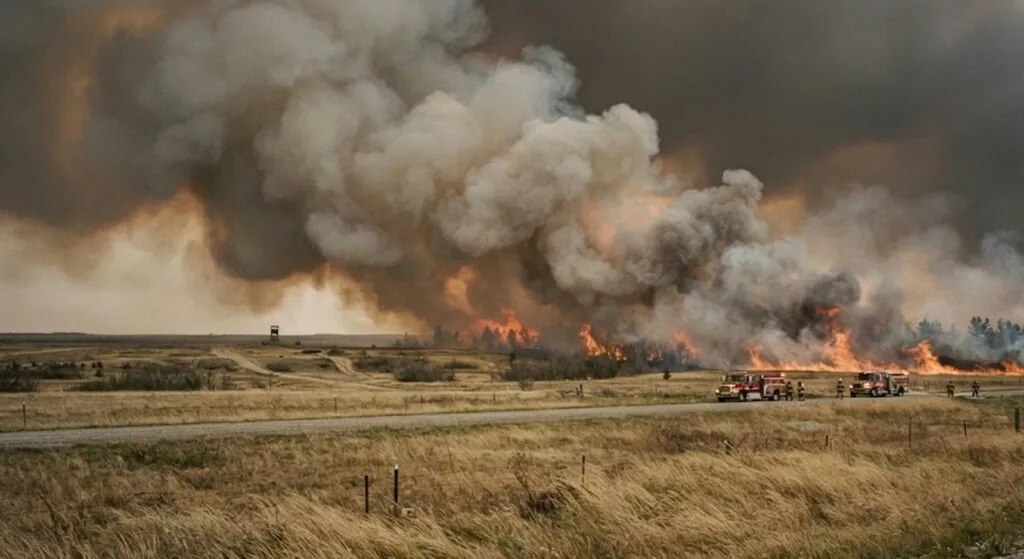
The defence minister confirmed there are dead, but said neither how many nor why. An emergency doctor says the health...
EU leaders spent two days in Brussels and couldn't even agree on how much money the Union will have at...
In front of around 700 soldiers, General Roly Walker announced an "open conversation" with the nation about the sacrifices defence...
Moscow is selling it as the "deal of the century", but the power will flow at the earliest five years...
Zaluzhnyi is trusted by 64 percent of respondents, Zelensky by 53 percent - but in a hypothetical first round Zelensky...
Najmeh Amini was arrested at the January protests and has now been sentenced to death over a single post. More...
The law is signed, the deadline is October 18, and nobody in Washington is preparing the sanctions. It seems that...
A routine check-up, 90 minutes on the operating table and the word "adenocarcinoma" said out loud. How many Balkan governments...
More than 1,600 new names on Europe's blacklist, against 4.8 million tonnes of Russian diesel that Trump is letting onto...
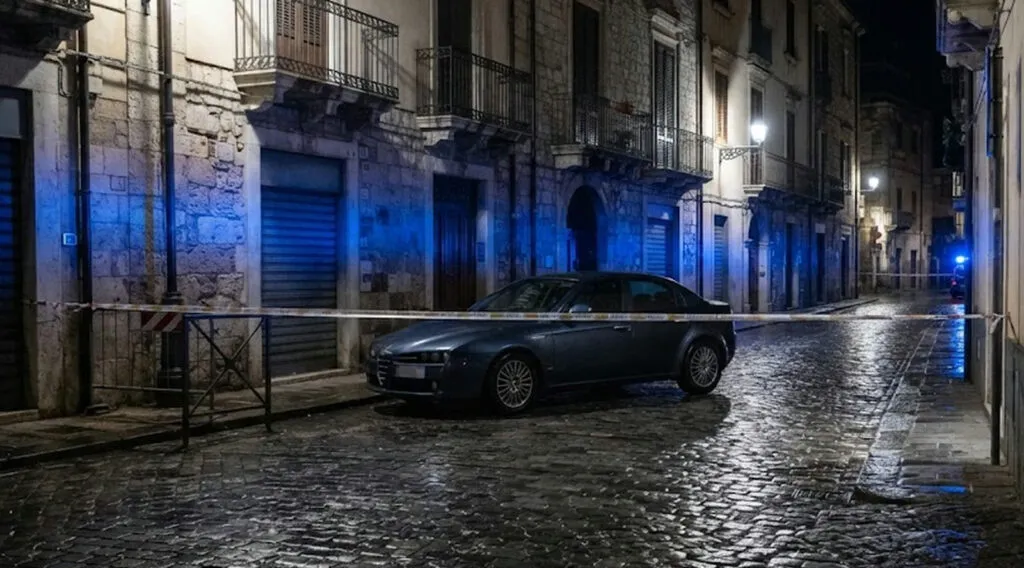
One person killed next to the European Parliament building, a police officer shot in the head in the suburb of...
This site uses cookies - is that okay? Learn more
Be the first to know when Metla launches something new
Leave your email and we will write when there is a new guide or something new on Metla.


