

Studeničani: 35-year-old dies after being electrocuted while washing his car with a pressure washer
18.09.2026


18.09.2026

18.09.2026

18.09.2026
18.09.2026

18.09.2026
18.09.2026
18.09.2026

17.09.2026

16.09.2026

18.09.2026

18.09.2026

17.09.2026

18.09.2026

18.09.2026

18.09.2026

18.09.2026

17.09.2026

16.09.2026

18.09.2026

18.09.2026

18.09.2026

18.09.2026

17.09.2026

17.09.2026

09.03.2026

27.02.2026

19.02.2026

18.09.2026
17.09.2026

16.09.2026

23.04.2026

23.04.2026

12.04.2026

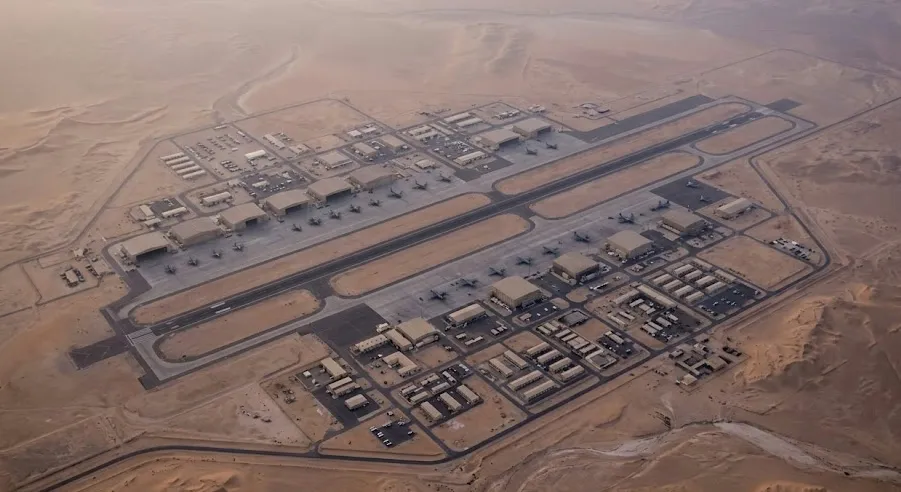
While the White House has spent months repeating that Iran's military is "nearly destroyed," satellite images tell a different story. An analysis by the BBC's fact-checking service shows that since the start of the US-Israeli war, Iran has damaged 20 American military facilities across the Middle East - with damage far greater than Washington has admitted.
The numbers are the kind that don't fit the official statements. According to the analysis, since late February Tehran has struck key military facilities in eight countries - Saudi Arabia, the UAE, Qatar, Kuwait, Iraq, Jordan, Bahrain and Oman. Among the damaged: three of the most advanced anti-missile battery systems and aerial refuelling aircraft. Some analysts estimate the number of hit bases runs as high as 28.
And here's the detail that says the most about the true scale: the high-altitude THAAD defence system costs around a billion dollars per battery, and the US operates only eight of them worldwide. Each interceptor it fires costs about 12.7 million dollars. A former commander said these networks are "very complex" and can't be "replaced quickly or easily." When something this expensive is damaged, that's no footnote.
Iran, for its part, used exactly the opposite logic - cheap, easily replaceable drones to strike expensive targets. According to the report, since February at least 42 aircraft have been damaged or destroyed, including F-15 and F-35 fighters, 24 MQ-9 Reaper drones and one A-10 attack plane. A classic asymmetry: one side spends billions, the other hundreds of thousands - and on a satellite image the result looks surprisingly similar.
There's also a move that deserves attention in its own right. According to the BBC, the US asked the company Planet to impose an "indefinite" restriction on new satellite images of Iran and much of the Middle East. The justification - to keep them from being used by "adversarial actors." But when one side restricts imaging of its very own damaged bases, the question asks itself: what exactly is in those images that they don't want seen?
For the Balkan reader, who learned to read between the lines of every military statement, this is a familiar lesson. The official narrative and the satellite image rarely tell the same story - and the truth is usually where someone is trying hardest to obscure it. The total bill for the American operation, according to the Pentagon, has already reached 29 billion dollars, much of it for repairs and replacement of destroyed equipment. A figure that speaks louder than any statement.
The latest 10 news from this category
The bill passed with 262 votes, and the key to it has been handed to a man who has already...
Ukraine adapts in weeks, the Alliance in decades. Europe is paying for Patriot systems from 1991 and is only now...
Missiles and drones on the Ukrainian capital, damaged water mains and residential buildings. The same night, Ukrainian drones set the...
Trump hopes the war is ending and is preparing to gather the Gulf leaders. Oil prices have jumped, and the...
Ukraine says when, where and which unit did it. Russia's defence ministry has not a single sentence about the circumstances....
Norway's prime minister talks about a plane a drone "almost hit". Moldova, the only party holding the figures, reported that...
Ukraine was shooting down nine out of ten of the old drones. Then Russia changed the drone - and in...
It was shot down a few minutes after midnight, and all of Vilnius got a warning on their phones. Two...
The entire story comes from one side, and the headlines turn it into a turning point. The difference between the...
Between 2,300 and 3,000 North Korean soldiers have died in Kursk so far. Kim Jong Un has found an export...
This site uses cookies - is that okay? Learn more
Be the first to know when Metla launches something new
Leave your email and we will write when there is a new guide or something new on Metla.
