

Kratovo man stabs police officer mid-intervention: prosecutors want the 40-year-old detained
15.09.2026


15.09.2026

15.09.2026

15.09.2026

15.09.2026
15.09.2026
15.09.2026

15.09.2026

14.09.2026

13.09.2026

15.09.2026

15.09.2026

14.09.2026

15.09.2026

15.09.2026

15.09.2026

15.09.2026

14.09.2026

13.09.2026

15.09.2026

15.09.2026

15.09.2026

15.09.2026

15.09.2026

14.09.2026

09.03.2026

27.02.2026

19.02.2026

15.09.2026

14.09.2026

14.09.2026

23.04.2026

23.04.2026

12.04.2026

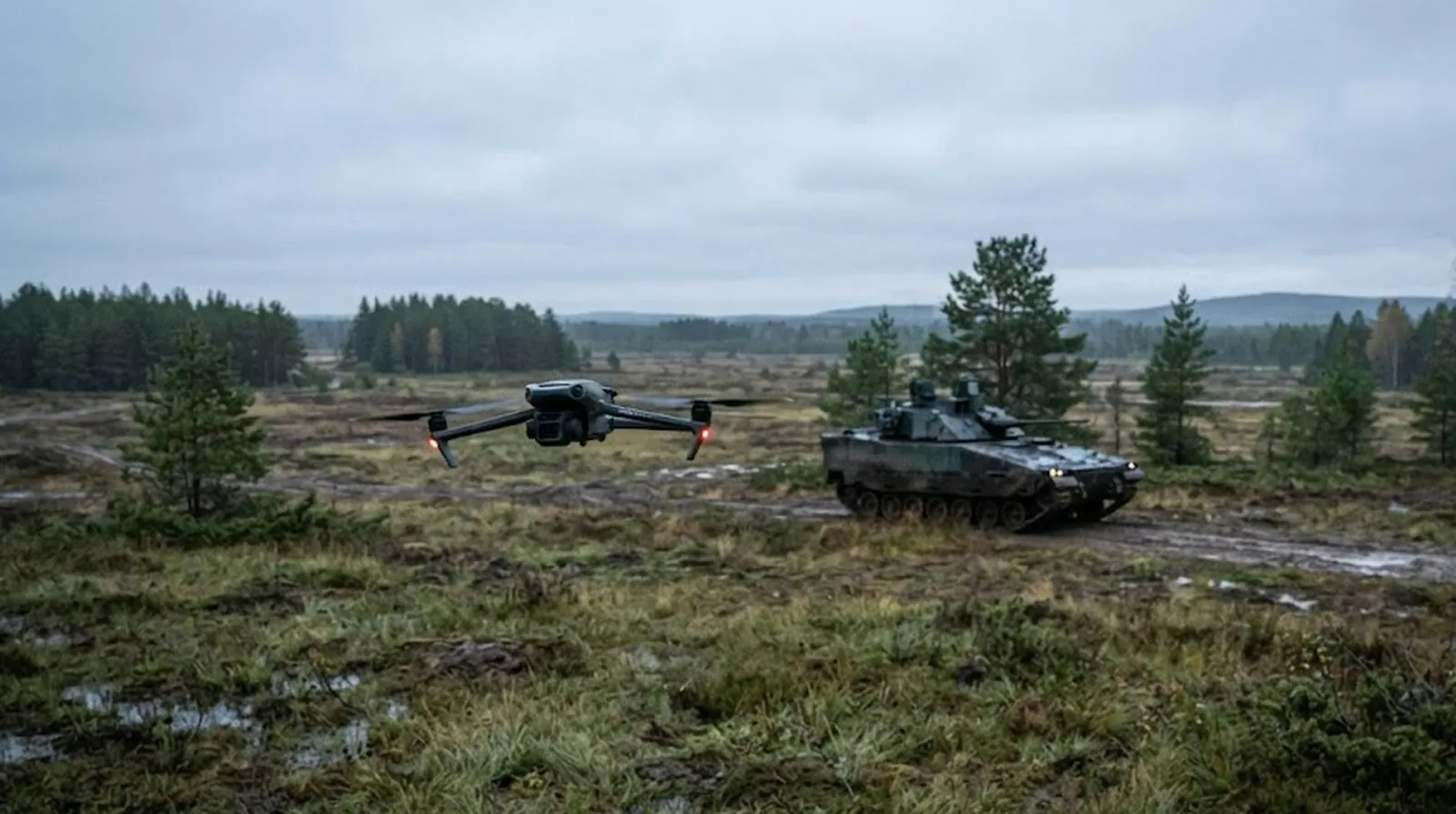
At the „Aurora 26” military exercise in Sweden, Ukrainian drone operators took armoured vehicles and entire NATO units out of action in short order. The hits were simulated and nothing was actually destroyed - but the result is uncomfortable: expensive tanks and armoured vehicles were dropping out of the fight on paper, taken down by aircraft costing a fraction of their value.
The role of the notional adversary went to members of the First Corps of Ukraine's National Guard, „Azov”. Using reconnaissance and first-person-view strike drones, they repeatedly broke through Western units' defences and forced organisers to halt and restart parts of the exercise. Their effectiveness was such that their participation was limited in certain phases - so that the other units would not suffer a total simulated loss of equipment.
A tank worth millions against a drone worth a few hundred euros
The exercise ran from 27 April to 13 May across Sweden, with the main activities on the strategically important island of Gotland in the Baltic Sea. More than 18,000 troops from 13 countries took part. The Ukrainian team was made up of members of the First Presidential Operational Brigade „Burevii” and the 20th Operational Brigade „Lubart”.
Their task was simple and brutal: to give Western units what Russian and Ukrainian forces face every day - uninterrupted aerial surveillance, rapid detection of movement and attacks by cheap drones. In one case an operator attacked a Leopard 2 tank while the soldier who had abandoned the vehicle tried to shoot down the drone with an infantry weapon. A scene that describes the whole asymmetry in one sentence.
The criticism wasn't about the equipment
The Ukrainians were most critical of how the manoeuvres were organised, the long pauses between operations and the strict restrictions on drone use. For units coming from a front where enemy drones constantly monitor the terrain and attack the moment they spot a target, that tempo has little to do with real war.
Their assessment was that Western armies still plan combat operations as if they had enough time to assemble, deploy and relocate large units. In real conditions, such a concentration of people and equipment would be detected and attacked immediately. One participant's conclusion: Western armed forces in their current form are not ready for modern war.
War changes faster than armies
Drones that can be bought or assembled for a few hundred or a few thousand euros now find, track and disable tanks worth millions. Above the front, reconnaissance aircraft, strike drones, electronic warfare and data-relay systems operate simultaneously, all but eliminating the possibility of moving unnoticed.
The substance of the warning from Gotland is not that NATO lacks expensive hardware. It is that the hardware is still being used by the rules of previous wars. While Western armies plan long manoeuvres and restrict drones with exercise regulations, the modern battlefield changes from week to week.
This is a story worth reading for anyone who thinks defence is measured in budgets and parade photographs. The most expensive equipment in the world got a lesson from operators flying hobby-shop aircraft - because they come from a place where a mistake is paid for immediately. Are the armies in this region reading the same lesson, or waiting for somebody else to learn it first?
The latest 10 news from this category
Between 2,300 and 3,000 North Korean soldiers have died in Kursk so far. Kim Jong Un has found an export...
A NATO fighter jet downed an unmanned aircraft over Lithuania minutes after midnight, and citizens got the warning on their...
The train was empty, the locomotive damaged, nobody hurt. But Boris Johnson and a group of European security advisers had...
453 drones in one night, 405 shot down - and the forty-eight that got through land somewhere. Poland's prime minister...

Trump's son-in-law told an audience in Kyiv the deal is done - if Ukraine withdraws. And added that the battlefield...

A barren volcanic rock in the middle of a strait 28 kilometres wide changed the oil market in a single...

Hostomel, Odesa, Kryvyi Rih - targets that are not the front line but the supply chain. A war against the...

We don't want war with Europe, but here is exactly how that war would start. He said both sentences in...

When an army recalls its special forces with a 12-hour deadline, that is not a rota but a signal. The...

Port infrastructure in Makhachkala and the theatre building caught fire, the governor said. Moscow claims it shot down 448 drones...
This site uses cookies - is that okay? Learn more
Be the first to know when Metla launches something new
Leave your email and we will write when there is a new guide or something new on Metla.
