
"That's not my job": the trial of the 13 Puls police officers restarted from scratch, and witnesses describe help being refused
22.09.2026


22.09.2026

22.09.2026

22.09.2026

22.09.2026
22.09.2026

22.09.2026

22.09.2026

21.09.2026

20.09.2026

22.09.2026

22.09.2026

21.09.2026

22.09.2026

22.09.2026

22.09.2026

22.09.2026

21.09.2026

20.09.2026

22.09.2026

22.09.2026

22.09.2026
22.09.2026

22.09.2026

22.09.2026

09.03.2026

27.02.2026

19.02.2026

22.09.2026

21.09.2026

21.09.2026

23.04.2026

23.04.2026

12.04.2026

Xi Jinping rarely raises his voice in meetings - Chinese leaders spend their entire diplomatic careers building exactly that kind of controlled verbal posture. So when he did it at the recent meeting with Donald Trump in Beijing, that means something. The topic he pulled out of diplomatic calm: Japan.
According to the Financial Times' reporting, this was the tensest moment of the two-day summit. Xi criticized what he calls the "remilitarization" of Japan, and the policies of Prime Minister Sanae Takaichi. American representatives were caught off guard - Japan was not a planned point on the agenda.
Trump responded with a generic line - that Japan has to bolster its security because of threats from North Korea - without tying Japanese military build-up to Chinese interests. But for Beijing, the problem is bigger: Takaichi recently suggested that Chinese actions against Taiwan could threaten Japan's very survival. That's a sentence Beijing remembers.
The context is wider. The Asian security triangle - Taiwan, North Korea, China - is being redefined. Japan sits in the middle, raising defense spending and deepening ties with the US. Analysts argue that Chinese pressure may be counterproductive - giving Tokyo even stronger justifications for regional security partnerships.
When Xi raises his voice, the Balkans should pay attention. Not because it concerns us right now - but because when the two largest economies clash over a third country, the fallout for global markets, supply chains and energy costs reaches every economy, ours included.
The latest 10 news from this category
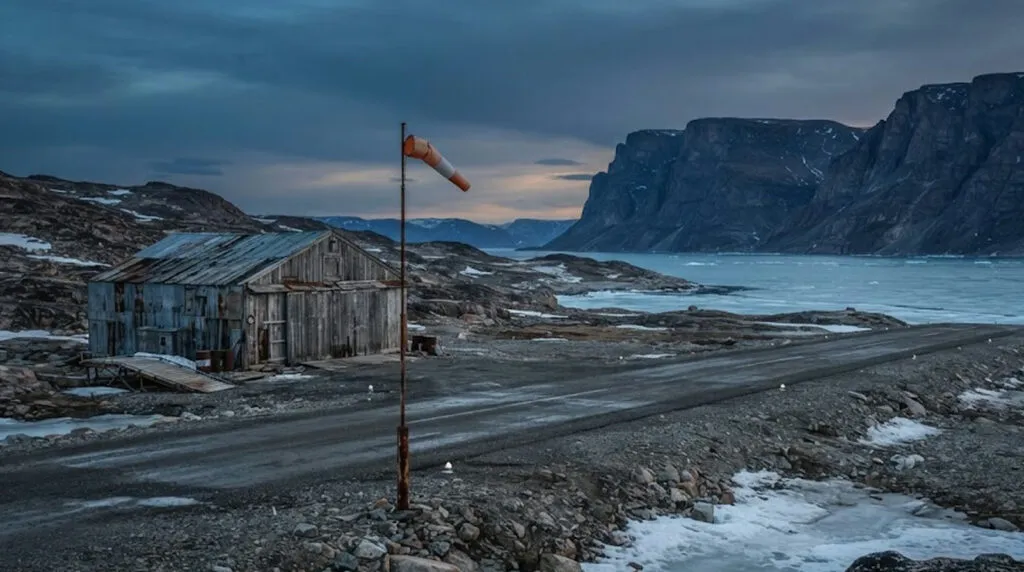
Washington, Copenhagen and Nuuk are signing off on a military presence on an island of 56,000 people - and the...
Phones in Krāslava rang by themselves, the fighters took off, and what exactly triggered the alert - nobody is saying....
In Mecklenburg the CDU finished on 4.9 percent and, for the first time in the history of the Federal Republic,...

Tisza took 16 years of power off Fidesz and won 141 of 199 parliamentary seats. Orbán now says Brussels is...
With 75 percent of protocols counted, the governing party leads in 208 of the 225 single-mandate districts. A parliament of...
He never sat on the throne, and the emirate is lowering its flags for ten days. Sometimes the surname says...

Three options on the table in Washington - military pressure, economic strangulation or a deal - and the president frames...
The party of Adenauer and Kohl slid to the electoral threshold in Mecklenburg, the AfD is already demanding the chancellor's...
Two prime ministers in the same Union, the same month, completely opposite diagnoses of who is provoking whom. There is...
A broken aircraft in a field usually ends up in a police note. This one ended up with federal investigators,...
This site uses cookies - is that okay? Learn more
Be the first to know when Metla launches something new
Leave your email and we will write when there is a new guide or something new on Metla.