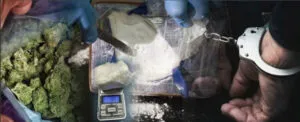
Sixteen Arrests in Twenty-Four Hours, All for Drugs: The Police Are Working - But Where Are All These People Coming From?
20.09.2026


20.09.2026

20.09.2026

20.09.2026
20.09.2026
20.09.2026
20.09.2026

20.09.2026
20.09.2026

20.09.2026

20.09.2026
20.09.2026
19.09.2026
20.09.2026

20.09.2026

20.09.2026

20.09.2026
19.09.2026
18.09.2026
20.09.2026

20.09.2026
20.09.2026
20.09.2026

20.09.2026

20.09.2026

09.03.2026

27.02.2026

19.02.2026
20.09.2026
19.09.2026
18.09.2026

23.04.2026

23.04.2026

12.04.2026

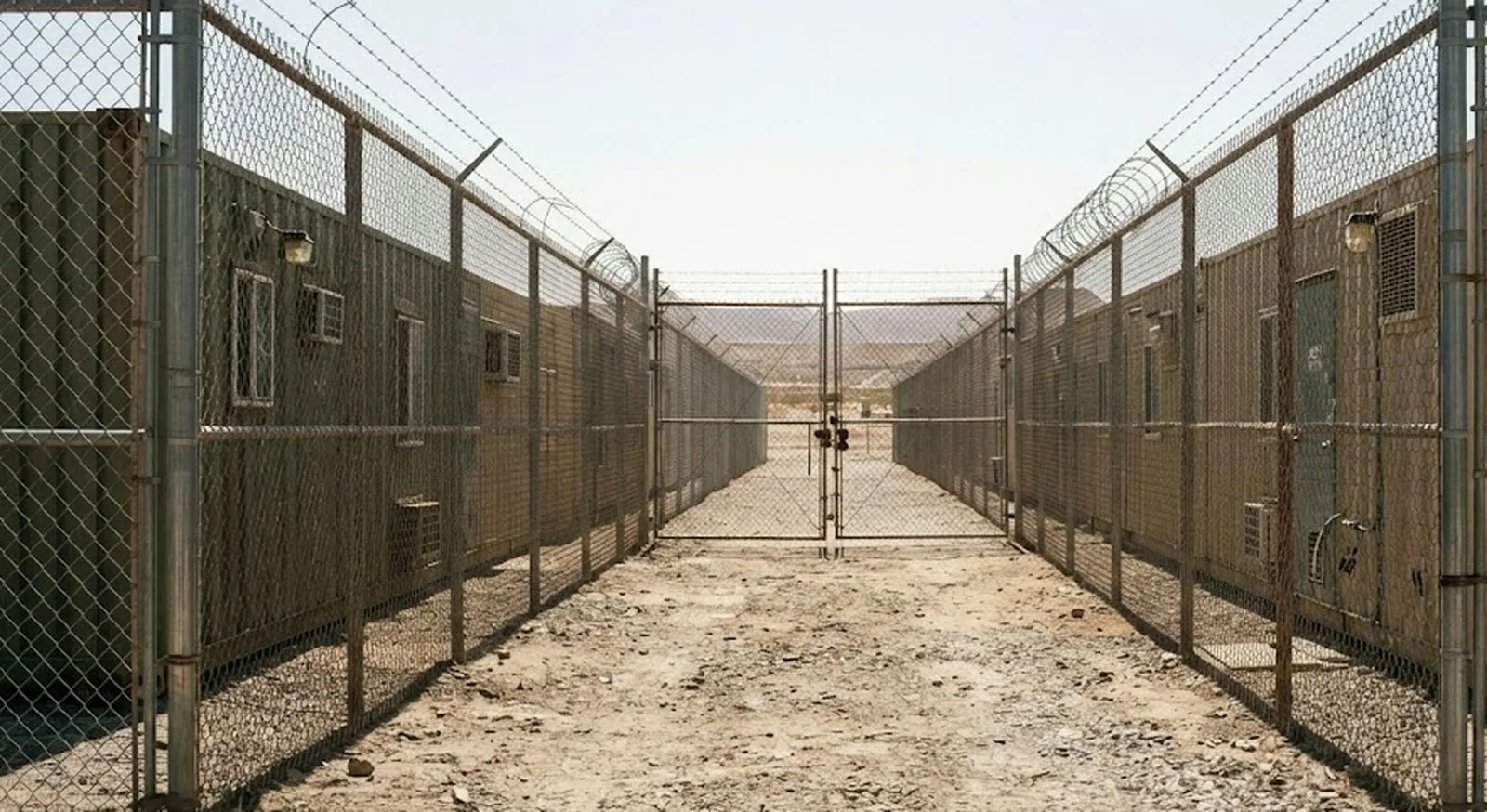
When Italy opened the centre in Gjadër, Albania, it was presented as an Italian experiment. Now the same experiment is being packaged as a European model - and on the list of possible partners, alongside Ghana, Senegal, Tunisia, Libya, Mauritania, Egypt, Uganda, Ethiopia, Uzbekistan and Armenia, stands Montenegro.
Italian interior minister Matteo Piantedosi will put the proposal to an emergency meeting of EU interior ministers. The idea is simple and that is precisely what makes it dangerously simple: anyone entering the EU illegally is sent to a centre in a third country, where their asylum claim and documents are processed. The funding? From the Union's budget. Who exactly pays, and how much - there is still no answer to that.
Why now
The meeting was called because of Ceuta, the Spanish enclave on Moroccan soil, where in recent days around 70,000 people tried to force their way into Spanish territory. Seventy thousand. That is not a number any administration can handle with existing procedures, and Rome knows it - so it is seizing the moment.
Italian foreign minister Antonio Tajani makes no secret of whom the criticism targets. He called Spanish policy too permissive and Italy's "strict and measured", arguing that Europe cannot take in everyone indiscriminately. He added that the European Commission supports the Italian, not the Spanish, position. "We must build a common strategy on immigration," Tajani said, mentioning "the possibility of opening new centres on the Albanian model in various African countries".
The Balkans as an extension of the European border
This is the part to read slowly here. Albania is already the model. Montenegro is on the list. So the two Balkan countries knocking loudest on the EU's door to be let inside are being considered as places where the Union will hold what it does not want to hold at home.
It is an old scene with a new name. For years the Balkans have served as a waiting room, a buffer zone, a place to park the problem while Brussels thinks. The difference now is that this is being formalised for the first time into a proposal with a budget line. And it is worth asking: what does a country that agrees to such a thing get - faster integration, or just one more agreement that keeps it exactly where it is?
The numbers do not add up
There is one more detail that makes the whole idea look weaker than Rome would like. The centre in Gjadër, which Italy wants running at full capacity by the end of the year, is supposed to process up to 3,000 people a month for asylum procedures. At present it serves only for deportations, with limited capacity. So the model being proposed for the entire continent, in its only live version, still does not do the thing it is being proposed for.
In parallel, Italy will also push for stricter application of the Generalised System of Preferences - the mechanism tying trade concessions for developing countries to their willingness to take back their own undocumented citizens. In other words: trade becomes leverage. Whoever will not take people back will pay for it on the market.
The latest 10 news from this category
Two prime ministers in the same Union, the same month, completely opposite diagnoses of who is provoking whom. There is...
A broken aircraft in a field usually ends up in a police note. This one ended up with federal investigators,...

Beijing will easily find another supplier. The harder question is what Washington is actually testing: whether private Chinese companies will...
The law lets Washington hit the five biggest buyers of Russian oil with tariffs of up to 100 per cent....
Measures imposed over the war in Ukraine are now being offered as currency in an entirely different dispute. If the...
A smaller dose and more needles does not mean a safer vaccine, it means an ineffective one. Science has had...
Harald designed the sarcophagus himself, and it is shaped like a ship. The stone is 400 million years old and...
Von der Leyen proposed a status that does not exist in European law, the Canadians distanced themselves, and Washington announced...
The French candidate called the war in Ukraine a slaughterhouse and pointed out it has already lasted longer than the...
Four decades in politics, but the headline the world wrote was about her brother and his sixteen wives. When the...
This site uses cookies - is that okay? Learn more
Be the first to know when Metla launches something new
Leave your email and we will write when there is a new guide or something new on Metla.