


Studeničani: 35-year-old dies after being electrocuted while washing his car with a pressure washer
18.09.2026


18.09.2026
18.09.2026

18.09.2026

18.09.2026

18.09.2026

18.09.2026
18.09.2026

17.09.2026

16.09.2026

18.09.2026

18.09.2026

17.09.2026

18.09.2026

18.09.2026

18.09.2026

18.09.2026

17.09.2026

16.09.2026

18.09.2026

18.09.2026

18.09.2026

18.09.2026

17.09.2026

17.09.2026

09.03.2026

27.02.2026

19.02.2026

18.09.2026

17.09.2026

16.09.2026

23.04.2026

23.04.2026

12.04.2026

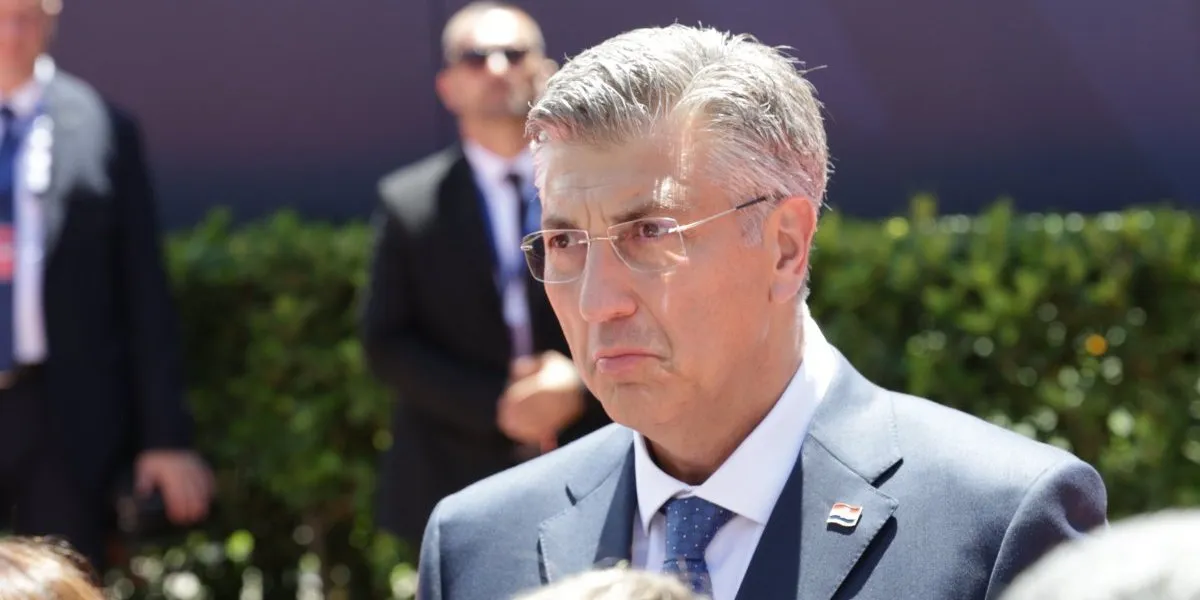
When a state invests money in a minority across the border, it's never just cultural policy - it's also strategy. Croatian prime minister Andrej Plenković openly stated that Croatia will prevent the assimilation of Croats in Serbia, and that the state „stands behind them financially."
Plenković highlighted the election of Jasna Vojnić from Serbia to the Croatian Parliament as strategically significant and confirmed support for her in the upcoming elections for the Croatian National Council in Serbia. As proof of his engagement he cited concrete investments: the „Matica" cultural center in Subotica, infrastructure projects in seven Vojvodina municipalities, and investments in kindergartens.
„All of this is a message to Croats in Serbia not to assimilate, to remain Croats, aware of themselves, to preserve their identity - and that the Croatian state stands behind them financially," he said. At first glance, a legitimate concern for compatriots across the border. But the same sentence, spoken from either side of any Balkan border, always carries a second layer.
Because the Balkans know this game by heart. Care for „one's own" across the border is real, but also a convenient tool of influence - the mother state buys loyalty, builds a network, sends the message that borders are on the map but not in people's heads. When Zagreb funds Vojvodina, it's care; when someone else does the same elsewhere, it's immediately called interference. The perspective depends on which side of the border you stand on.
In the subtext lie the unresolved border questions between Croatia and Serbia along the Danube - an old theme that regularly returns when relations grow tense. The question that remains is whether this is really protection of identity, or another round of quiet tug-of-war between two neighbors who just can't seem to close a chapter from the past.
The latest 10 news from this category
The call was about damaged furniture on a terrace. Armin Dzutovic died three days later. The internal investigation found first...
Four KLA leaders received 81 years in prison, and Albania's parliament immediately adopted a declaration calling the verdict unjust. The...
The court established responsibility for 96 killed, 303 tortured and 385 unlawfully detained. The prosecution asked for 45 years. Serbia...
Thaci and Krasniqi got 25 years each, Veseli 18, Selimi 13. The court established 385 unlawfully detained, 303 tortured and...

"If it is acceptable to the participants" - that is the entire offer. What gets negotiated is the format, not...

Thousands walked from the Rectorate to the electoral commission, and the signatures had to be queued for all weekend because...
Thousands of people under a digital clock and a banner asking for them to be found innocent. On Wednesday The...
The ruling list sailed through without a single problem, the student list was left waiting in line. Nobody banned anything...
The same firm that supplied ammunition to Ukraine for years is burning for the second time in a month. Seven...
A third attempt in three years, but this time the signatures came from the government benches too. Six MPs from...
This site uses cookies - is that okay? Learn more
Be the first to know when Metla launches something new
Leave your email and we will write when there is a new guide or something new on Metla.
