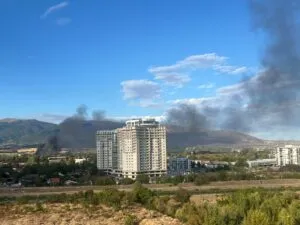
Black Smoke Over Skopje: A Paint and Varnish Warehouse Burned Inside the Old Steelworks
23.09.2026


23.09.2026
23.09.2026
23.09.2026
23.09.2026
23.09.2026
23.09.2026
23.09.2026
22.09.2026
21.09.2026

23.09.2026

23.09.2026

22.09.2026

23.09.2026

23.09.2026

23.09.2026
23.09.2026
22.09.2026

21.09.2026
23.09.2026

23.09.2026
23.09.2026
23.09.2026
23.09.2026

23.09.2026

09.03.2026

27.02.2026

19.02.2026
23.09.2026
22.09.2026

21.09.2026

23.04.2026

23.04.2026

12.04.2026

Volodymyr Zelensky arrives in Belgrade on Saturday - the first bilateral visit by a Ukrainian president to Serbia since the war began. The question everyone asked straight away was different from the agenda: does this mean Serbia is finally joining the European sanctions against Russia?
Aleksandar Vučić's answer was carefully assembled. Serbia, he said, has established its policy; it set out its positions four years ago, hasn't changed them and won't be changing them. Zelensky will say his piece. The sentence is built so that it promises nothing and refuses nothing directly either.
Three topics and one that's missing
The official agenda has three items: the European path of both countries and shared challenges, economic cooperation, and energy. Of those three, the third is the reason the whole visit is interesting. Energy is precisely where Serbia's policy of non-alignment is most expensive and hardest to sustain.
Vučić also recalled something rarely mentioned in a Western context - that Ukraine has never recognised Kosovo and has never invited representatives from Pristina to conferences it organised. That is not a footnote in Serbia's domestic ledger. It is the reason this visit can be defended at home without looking like a concession.
For us here, the mechanics are the valuable part. A state that wants into the European Union but doesn't want to accept its sanctions has to answer the question at some point instead of postponing it. So far, postponing has worked. The question is how long one visit can stand in for one answer.
Macedonia introduced the sanctions without much debate, and it didn't open a single door any faster. Serbia didn't introduce them and is still negotiating. Neither experience yields a lesson about who was smarter - it only yields the fact that conditions rarely determine outcomes. What decides is who is needed, how badly, and by whom.
The latest 10 news from this category
The question is not emotional but institutional: what does accepting European criteria mean if the verdicts of a court whose...
An economic normalisation signed in 2020 is now filed as a finished war before the General Assembly. A conflict does...
Under the trailer there is not one claim that anything in the film is untrue. There is a ledger: you...
Regimes do not spend tabloid artillery on candidates they are not worried about. Ilija Srdanović got that treatment ahead of...
The president who dissolved parliament himself is now resigning too, promising a cabinet of no more than 12 ministers and...
Eight countries, 120 million people, a motorway to Timisoara and energy connections. And one cancelled visit that says more than...
The call was about damaged furniture on a terrace. Armin Dzutovic died three days later. The internal investigation found first...
Four KLA leaders received 81 years in prison, and Albania's parliament immediately adopted a declaration calling the verdict unjust. The...
The court established responsibility for 96 killed, 303 tortured and 385 unlawfully detained. The prosecution asked for 45 years. Serbia...
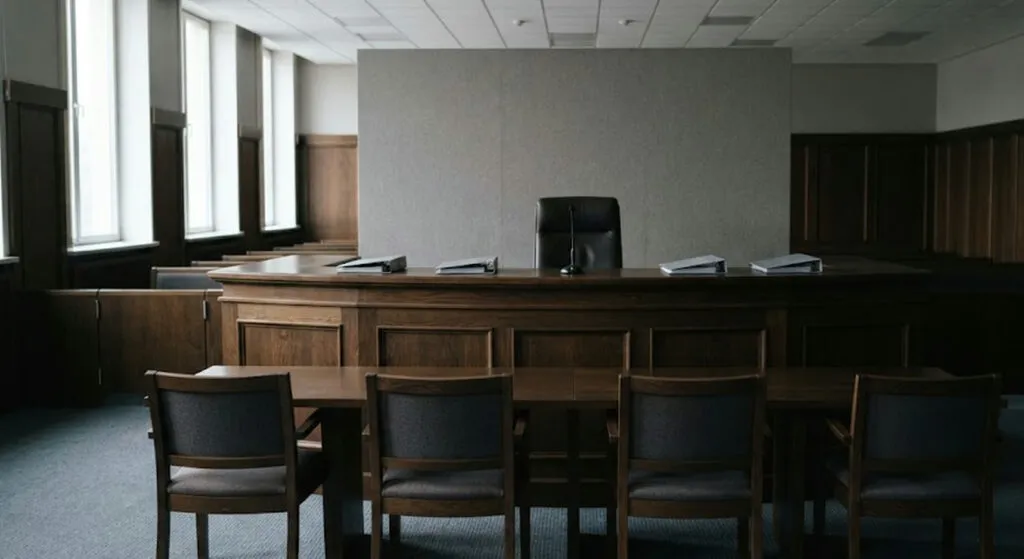
Thaci and Krasniqi got 25 years each, Veseli 18, Selimi 13. The court established 385 unlawfully detained, 303 tortured and...
This site uses cookies - is that okay? Learn more
Be the first to know when Metla launches something new
Leave your email and we will write when there is a new guide or something new on Metla.