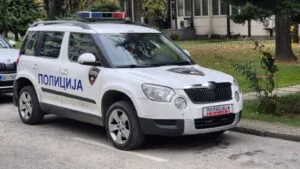
Smugglers Dragged a Police Officer With Their Vehicle at Blace: the Second Car Is What Tells You This Wasn't an Accident
14.09.2026


14.09.2026

14.09.2026
14.09.2026

14.09.2026
13.09.2026

12.09.2026
14.09.2026

14.09.2026

13.09.2026

14.09.2026

14.09.2026

14.09.2026

14.09.2026

13.09.2026

12.09.2026

14.09.2026

14.09.2026
14.09.2026

14.09.2026

14.09.2026

13.09.2026

09.03.2026

27.02.2026

19.02.2026

23.04.2026

23.04.2026

12.04.2026


Royal families across Europe have complained for decades that too many eyes follow them. This time the problem is the reverse: someone watched them very closely, took the names and the faces, and started asking for money in their name. On 9 September the office of the Greek royal family issued a statement that reads like a self-defence manual rather than a palace announcement.
The message is short and leaves no room for interpretation: Pavlos of Greece and members of the former Greek royal family do not take part in financial assistance procedures by telephone, video call or internet, and never ask for either money or banking details. When an institution has to write precisely that, it means somebody has already tried.
The scammers' method is not new and requires no technological feat. You open a profile, usually on Facebook, upload genuine photographs that are available everywhere, and wait for someone to believe it. In 2024 a 74-year-old man reported that someone posing as Prince Pavlos had offered him membership of a club with special privileges, in exchange for money and personal details. In 2025 Princess Marie-Chantal discovered a fake Facebook account using her name and her photographs.
The palace's response was to publish an official list of verified accounts. That is an admission that defending against this kind of fraud is no longer the police's job, but the job of the victim whose identity is being stolen. Who is actually supposed to delete these profiles, and who ends up doing it?
Spain has the same story under a different name. In January 2026 the "Princess of Asturias" Foundation warned about scams in which someone posed as Princess Leonor, in wording that leaves no doubt: her highness under no circumstances requests, offers or manages monetary contributions. In July the same foundation reported a far more polished fraud, offering supposed VIP places near the royal family at the awards ceremony, sent via WhatsApp and email, with PDF documents that looked official.
That is the part worth holding on to. These are not letters full of spelling mistakes from a prince in exile. These are documents that look right, with the logos in the correct place, arriving through a communication channel the victim already uses every day. The difference between real and fake came down to whether the recipient knows where to check.
And that is where the story stops being about crowns. If an institution with a palace apparatus, a legal department and the ability to publish an official list still has to publicly beg people not to send money, what chance does an ordinary person have when they get the same message bearing the name of a bank, a municipality or a debt collection firm? Only someone with people to write it for them gets a list of verified accounts.
The latest 10 news from this category
A country that was Europe's byword for stability for decades now has a parliament split into two blocs by a...
Sixteen years in power, defeat at a regular election, five months of quiet - and now the election result is...

Nobody said they do not trust Washington. Everyone is behaving as though they do not - gold, weapons, the cloud...
The warning reached the president three years before 9/11. The problem was not a lack of information, but that nobody...
In 1976 tradition demanded the future king choose a bride with no past. Thirty years later that same king married...

Five institutions declined to comment on damaged infrastructure the global oil market depends on. When that many addresses have nothing...
One unidentified object on the tracks, 180 passengers on board, 140 firefighters on site. The difference between railways is not...
We are preparing for war so that it does not come, Lukashenko says. Put the neighbours' numbers side by side...

Three years ago the Polish army waited twenty days for satellite images, today it gets them in minutes. And one...
At 22 she had to become Norway's first lady because her mother had died. At 29 she married a divorced...
This site uses cookies - is that okay? Learn more
Be the first to know when Metla launches something new
Leave your email and we will write when there is a new guide or something new on Metla.