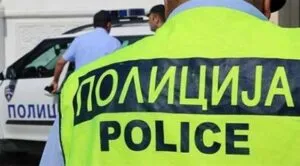
Smugglers Dragged a Police Officer With Their Vehicle at Blace: the Second Car Is What Tells You This Wasn't an Accident
14.09.2026


14.09.2026

14.09.2026
14.09.2026

14.09.2026
13.09.2026

12.09.2026

14.09.2026

14.09.2026

13.09.2026

14.09.2026

14.09.2026

14.09.2026

14.09.2026
13.09.2026

12.09.2026

14.09.2026

14.09.2026

14.09.2026

14.09.2026

14.09.2026

13.09.2026

09.03.2026

27.02.2026

19.02.2026

23.04.2026

23.04.2026

12.04.2026

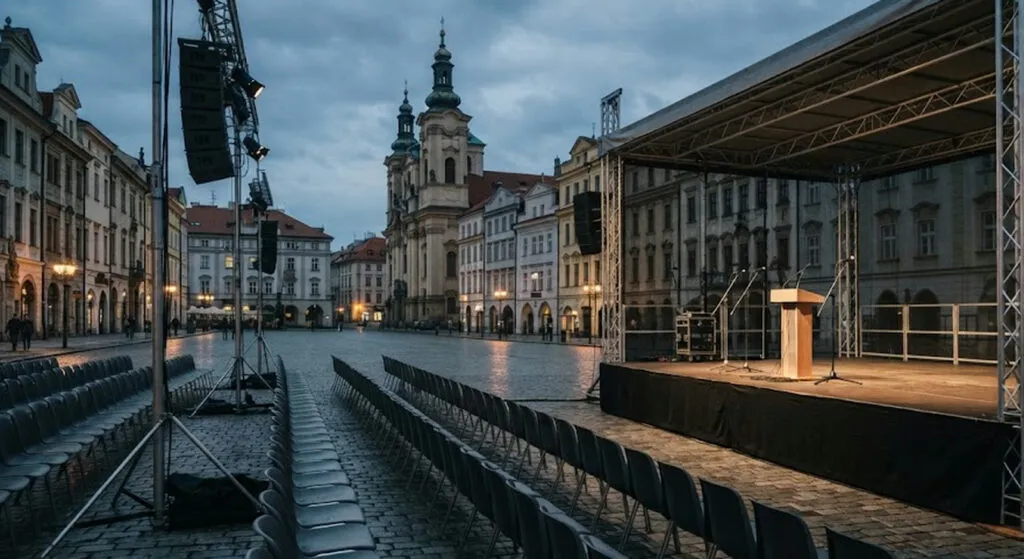
Viktor Orban was prime minister of Hungary for sixteen years. On 12 April this year he lost the election to Peter Magyar and his party "Tisza", and a new government was formed in May. Since then the former prime minister has been relatively quiet. That, he says himself, now ends.
"We were patient, perhaps even more than we should have been. And we were fair, given how they behaved, perhaps even more than we should have been... Five months have passed. That phase is over. That is it, the end. It cannot go on like this. The time has come for national resistance", Orban said at the opening of the political season in the town of Kecs.
Five months of patience - or five months of preparation?
The phrasing is carefully chosen. "National resistance" is not a term used for parliamentary opposition. It is vocabulary that presents the government as something foreign, rather than as a government elected five months ago by a majority of votes. According to Orban, right-wing forces in Hungary want the country to be sovereign, while the "Tisza" government wants to turn it into a colony.
It is worth pausing here. A man who held power for sixteen years, and who lost it at a regular election, is now publicly saying that the period of accepting the result - because that is what "we were patient and fair" means - has an expiry date. Five months. And that this date has just passed.
Why this concerns us
Hungary is not a distant subject for this region. It is an EU member state that spent years using its position as a brake - on sanctions, on the budget, on enlargement. Orban's government was also one of the loudest partners of certain political establishments in the Western Balkans. A change of power in Budapest directly changes the arithmetic in Brussels, and every attempt to call that change into question comes back around to us.
The question is not whether Orban has the right to lead an opposition - he does, that is normal politics. The question is what it means when an electoral defeat is reframed as an occupation requiring "resistance". The Balkans know that sentence far too well, and know how long it can last.
This is the start of a campaign, not of a speech
Opening a political season with a speech about resistance is not an emotional outburst. It is a starting point. Orban was not speaking like a man stepping back, but like a man counting down to the next election and already setting the frame he will fight it in.
For Magyar, who has governed for a little over four months, it means the honeymoon ended before it began. For the rest of Europe, it means Hungary will be a topic again. And for us - another reminder that in this part of the world political reckonings rarely end on election day.
The latest 10 news from this category
A country that was Europe's byword for stability for decades now has a parliament split into two blocs by a...

When an institution with a legal department and a palace apparatus has to publish a list of its verified accounts,...

Nobody said they do not trust Washington. Everyone is behaving as though they do not - gold, weapons, the cloud...
The warning reached the president three years before 9/11. The problem was not a lack of information, but that nobody...
In 1976 tradition demanded the future king choose a bride with no past. Thirty years later that same king married...
Five institutions declined to comment on damaged infrastructure the global oil market depends on. When that many addresses have nothing...
One unidentified object on the tracks, 180 passengers on board, 140 firefighters on site. The difference between railways is not...
We are preparing for war so that it does not come, Lukashenko says. Put the neighbours' numbers side by side...

Three years ago the Polish army waited twenty days for satellite images, today it gets them in minutes. And one...
At 22 she had to become Norway's first lady because her mother had died. At 29 she married a divorced...
This site uses cookies - is that okay? Learn more
Be the first to know when Metla launches something new
Leave your email and we will write when there is a new guide or something new on Metla.