


Kratovo man stabs police officer mid-intervention: prosecutors want the 40-year-old detained
15.09.2026


15.09.2026

15.09.2026

15.09.2026

15.09.2026

15.09.2026
15.09.2026

15.09.2026

14.09.2026

13.09.2026

15.09.2026

15.09.2026

14.09.2026

15.09.2026

15.09.2026

15.09.2026

15.09.2026

14.09.2026

13.09.2026

15.09.2026

15.09.2026

15.09.2026

15.09.2026

15.09.2026

14.09.2026

09.03.2026

27.02.2026

19.02.2026

14.09.2026

14.09.2026

13.09.2026

23.04.2026

23.04.2026

12.04.2026

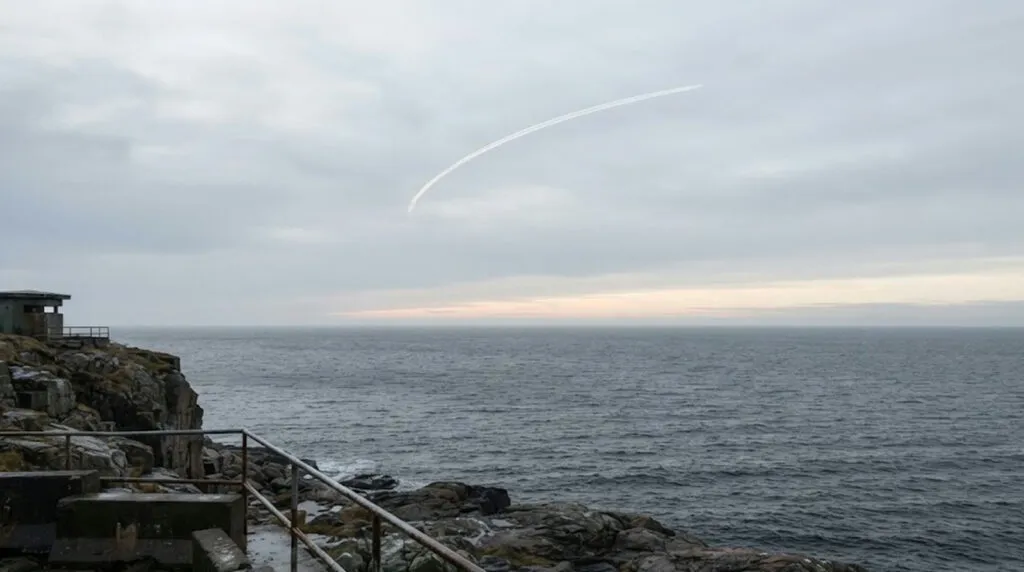
One day after the end of the five-day joint exercise by the US, South Korea and Japan, North Korea fired several unidentified short-range ballistic missiles towards the East Sea. The timing is not a coincidence but a message written in the only language Pyongyang is still confident gets heard.
According to data from South Korea's Joint Chiefs of Staff, the missiles were launched from the Wonsan area on the east coast. They travelled around 250 kilometres before falling into waters east of the Korean Peninsula. The South Korean military did not immediately release precise details on their type. Seoul stepped up surveillance, while Washington and Tokyo are exchanging data on the launch.
The drill that summoned the answer
The "Freedom Edge" exercise ran for five days and was aimed at improving the joint capacity to respond to North Korean nuclear and missile threats. Pyongyang routinely labels such activities a provocation and preparation for attack. So: one side practises defence, the other reads it as preparation for attack and replies with missiles. Every step by one is proof to the other that it was right to be afraid. The logic is closed and leads nowhere.
This is North Korea's first ballistic missile launch in about three weeks. The previous month Pyongyang carried out more than ten short-range missile launches, while the army was ordered to be on full alert for the duration of the US-South Korean exercises.
Trump scaled back the drills. Kim did not scale back the pressure
Last month US President Donald Trump ordered a significant reduction in the scale of the major US-South Korean military exercises, saying he wanted to reduce what Pyongyang regards as hostile military activity. At the same time he said he expects another meeting with Kim Jong Un later this year.
Pyongyang rejected the idea that scaling back exercises alone amounts to a sufficient change in American policy. The latest launch says so without diplomatic translation: the concession was received, registered and judged insufficient. When a step you gave away comes back as a missile, the next negotiator gets far less room than their predecessor had.
Has a one-sided concession ever actually bought anything? From this angle you can see what it bought: three weeks of silence, and then an answer from Wonsan.
The latest 10 news from this category

The sanctions list got a seven-day extension instead of one measured in months, a move diplomats themselves call unprecedented. Two...

Switzerland offered a table for talks on Ukraine, Moscow replied that the table stopped being neutral once Bern adopted EU...

The will says one thing, a committee of twenty-one men decided another. The queen mother says the army pulled the...
A country that was Europe's byword for stability for decades now has a parliament split into two blocs by a...

Sixteen years in power, defeat at a regular election, five months of quiet - and now the election result is...

When an institution with a legal department and a palace apparatus has to publish a list of its verified accounts,...

Nobody said they do not trust Washington. Everyone is behaving as though they do not - gold, weapons, the cloud...

The warning reached the president three years before 9/11. The problem was not a lack of information, but that nobody...

In 1976 tradition demanded the future king choose a bride with no past. Thirty years later that same king married...

Five institutions declined to comment on damaged infrastructure the global oil market depends on. When that many addresses have nothing...
This site uses cookies - is that okay? Learn more
Be the first to know when Metla launches something new
Leave your email and we will write when there is a new guide or something new on Metla.
