Six Men Brawled Outside the Police Station in Kočani: Now They'll Also Check What the Officers Were Doing
17.08.2026


17.08.2026
17.08.2026

17.08.2026

17.08.2026

17.08.2026

17.08.2026

17.08.2026

16.08.2026

15.08.2026

17.08.2026

17.08.2026

16.08.2026

17.08.2026

17.08.2026

17.08.2026

17.08.2026

16.08.2026

15.08.2026
17.08.2026

17.08.2026
17.08.2026
17.08.2026

17.08.2026

16.08.2026

09.03.2026

27.02.2026

19.02.2026
16.08.2026
15.08.2026
14.08.2026

23.04.2026

23.04.2026

12.04.2026
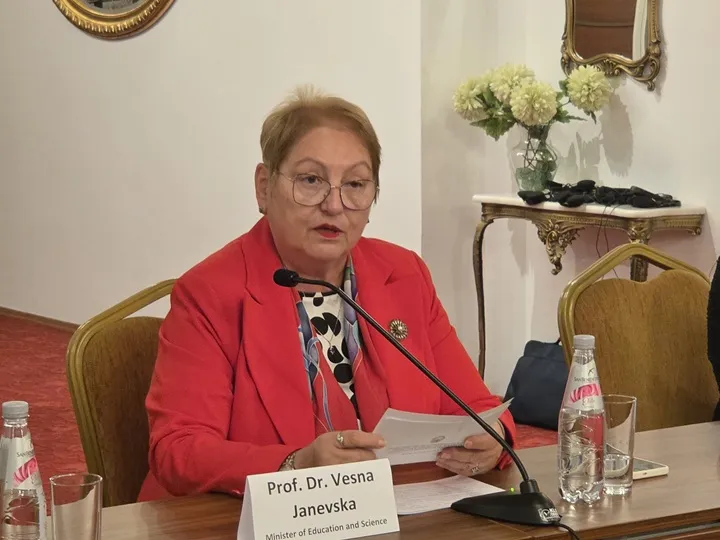
The opposition claims that two inspectors from the State Education Inspectorate are running a campaign against school heads who refuse to be party loyalists. The ministry replies that this is an attempt to manipulate the public. Standing between the two statements is an institution that has not once spoken for itself.
The accusation
Jovanče Manaskov of the SDSM education commission named names at a press conference: Mirjana Naskovska and Toni Iliev. According to his claims, the two of them are carrying out extraordinary inspections in several schools based on complaints with similar or identical wording, while at the same time being promoted or rewarded.
„This process of pressure and removal of unsuitable head teachers is also under way at the Pance Arsovski secondary school in Skopje, where these exact two inspectors are operating,” Manaskov claims. He added that some head teachers have already challenged their dismissal orders, that part of the proceedings are before second-instance bodies, and that the Administrative Court has in some cases intervened and sent the case back for a fresh decision, with rulings on the merits in favour of dismissed head teachers.
The opposition asked for a review of how the inspectors operate, of the criteria for their promotions and extra allowances, and of how cases are assigned. „Schools are not party headquarters. Head teachers are not party loyalists,” Manaskov said.
The response
The Ministry of Education and Science responds that the claim about inspections being used for political score-settling and the removal of unsuitable head teachers is an attempt to manipulate the public. Their main argument is structural: the composition of the State Education Inspectorate is identical to what it was when SDSM ran the institution, yet nobody named those same inspectors back then.
The ministry points out that the inspectorate's core legal remit is to carry out regular checks on the work of educational institutions and to act on complaints and initiatives from citizens, which are assigned according to available staffing. Where irregularities are found, measures follow.
The ministry also steered the discussion back to its own figures: over 70 million euros invested in education infrastructure in two years, new curricula, textbooks in every subject available on 1 September, teacher salaries up by more than 20 percent and new legislation aligned with European law.
What is missing
Both sides are talking about the inspectorate. The inspectorate is silent.
And the questions only it can answer are entirely concrete and require no political judgement: how many extraordinary inspections were carried out over the past year, on how many complaints, how cases are distributed among inspectors, and how many dismissal orders ended up challenged before the Administrative Court. Those are figures from its own records, not an opinion.
When an institution leaves the answer to two political parties, it does not stay neutral - it becomes terrain. And the next time it sends an inspector into a school, the head teacher will not see oversight, but politics. That is exactly the price of the silence.
The latest 10 news from this category
Three people are in custody, the investigation is ongoing, and the press releases revolve around who failed to mention whom....
The fire near Ramni Gaber was caused by a spark from a cable, according to initial information. Maintaining overhead lines...
The country could not manage a joint anniversary for the document that stopped a war. Mickoski marked it on Facebook.
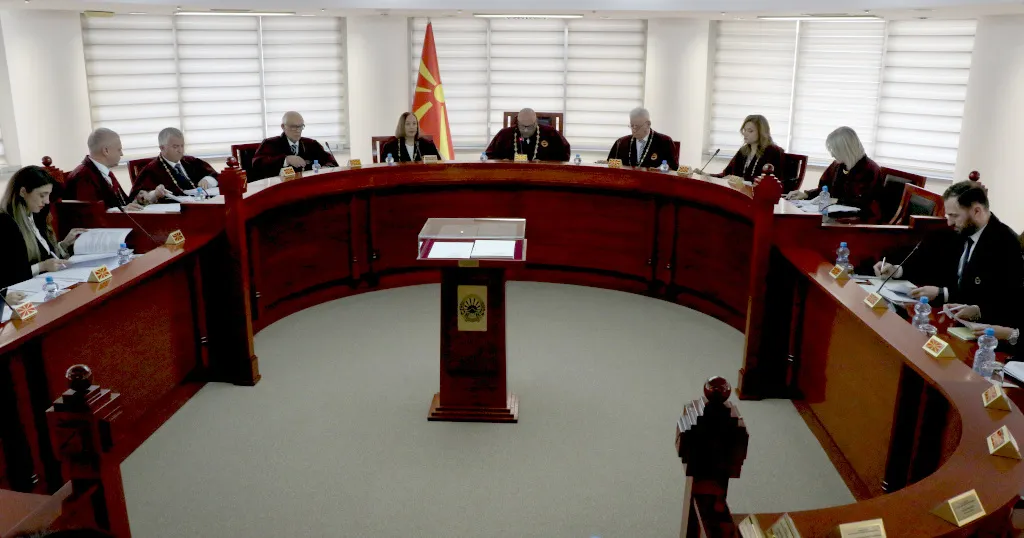
A 2025 ruling simply was not enforced. When the country's top judicial bodies trade press releases, the citizen who won...
Bulgaria wants a minority written into the constitution, Macedonia wants the Strasbourg judgments respected. The question left unanswered is what...
Both sides have a solid legal argument. While they trade statements, the case that started the whole argument sits in...
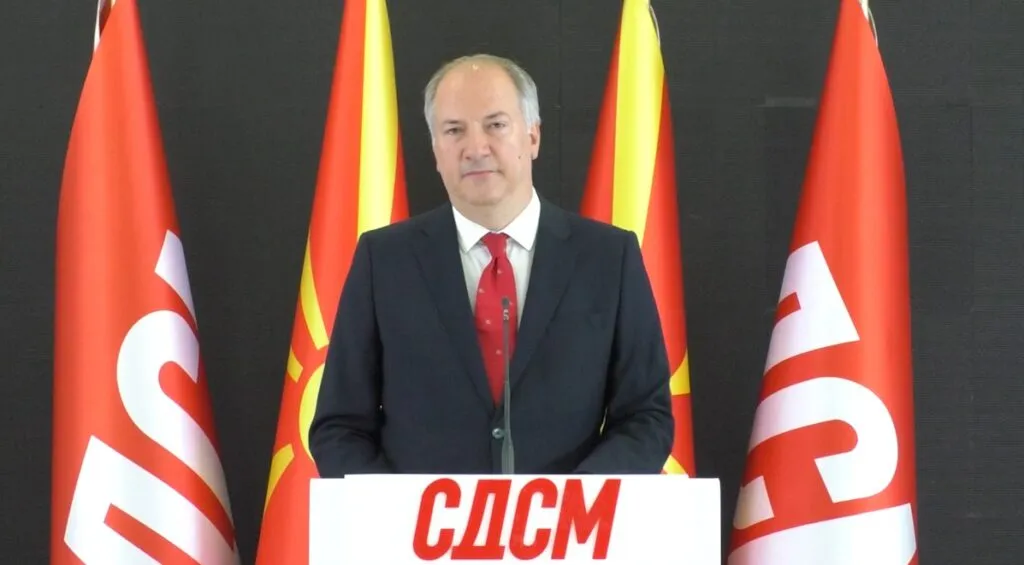
The law provides for liability even when a flag is displayed wrongly "by mistake or ignorance". Three pieces of data...
After 25 years the DUI leader announced that his party won't let him leave. And called for a vote that...
The Constitutional Court says its decision wasn't enforced. The judges say the proceedings are ongoing and the pressure is impermissible....
The election commission adopted the timetable after the sudden death of Jovica Ilievski, who won last year by a narrow...
This site uses cookies - is that okay? Learn more
Be the first to know when Metla launches something new
Leave your email and we will write when there is a new guide or something new on Metla.