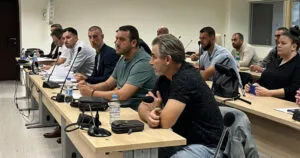
"That's not my job": the trial of the 13 Puls police officers restarted from scratch, and witnesses describe help being refused
22.09.2026


22.09.2026
22.09.2026
22.09.2026
22.09.2026
22.09.2026

22.09.2026

22.09.2026

21.09.2026

20.09.2026

22.09.2026

22.09.2026

21.09.2026
22.09.2026

22.09.2026

22.09.2026

22.09.2026

21.09.2026

20.09.2026

22.09.2026

22.09.2026

22.09.2026
22.09.2026

22.09.2026

22.09.2026

09.03.2026

27.02.2026

19.02.2026

22.09.2026

21.09.2026
21.09.2026

23.04.2026

23.04.2026

12.04.2026


Hungary's new prime minister, Peter Magyar, has refused to sign the document for the severance payments to ministers in Viktor Orban's government. Around one billion forint (about 2.6 million euros) that, under a law Orban himself put in place, would have to be paid out - will now be redirected to humanitarian causes. It's a political decision, and it's a message for a new era.
Magyar addressed Orban directly: "Viktor Orban, who on paper owns virtually nothing, would be entitled to 38 million forint (105,000 euros) under the law he himself introduced." A sentence that connects two Hungaries - the one in which Orban ruled for two decades, and the one in which open talk about corruption now has a place in the prime minister's office.
Magyar called the payout "for the looting of our country" - and announced that Orban will not get it. That's a bold posture for a new prime minister - but Magyar knows he has the political capital for it. In the previous election, support for Orban collapsed after years of public criticism that he was declaring minimal personal assets while those close to him built fortunes.
The most provocative example: Lorinc Mesaroš, a childhood friend of Orban and a former gas installer. Today he is the richest man in Hungary, with a fortune of 3.1 billion euros, built primarily through state contracts. Financial Times and political analysts describe that model of governance as "neo-feudal clientelism" - public funds flow to the prime minister's inner circle.
Magyar has also asked the state secretaries to declare publicly whether they will give up their severance or donate it to humanitarian causes. That's political pressure dressed in ethical clothing - and many have already given it up without waiting to be asked twice.
The result? Not quite what Magyar planned. Orban later donated his own 105,000 euros to an orphanage in Zakarpattia - the Ukrainian region with a significant ethnic Hungarian community. He turned the indictment of "looting" into a humanitarian gesture. And that's what makes politics with Orban complicated even when there are credible alternatives.
There's a lesson here for the Balkans. When a new administration arrives with the message "we are not paying stolen money back to the thieves," that's a good start. But right afterwards comes the moment when the old administration responds with a gesture - and the political picture blurs again. That's the test for Magyar, and the test for everyone watching Hungary as a training case for how to deliver real reform without resorting to the old practices.
The latest 10 news from this category
Washington, Copenhagen and Nuuk are signing off on a military presence on an island of 56,000 people - and the...

Phones in Krāslava rang by themselves, the fighters took off, and what exactly triggered the alert - nobody is saying....
In Mecklenburg the CDU finished on 4.9 percent and, for the first time in the history of the Federal Republic,...

Tisza took 16 years of power off Fidesz and won 141 of 199 parliamentary seats. Orbán now says Brussels is...
With 75 percent of protocols counted, the governing party leads in 208 of the 225 single-mandate districts. A parliament of...
He never sat on the throne, and the emirate is lowering its flags for ten days. Sometimes the surname says...
Three options on the table in Washington - military pressure, economic strangulation or a deal - and the president frames...
The party of Adenauer and Kohl slid to the electoral threshold in Mecklenburg, the AfD is already demanding the chancellor's...
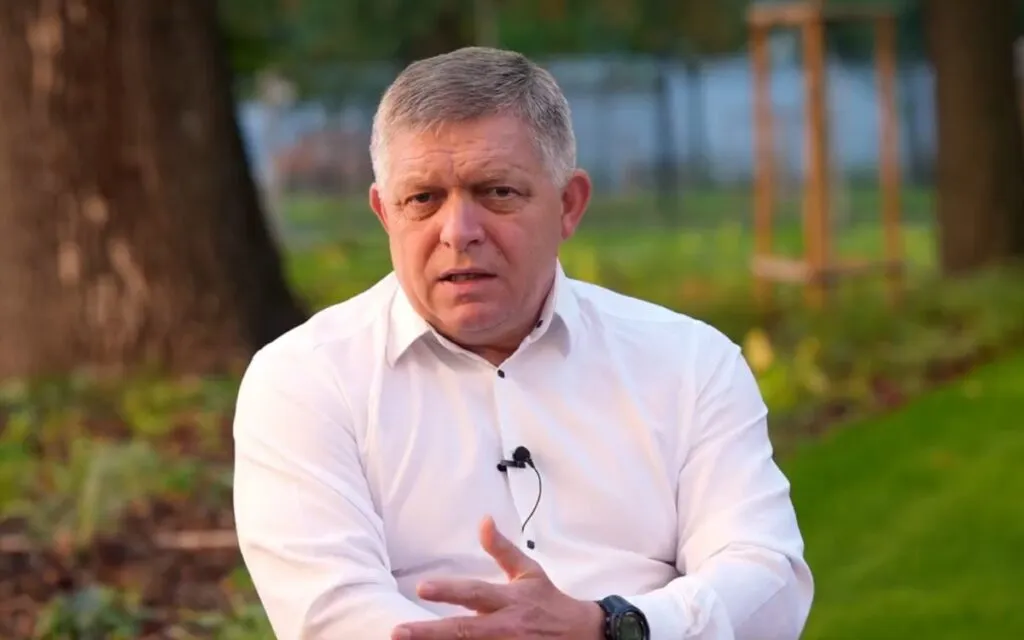
Two prime ministers in the same Union, the same month, completely opposite diagnoses of who is provoking whom. There is...

A broken aircraft in a field usually ends up in a police note. This one ended up with federal investigators,...
This site uses cookies - is that okay? Learn more
Be the first to know when Metla launches something new
Leave your email and we will write when there is a new guide or something new on Metla.