
Six reports in 24 hours: violence in the Macedonian family runs on a schedule, and the institutions arrive last
29.08.2026


29.08.2026

29.08.2026
29.08.2026

29.08.2026
29.08.2026

29.08.2026
29.08.2026
28.08.2026
27.08.2026

29.08.2026

29.08.2026

28.08.2026

29.08.2026

28.08.2026

27.08.2026

29.08.2026

29.08.2026

29.08.2026

29.08.2026

29.08.2026

28.08.2026

09.03.2026

27.02.2026

19.02.2026

29.08.2026

28.08.2026
27.08.2026

23.04.2026

23.04.2026

12.04.2026
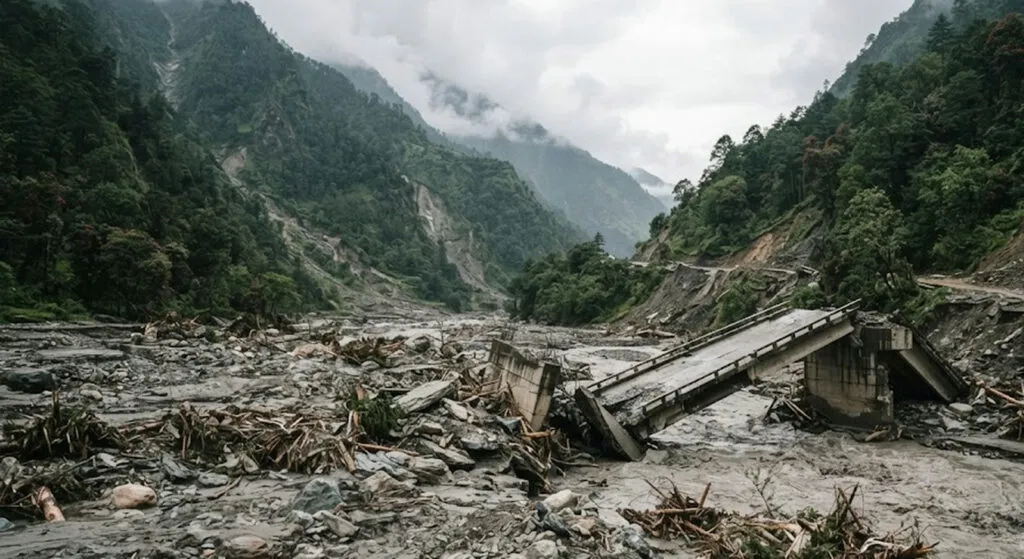
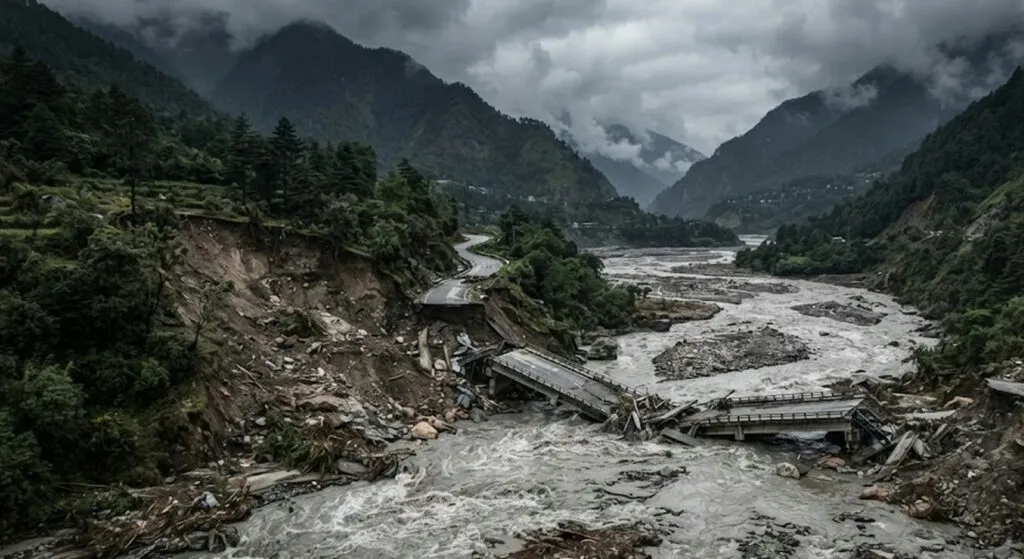
The death toll from the flash flooding in Nepal has reached 469, the Nepalese police announced. On the same day the foreign ministry in Kathmandu said foreign assistance was not needed. "The offer of help is natural. Our security agencies are conducting search and rescue operations. For now we do not need such assistance", spokesman Lok Bahadur Chhetri said.
In the same country, at the same moment, more than a thousand people are being searched for - 650 of them foreigners, according to Nepal's interior minister Sudhan Gurung. The number of missing local residents is not known at all. The Red Cross said entire villages have been destroyed and numerous communities cut off by collapsed bridges and impassable roads, and added a sentence worth more than every government statement combined: "We still do not have a full picture of this disaster".
When a state says it needs no help
Two contradictory sentences meet here. The rescue services do not have a full picture, do not have access to part of the terrain, do not even have a count of their own missing citizens - and the ministry says at the same time that foreign teams are not needed.
One of those two sentences cannot be true. Either Nepal has the situation under control, or it does not know how many people it is looking for. Either way, refusing help is not a logistical decision but a political one.
When a state turns down what is being offered, it is usually not about capacity. It is about what a foreign team would see once it got there: how many bridges fell, how they were built, who signed them off, why the warnings did not reach the villages in time. Rescue crews pull people out, but they also photograph the rubble.
The ice that broke away
The cause of the disaster is exactly what climatologists have been forecasting for the Himalayas for years. An enormous mass of ice, mud and rock collapsed into a mountain river and set off the torrent that wiped out the towns downstream. This was not ordinary rainfall rising - this was a glacier giving way.
And the story is not over. Nepal and China warned on Thursday of further flooding, because two lakes formed on either side of their border are threatening to burst onto the same region that has already been destroyed. So while the dead from the first wave are being counted, the second one is being waited for.
The Balkans have their own unread warnings
From here it is easy to see Nepal as a distant mountain story. It is not as distant as it looks. Every summer this side of Europe gets the same lesson in a smaller format - torrents that carry away bridges built half a century ago, villages reachable by a single road, and reports that later get lost somewhere. The difference is in the number, not in the mechanism.
And the mechanism is familiar: infrastructure built for a former climate, warnings with nobody to carry them to the last village, and institutions that talk after the disaster about how well they responded.
Nepal will count its dead itself, as it announced. The question that remains is whether anyone will count how many of those 469 people could have been warned.
The latest 10 news from this category
It was hit inside the economic zone of a NATO and EU member, not in Ukrainian waters. Three questions remain...

The German manufacturer published the batch number, the date and the right to a refund without a receipt. How often...

Europe's longest-reigning monarch has died, and the succession went through without a single day's gap. We know rather different transfers...
The first visit by a CIA director to Russia since 2021. Intelligence assessments say Moscow does not feel cornered -...
The Pentagon is shifting money meant for wages and maintenance into combat operations. When an army has to choose between...
He reigned for 35 years and modernised the monarchy. Support fell from 72 to 54 percent, but the criticism was...

Ratcliffe landed in Moscow unannounced, the content stayed secret, and Trump called the visit semi-routine - then immediately added that...
In 1968 he married a woman without royal blood and changed the equation for the whole of Europe. His death...
Seismographs read it as an earthquake. It was not. One hundred and fifteen kilometres later, 80 bridges are gone, and...

Kyiv was reportedly asked to hold fire for a few hours so the American aircraft could pass. That is not...
This site uses cookies - is that okay? Learn more
Be the first to know when Metla launches something new
Leave your email and we will write when there is a new guide or something new on Metla.