Twenty-one fires in a single day: the record nobody wanted to break
13.08.2026


13.08.2026

13.08.2026

13.08.2026
13.08.2026
12.08.2026

12.08.2026

13.08.2026

13.08.2026

12.08.2026

13.08.2026

13.08.2026

13.08.2026

13.08.2026

12.08.2026

11.08.2026

13.08.2026

13.08.2026

13.08.2026

13.08.2026

13.08.2026

12.08.2026

09.03.2026

27.02.2026

19.02.2026

13.08.2026
12.08.2026
11.08.2026

23.04.2026

23.04.2026

12.04.2026
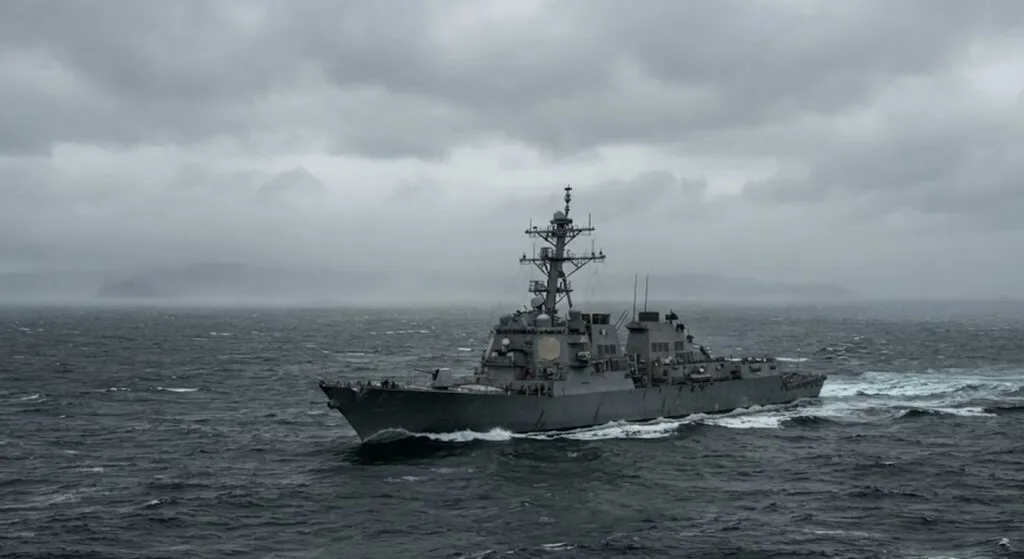
Vladimir Putin used a visit to the missile cruiser Varyag for a message that was not addressed to the crew. Watching the closing phase of the Russian Pacific Fleet's exercises, he said the potential for collision in the Pacific is growing.
„We see that, unfortunately, the potential for conflict here is growing. NATO is infiltrating here, new military-political blocs are being created, and new weapons systems are being deployed or planned that pose a threat to our country too”, the Russian president said.
The formulation is familiar. The same argument, with the place names swapped out, has been coming from Moscow since 2014: somebody else is moving closer, Russia is only reacting. The difference is that this time the stage is the Pacific, not Europe.
The exercises began on 4 August and cover the defence of maritime borders, island zones and coastal areas of the Russian Far East. In the waters of the Sea of Japan, the Sea of Okhotsk and the northwest Pacific, around 60 ships, submarines and support vessels, 30 aircraft, helicopters and drones, and more than 13,000 troops are taking part.
Thirteen thousand troops on an exercise explained as defensive. The figure alone says which direction the region is moving in.
Japan, mentioned in a particular tone
The most interesting part of the statement concerned Tokyo. Putin stressed that Russia is not threatening Japan and has no territorial or other claims, then immediately added that Japan, for the first time in its latest military doctrine documents, has named Russia as one of the main sources of threat.
„I would like to underline that we are not threatening Japan. We have absolutely no complaints”, he said.
The sentence „we have no territorial claims” spoken in the context of Moscow-Tokyo relations carries its own weight, since the dispute over the Kuril Islands has run since 1945 and is the reason the two countries still have no signed peace treaty from the Second World War.
Putin also warned that Moscow notes attempts by authorities in individual countries to restrict the movement of Russian ships, and that Russia will respond in kind to any attempt to seize its merchant vessels, regardless of which waters it happens in.
At the end came the offer: Russia is ready to cooperate in the Arctic, including on use of the Northern Sea Route, in accordance with international maritime law. Invoking international law in the same speech that announces retaliation regardless of whose waters is a contrast worth noting.
The Balkans knows this rhetorical form by heart. First you explain that you have no intentions, then you count the ships. The only difference is how far away the sea is.
The latest 10 news from this category
Moscow called the seizure of tankers piracy, then promised to do the same. When the rules at sea are written...
She earned 25 euros per win and cleaned graves to support her family. The document that opened the way for...
In one month the agency moved its estimate from 800,000 to 1.8 million barrels a day of shortfall. The same...
The appeals court refused: there is a high probability he would commit new offences. The crown princess's son has no...
The only country in the world where the ban is official, in writing. Five years is almost an entire secondary...
They abolished his post with a transitional clause, then introduced a requirement tailored so that only he could not meet...
A Damascus court sentenced Bashar al-Assad to death for war crimes. A verdict handed down in absentia is a document,...

The Union approved the amount, and there is still no document setting out how much falls on each member state....
Eighteen years without diplomatic relations and hope in political changes nobody specifies. Frozen conflicts do not get resolved, people get...
The man who knew the names, the connections and the money of one side in a divided Libya has been...
This site uses cookies - is that okay? Learn more
Be the first to know when Metla launches something new
Leave your email and we will write when there is a new guide or something new on Metla.