Twenty-one fires in a single day: the record nobody wanted to break
13.08.2026


13.08.2026

13.08.2026

13.08.2026

13.08.2026
12.08.2026

12.08.2026

13.08.2026

13.08.2026

12.08.2026

13.08.2026

13.08.2026

13.08.2026

13.08.2026

12.08.2026

11.08.2026

13.08.2026

13.08.2026

13.08.2026

13.08.2026

13.08.2026

12.08.2026

09.03.2026

27.02.2026

19.02.2026

13.08.2026
12.08.2026
11.08.2026

23.04.2026

23.04.2026

12.04.2026
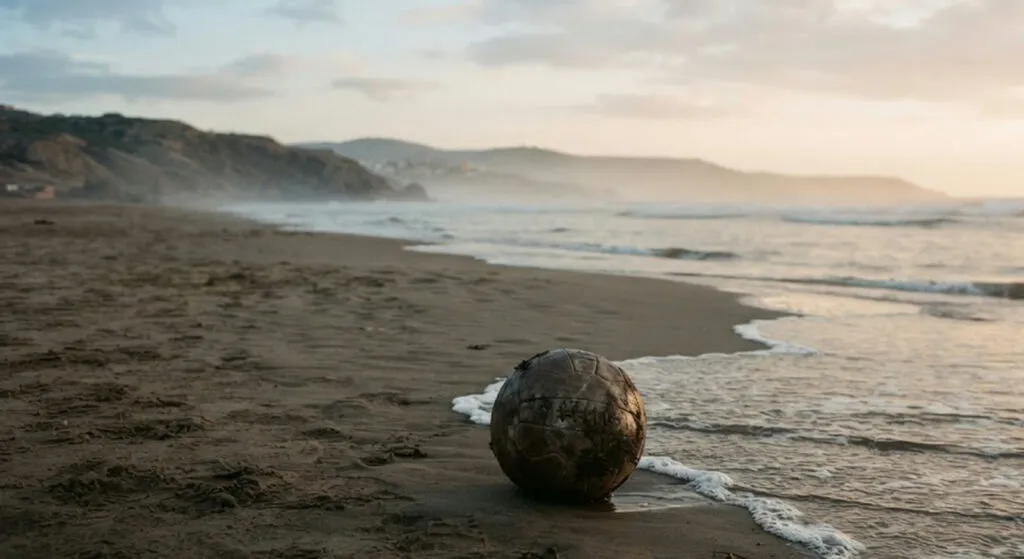
On the same day Faten Ben Omar El Azizi drowned trying to swim to Ceuta, her mother received a phone call from a Spanish official. Her daughter's visa had been approved.
Faten was 26 and played football for Maghreb Atlético Tetouan, in Morocco's regional women's league. She died on 30 July, among some 150 people who tried to cross the border into the Spanish enclave that day. According to the migrant rights organisation Caminando Fronteras, at least 141 people died attempting the crossing during July - drowned, or crushed at the land border. Most of them were under 35.
Twenty-five euros per win
Football did not pay a living. Faten took around 25 euros for a win, and for a defeat - nothing. Her coach recounts that she loved training: Tuesdays on the pitch, Thursdays on the beach near Tetouan.
To support her family she also worked at the oldest cemetery in Tetouan - cleaning graves and selling visitors sprigs of basil, which in Muslim tradition are tied to a blessing for the dead. Her mother Jamila says the thing that needs no further explanation: she dreamed of reaching Europe through football.
The figure that explains the border
Nearly 40 percent of Moroccans aged 15 to 24 were unemployed last year. The minimum wage in the private sector runs at around 300 euros a month. The country saw its biggest protests since the Arab Spring of 2011, with one demand that needs little interpretation: money for healthcare and education instead of expensive stadiums for the 2030 World Cup, which Morocco will co-host with Spain and Portugal.
A state that builds stadiums for a tournament the world will watch for three weeks, while its twenty-somethings walk into the sea because nothing on land is waiting for them - is not producing accidents. It is producing a predictable outcome.
What was left
Jamila never knew her daughter had applied for a visa at all. She suspects Faten tried through unofficial channels and did not expect it to be approved - which makes the decision to make the crossing even harder to explain.
She then learned that her other two children had set out on the same route. The eldest son reached Ceuta and called. For the 14-year-old daughter, believed to have entered Spanish territory, there is still no word. The sentence the mother ends on needs no comment: now I am alone, without my children.
Faten's visa was approved. The document existed. It only arrived a day after the sea did - and that is the whole difference between a procedure and a life.
The latest 10 news from this category
Moscow called the seizure of tankers piracy, then promised to do the same. When the rules at sea are written...
In one month the agency moved its estimate from 800,000 to 1.8 million barrels a day of shortfall. The same...
The Russian president claims NATO is infiltrating the Pacific and that the potential for collision is growing. The same speech...

The appeals court refused: there is a high probability he would commit new offences. The crown princess's son has no...

The only country in the world where the ban is official, in writing. Five years is almost an entire secondary...

They abolished his post with a transitional clause, then introduced a requirement tailored so that only he could not meet...
A Damascus court sentenced Bashar al-Assad to death for war crimes. A verdict handed down in absentia is a document,...

The Union approved the amount, and there is still no document setting out how much falls on each member state....
Eighteen years without diplomatic relations and hope in political changes nobody specifies. Frozen conflicts do not get resolved, people get...
The man who knew the names, the connections and the money of one side in a divided Libya has been...
This site uses cookies - is that okay? Learn more
Be the first to know when Metla launches something new
Leave your email and we will write when there is a new guide or something new on Metla.