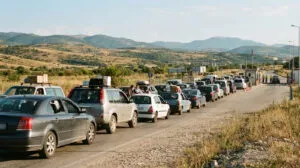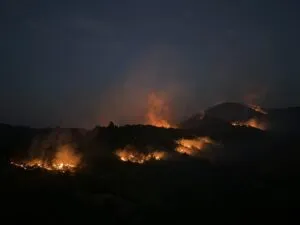
Fifty-two fires in a single day: the flames reached houses in Bogomila, and the whole country has three air tractors
14.08.2026


14.08.2026

14.08.2026

14.08.2026

14.08.2026

14.08.2026

14.08.2026

14.08.2026
14.08.2026

14.08.2026

14.08.2026

14.08.2026

13.08.2026

14.08.2026

14.08.2026

14.08.2026

14.08.2026

13.08.2026

12.08.2026

14.08.2026

14.08.2026

14.08.2026

14.08.2026

14.08.2026

13.08.2026

09.03.2026

27.02.2026

19.02.2026

14.08.2026

13.08.2026

12.08.2026

23.04.2026

23.04.2026

12.04.2026

Moscow has a new problem in the Balkans and it is called defence cooperation. Yuri Pilipson, director of the South-East Europe department at the Russian foreign ministry, described the trilateral declaration between Croatia, Albania and Kosovo in an interview with TASS as a „military quasi-bloc” destabilising the region.
The document was signed in Tirana in March 2025 by the defence ministers of the three countries. It provides for cooperation in the defence industry, joint procurement, interoperability of forces and data sharing. What it does not provide for is an alliance - there is no collective defence clause, no obligation for anyone to come to anyone's aid. Legally speaking, it is a cooperation framework, not Article 5.
When cooperation becomes an „axis”
Pilipson objected specifically to the development of the defence industry, to joint procurement and to data-sharing systems, and in particular to the strengthening of Kosovo's military capacity, invoking UN Security Council Resolution 1244. In his words, „the creation of a closed Zagreb-Tirana-Pristina axis represents a destabilising factor”.
Moscow openly stated that it shares Serbian concerns about the supposed „anti-Serbian character” of the arrangement. Serbia did indeed object sharply to the declaration when it was signed.
A vocabulary with a false bottom
The choice of words is worth noticing. Three countries buying equipment together are a „quasi-bloc”. Three countries sharing data form an „axis”. That is vocabulary with weight in the Balkans - „axis” is not a neutral term here, and Pilipson knows it.
It is also interesting that two of the three signatories are NATO members. Croatia has been in the Alliance since 2009, Albania since the same year. Their defence cooperation with a third country in the region can hardly be a bigger military fact than the membership itself. If that is the problem, then the problem is fifteen years old, not dated to last March.
What this means for us
Macedonia is not a signatory to this declaration. But it has been a NATO member since 2020 and sits precisely in the middle of the region Moscow says is being destabilised. Every line drawn across the Balkans - an „axis” on one side, „concern” on the other - leaves us somewhere on that line, whether we want it or not.
The question that remains is simple: if regional defence cooperation between neighbours is destabilising, what exactly would be stabilising? The answer to that question usually says more about whoever framed the problem than about the problem itself.
The latest 10 news from this category
The argument is about who appoints whom, not about what the institution does once someone is appointed. That is still...

Ukraine will not recognise Kosovo, and Serbia keeps supplying Soviet-calibre ammunition. What is the price of one crate of shells...

Seven municipalities and Kosovo's electricity depend on that water. When political conversation gets too tight, the Balkans always find something...
He was met by the energy minister, not the president. Serbia gets confirmation on Kosovo, Ukraine gets ammunition - and...
For four years the flag stood in central Pristina as a sign of solidarity. Zelensky confirmed Ukraine does not recognise...
Russia called the cooperation between Albania, Croatia and Kosovo a threat to regional security. Macedonia appears nowhere in the statement...

Belgrade's argument is not new, but the context is. Territorial integrity suddenly became the West's highest value - after Russia...

Zelensky's first official visit to Belgrade, and one sentence carried the whole logic of the meeting. Two presidents, the same...
The Ukrainian president came for infrastructure and jobs and left with a memorandum on food safety. His host announced a...
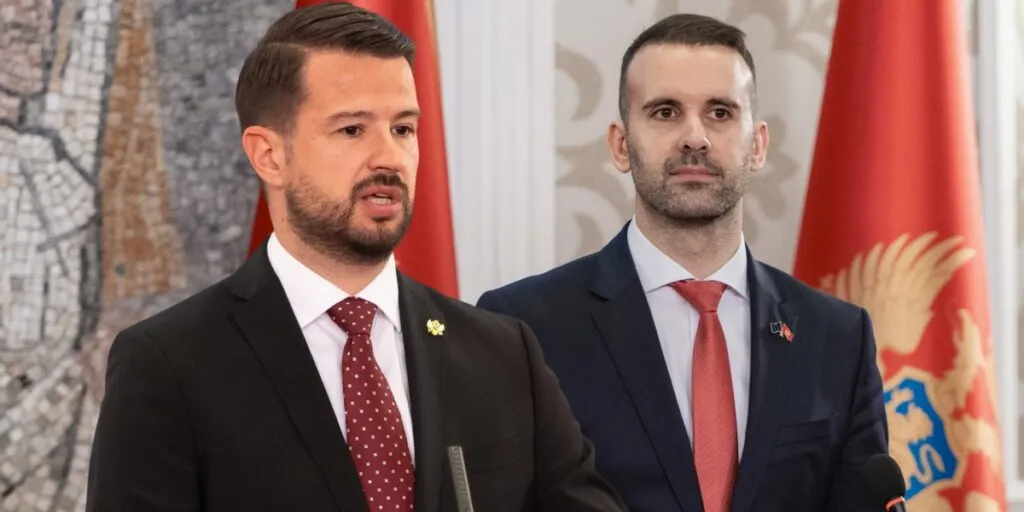
The declaration on military cooperation is real and public. Podgorica joining it has been confirmed by nobody. The difference between...
This site uses cookies - is that okay? Learn more
Be the first to know when Metla launches something new
Leave your email and we will write when there is a new guide or something new on Metla.