Ljupcho Has Been Missing Ten Days, and the Family Warned Beforehand: They Got the Referral, the Hospital Said It Was Being Renovated
16.08.2026


16.08.2026
16.08.2026
16.08.2026

16.08.2026

16.08.2026

16.08.2026

16.08.2026

15.08.2026
14.08.2026
16.08.2026

16.08.2026

15.08.2026

16.08.2026

16.08.2026
16.08.2026

16.08.2026

15.08.2026

14.08.2026
16.08.2026

16.08.2026

16.08.2026

16.08.2026

16.08.2026

15.08.2026

09.03.2026

27.02.2026

19.02.2026
16.08.2026

15.08.2026
14.08.2026

23.04.2026

23.04.2026

12.04.2026
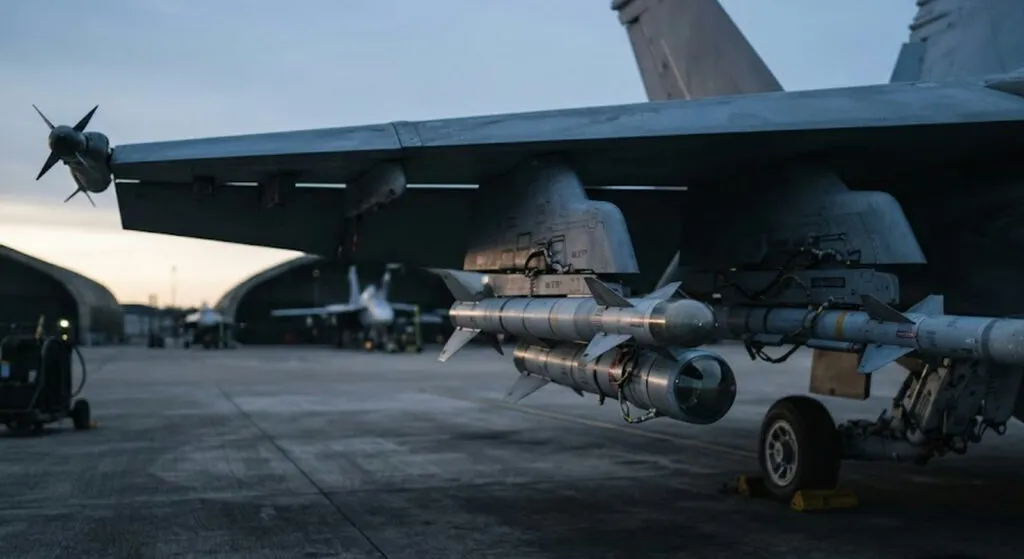
A few years ago, dismissive comments about the Serbian army were coming out of Zagreb. Croatian president Zoran Milanovic joked at the time that Belgrade had only "water pistols" and openly wondered what Serbia could possibly attack anyone with. Today the same Zagreb is speaking in a completely different tone - and addressing Brussels.
"So, Belgrade is so weak, people like that cannot attack you. What are they going to attack, Kosovo? With what? With water pistols?" - that was Milanovic's phrasing.
The response from Belgrade at the time was not an argument but a procurement plan. Serbian president Aleksandar Vucic promised new missiles for his aircraft and new radar systems, with a rhetorical question aimed at the neighbours: "What would you know about what missiles we are going to buy for our planes and what radar systems we are going to buy?"
From mockery to a request for help
Time has shown who was doing which arithmetic. Instead of mockery, warnings began arriving from Croatia about the growth of Serbian military capacity - as far as assessments that "Serbia has weapons NATO does not have". Particular attention went to reports of the purchase of Chinese CM-400 missiles, launched from MiG-29 fighter jets. Croatian defence minister Ivan Anusic expressed hope that those missiles would stay in storage. Hope - that is the word a defence minister used while talking about somebody else's weapons.
Croatian prime minister Andrej Plenkovic, meanwhile, is addressing NATO secretary general Mark Rutte. So the mechanism is familiar: when your own calculation does not work out, you call on the alliance.
From Belgrade the rhetoric is calm to a degree that Vucic himself probably knows serves him well. "We are not taking part in any conquering campaigns or in anything at all. Ours is to protect our country, to protect our sky, and in that we will be successful," he said.
And us in the middle
Both sides repeat that they want peace, and each measures the other through a long list of procurements. Macedonia is in neither story - but it is between them on the map, and inside the alliance Zagreb is appealing to. When neighbours are outbidding each other on missile systems and radar coverage, that is not distant geopolitics; that is an inventory a few hours' drive away.
The most interesting thing in the whole exchange is not the weaponry but the timeframe. The road from "water pistols" to concern over Serbian missiles was evidently far shorter than Zagreb had calculated. What is a good soundbite worth when the neighbour, instead of replying, starts buying?
The latest 10 news from this category
Three countries buying equipment together are a „quasi-bloc”, and two of them have been in NATO for fifteen years. The...
The argument is about who appoints whom, not about what the institution does once someone is appointed. That is still...
Ukraine will not recognise Kosovo, and Serbia keeps supplying Soviet-calibre ammunition. What is the price of one crate of shells...
Seven municipalities and Kosovo's electricity depend on that water. When political conversation gets too tight, the Balkans always find something...
He was met by the energy minister, not the president. Serbia gets confirmation on Kosovo, Ukraine gets ammunition - and...
For four years the flag stood in central Pristina as a sign of solidarity. Zelensky confirmed Ukraine does not recognise...
Russia called the cooperation between Albania, Croatia and Kosovo a threat to regional security. Macedonia appears nowhere in the statement...
Belgrade's argument is not new, but the context is. Territorial integrity suddenly became the West's highest value - after Russia...
Zelensky's first official visit to Belgrade, and one sentence carried the whole logic of the meeting. Two presidents, the same...
The Ukrainian president came for infrastructure and jobs and left with a memorandum on food safety. His host announced a...
This site uses cookies - is that okay? Learn more
Be the first to know when Metla launches something new
Leave your email and we will write when there is a new guide or something new on Metla.