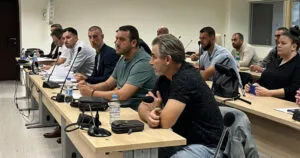
"That's not my job": the trial of the 13 Puls police officers restarted from scratch, and witnesses describe help being refused
22.09.2026


22.09.2026

22.09.2026

22.09.2026

22.09.2026

22.09.2026

22.09.2026

22.09.2026

21.09.2026

20.09.2026

22.09.2026

22.09.2026

21.09.2026

22.09.2026

22.09.2026

22.09.2026

22.09.2026

21.09.2026

20.09.2026

22.09.2026

22.09.2026

22.09.2026

22.09.2026

22.09.2026

22.09.2026

09.03.2026

27.02.2026

19.02.2026

22.09.2026

21.09.2026

21.09.2026

23.04.2026

23.04.2026

12.04.2026

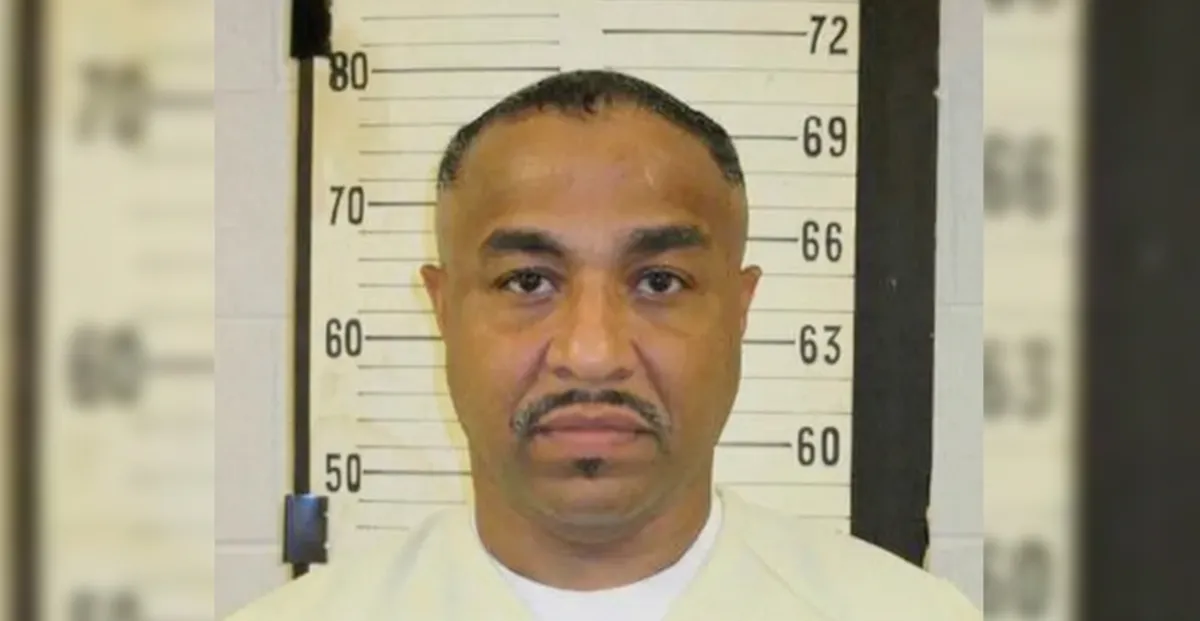
On 21 May 2026, in a Tennessee prison, the attempt to execute Tony Carruthers (57) was halted after an hour. Medical staff could not find a suitable vein for the backup IV that the state's death penalty protocol requires. The governor of Tennessee eventually postponed the execution by a year - but by then it was already too late for it to be painless for a man who immediately reacted with crying and convulsions.
"It is incredible. I am so grateful," said Maria DeLibetato, Carruthers's attorney, when she learned of the postponement. She testified that the condemned man "was writhing and screaming" while they searched for a second vein. That's not the picture Tennessee wants to see in the media, but it's the picture medical staff, with all their experience, could not avoid.
The view from the other side: the Tennessee Department of Corrections confirmed they had managed to establish the main intravenous line, but not the backup. Attempts at a central line also failed. That's the technical statement. It's the death penalty turned into a medical procedure that doesn't work.
Carruthers's case is old. He was convicted in 1994 of a triple murder - Marcellos Anderson, his mother Delois Anderson, and Frederick Tucker. But facts that were quieted then and are obvious now: there was no physical evidence directly tying him to the crime. The conviction rested on witness testimony - including a police informant who was later revealed to have been paid for his testimony.
Carruthers's co-defendant, James Montgomery, had his death sentence commuted and was released from prison in 2015. Two men convicted of the same crime - one free, one on death row. That's what justice looks like when it's based on the testimony of a man who has since admitted he lied.
Will 12 months be enough for the courts to reconsider the case? Probably not. The death penalty systems in the US again have their own dynamic. But 12 months will be enough for Tennessee to re-examine its procedures, and to make sure that next time, the technology doesn't betray the political narrative of "swift justice."
The latest 10 news from this category

Washington, Copenhagen and Nuuk are signing off on a military presence on an island of 56,000 people - and the...

Phones in Krāslava rang by themselves, the fighters took off, and what exactly triggered the alert - nobody is saying....

In Mecklenburg the CDU finished on 4.9 percent and, for the first time in the history of the Federal Republic,...

Tisza took 16 years of power off Fidesz and won 141 of 199 parliamentary seats. Orbán now says Brussels is...

With 75 percent of protocols counted, the governing party leads in 208 of the 225 single-mandate districts. A parliament of...

He never sat on the throne, and the emirate is lowering its flags for ten days. Sometimes the surname says...

Three options on the table in Washington - military pressure, economic strangulation or a deal - and the president frames...

The party of Adenauer and Kohl slid to the electoral threshold in Mecklenburg, the AfD is already demanding the chancellor's...

Two prime ministers in the same Union, the same month, completely opposite diagnoses of who is provoking whom. There is...

A broken aircraft in a field usually ends up in a police note. This one ended up with federal investigators,...
This site uses cookies - is that okay? Learn more
Be the first to know when Metla launches something new
Leave your email and we will write when there is a new guide or something new on Metla.