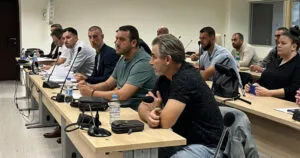
"That's not my job": the trial of the 13 Puls police officers restarted from scratch, and witnesses describe help being refused
22.09.2026


22.09.2026

22.09.2026
22.09.2026

22.09.2026
22.09.2026
22.09.2026

22.09.2026

21.09.2026

20.09.2026

22.09.2026
22.09.2026

21.09.2026
22.09.2026

22.09.2026

22.09.2026

22.09.2026

21.09.2026

20.09.2026

22.09.2026

22.09.2026

22.09.2026

22.09.2026

22.09.2026

22.09.2026

09.03.2026

27.02.2026

19.02.2026

22.09.2026

21.09.2026
21.09.2026

23.04.2026

23.04.2026

12.04.2026

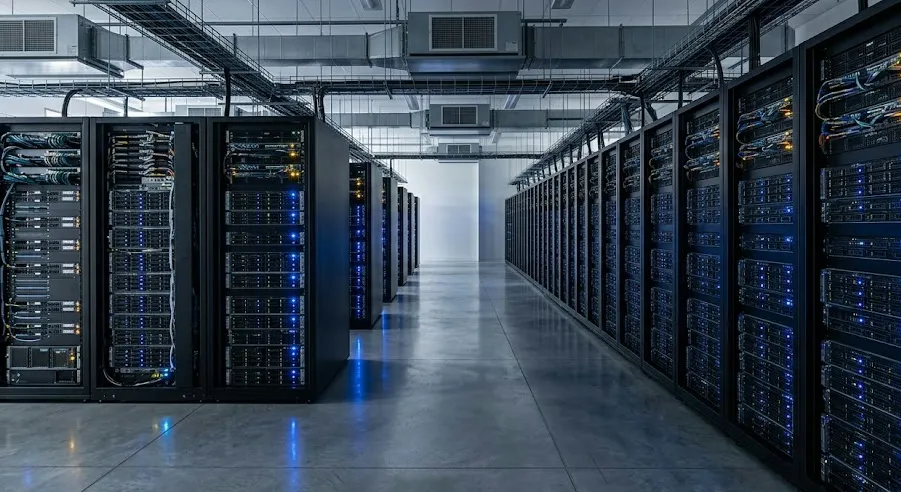
Sometimes a continent needs a jolt to grasp something it has known for years. Donald Trump, it seems, has achieved what years of warnings from Paris and Brussels could not: he convinced Europe's free-market advocates that leaning on American technology is a serious vulnerability, not just a theoretical concern.
How? With threats toward Greenland, sanctions against international officials, and a readiness to use Europe's dependence on American companies as leverage. According to Politico, the European Commission is preparing a "tech sovereignty" package aimed at cutting dependence on foreign firms - everything from email and data storage to the tools that run public services.
"People finally realised there's no greater power than technology," said Sebastiano Toffaletti of the European association of digital SMEs. "It's not just a commodity. It's a means of power and influence, which is why Europe must have its own." Sentences that just a few years ago in Brussels would have been dismissed as disguised protectionism.
The turnaround is dramatic. Countries like the Netherlands and Denmark used to slow down French efforts to keep the EU's most sensitive data away from American servers. Dutch MP Bart Groothuis admits he made a "major U-turn": "It was a clear sign that our big ally would colonise us, that it wants us to depend entirely on American artificial intelligence."
And the real alarm bell, ironically, wasn't first sounded by Trump - but by Joe Biden, who before leaving pushed through rules restricting exports of AI chips to some European countries. Trump merely recognised the vulnerability and pressed it to the hilt, especially through sanctions against International Criminal Court officials.
For the Balkans, this is a lesson worth heeding. We're used to being small and dependent - on foreign capital, foreign platforms, foreign rules. But when even a powerful Europe discovers that dependence is a vulnerability the moment an ally decides to exploit it, the question becomes unavoidable: on whose servers, whose tools and whose rules do we ourselves actually live - and what do we have of our own in that whole story?
The latest 10 news from this category
Washington, Copenhagen and Nuuk are signing off on a military presence on an island of 56,000 people - and the...
Phones in Krāslava rang by themselves, the fighters took off, and what exactly triggered the alert - nobody is saying....
In Mecklenburg the CDU finished on 4.9 percent and, for the first time in the history of the Federal Republic,...
Tisza took 16 years of power off Fidesz and won 141 of 199 parliamentary seats. Orbán now says Brussels is...
With 75 percent of protocols counted, the governing party leads in 208 of the 225 single-mandate districts. A parliament of...
He never sat on the throne, and the emirate is lowering its flags for ten days. Sometimes the surname says...

Three options on the table in Washington - military pressure, economic strangulation or a deal - and the president frames...
The party of Adenauer and Kohl slid to the electoral threshold in Mecklenburg, the AfD is already demanding the chancellor's...
Two prime ministers in the same Union, the same month, completely opposite diagnoses of who is provoking whom. There is...
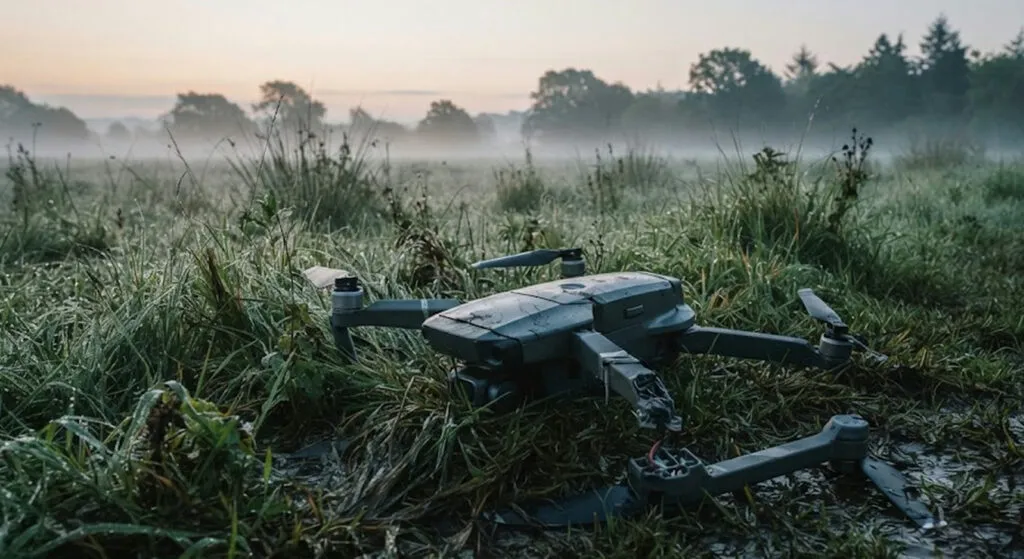
A broken aircraft in a field usually ends up in a police note. This one ended up with federal investigators,...
This site uses cookies - is that okay? Learn more
Be the first to know when Metla launches something new
Leave your email and we will write when there is a new guide or something new on Metla.