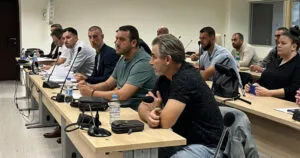
"That's not my job": the trial of the 13 Puls police officers restarted from scratch, and witnesses describe help being refused
22.09.2026


22.09.2026
22.09.2026
22.09.2026
22.09.2026
22.09.2026

22.09.2026

22.09.2026

21.09.2026

20.09.2026

22.09.2026

22.09.2026
21.09.2026

22.09.2026

22.09.2026

22.09.2026

22.09.2026

21.09.2026

20.09.2026
22.09.2026

22.09.2026

22.09.2026
22.09.2026

22.09.2026

22.09.2026

09.03.2026

27.02.2026

19.02.2026
22.09.2026

21.09.2026

21.09.2026

23.04.2026

23.04.2026

12.04.2026

For the first time in the same annual report, the UN has put Russian and Israeli military forces on the blacklist for sexual violence in armed conflict. The documented cases number in the dozens - from Gaza, the West Bank and prisons in Ukraine - and stem from the testimony of former prisoners and victims.
Against Israel, the UN confirmed the "torture" of 14 men, seven women, nine boys and one girl in Gaza and the West Bank. The specifics are hard to read: rape with objects, gang rape, genital mutilation, forced nudity, "searches without clear security justification." Perpetrators: the Israeli military, security forces, prison services.
Against the Russian forces, 310 cases related to the conflict are documented - rape, genital mutilation, electric shocks. Victims: predominantly male prisoners of war who spoke out after their release.
Israel reacted fast and without wrapping. Ambassador Danny Danon described the decision as "shameful and absurd," claiming the UN was equating Israel with Hamas (which is already on the list). The diplomatic effect: a "freeze" of relations with the Guterres cabinet until December 31, 2026. Russia still has no official response. Not that it needs one.
What does "UN blacklist" actually mean? Realistically - little. No sanctions, no international indictments, no state-level implications. It's a reputational document, with the look of an act. For Israel, already living with relentless pressure from international public opinion, even that symbolism lands like a slap. For Russia - perhaps one more footnote in an already long list.
For the Balkans, it's a reminder that the UN shows up where power can't be measured on the ground. Every victim of sexual violence from the 1990s wars - Bosnia, Kosovo, Croatia - knows the same lesson: international institutions react slowly, document strictly, and punish almost never. In the meantime, the lists grow.
The latest 10 news from this category
Washington, Copenhagen and Nuuk are signing off on a military presence on an island of 56,000 people - and the...
Phones in Krāslava rang by themselves, the fighters took off, and what exactly triggered the alert - nobody is saying....
In Mecklenburg the CDU finished on 4.9 percent and, for the first time in the history of the Federal Republic,...
Tisza took 16 years of power off Fidesz and won 141 of 199 parliamentary seats. Orbán now says Brussels is...
With 75 percent of protocols counted, the governing party leads in 208 of the 225 single-mandate districts. A parliament of...
He never sat on the throne, and the emirate is lowering its flags for ten days. Sometimes the surname says...

Three options on the table in Washington - military pressure, economic strangulation or a deal - and the president frames...
The party of Adenauer and Kohl slid to the electoral threshold in Mecklenburg, the AfD is already demanding the chancellor's...
Two prime ministers in the same Union, the same month, completely opposite diagnoses of who is provoking whom. There is...
A broken aircraft in a field usually ends up in a police note. This one ended up with federal investigators,...
This site uses cookies - is that okay? Learn more
Be the first to know when Metla launches something new
Leave your email and we will write when there is a new guide or something new on Metla.