
Sixteen Arrests in Twenty-Four Hours, All for Drugs: The Police Are Working - But Where Are All These People Coming From?
20.09.2026


20.09.2026

20.09.2026

20.09.2026
20.09.2026
20.09.2026

20.09.2026

20.09.2026

20.09.2026

20.09.2026

20.09.2026

20.09.2026

19.09.2026

20.09.2026

20.09.2026

20.09.2026

20.09.2026

19.09.2026
18.09.2026

20.09.2026

20.09.2026

20.09.2026
20.09.2026

20.09.2026

20.09.2026

09.03.2026

27.02.2026

19.02.2026

20.09.2026

19.09.2026

18.09.2026

23.04.2026

23.04.2026

12.04.2026

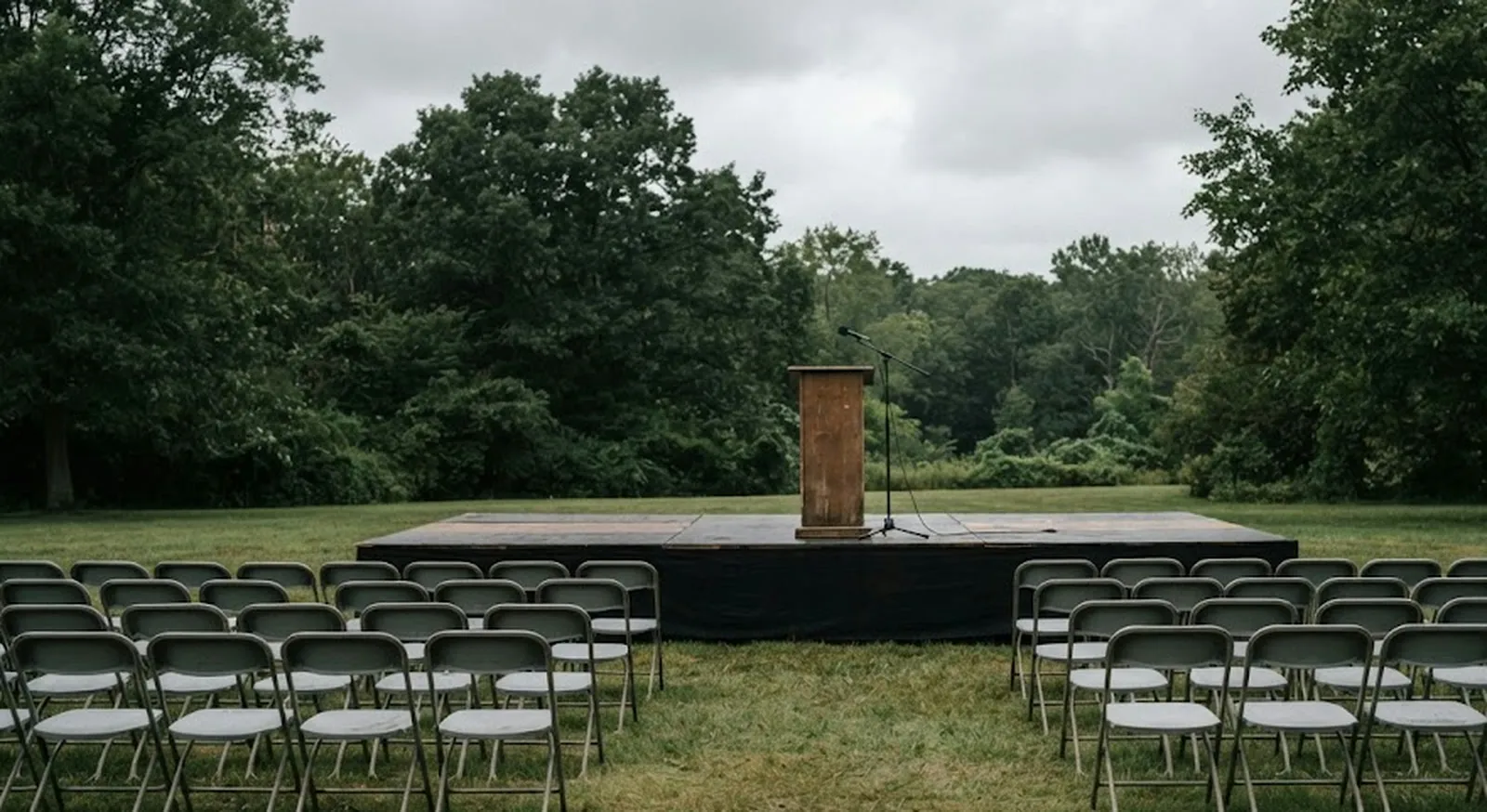
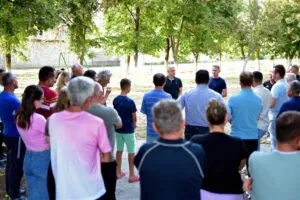
There was organised transport. There were calls to turn out in numbers. An audience - barely. In Mrkonjic Grad, where the authorities of Republika Srpska organised a gathering to mark the anniversary of Operation Storm, relatively few participants showed up. All the most senior officials of Serbia and Republika Srpska did, however. When the podium is full and the chairs are empty, that is a message in itself.
Serbian President Aleksandar Vucic was the main speaker. He called the military and police operation that in August 1995 liberated the then-occupied part of Croatia's territory a crime that Serbs must not forget, with a warning that nothing similar will ever be repeated. The religious service was led by the Serbian Orthodox Church's Patriarch Porfirije, who in his sermon described the operation as "a terrible persecution without precedent in the 20th century" - while also calling on the faithful to seek "peace and good neighbourly relations with those with whom they share the same living space".
A speech for domestic use
Vucic repeated his old lines about conspiracies against Serbia and unjust accusations. He claimed that stories about an agreed collapse of the rebel para-entity in Croatia are false, and offered those gathered an apology "because Serbia in 1995 was weak". He noted that he was speaking for the last time as president of Serbia "without knowing whether that will ever be the case again" - a sentence that says more about the domestic political calculation than about 1995.
He complained that Croatia had banned him from visiting Jasenovac even though he is "a descendant of victims", and claimed Croatia "lies every day and deceives the whole world". He said he hopes he will not have to use the army for defensive purposes, because he knows there are some waiting for a "second half".
The leader of the ruling party in Republika Srpska, Milorad Dodik, went further still. "Shame on the Croats," he said, claiming that today's Croatia aimed "to finish the work of the Ustasha NDH". He accused Croatia of "aggression against Republika Srpska", the US of participating in "genocide and ethnic cleansing", and Montenegro's authorities of betraying Serbs. He concluded that Serbia must be strong, because that is the only way Croats and Bosniaks will be defeated, and that nobody will stop the integration of Serbia and Republika Srpska.
Who does this serve now
Thirty-one years on, two states still cannot sit at the same table over the same August. That is a fact and it is not new. What is new is when "never again" gets packaged together with an announcement that something must "be finished", while on the other side a second half is invoked - that is no longer memory, that is a schedule.
The region knows this scene by heart. An anniversary, a microphone, a historic injustice, and at the end - a sentence about who will defeat whom. The question rarely asked out loud is a different one: what does an ordinary person in Banja Luka, in Knin or in Mrkonjic Grad get out of one more speech like this? Judging by the empty chairs, it seems they already have their answer.
The latest 10 news from this category
Eight countries, 120 million people, a motorway to Timisoara and energy connections. And one cancelled visit that says more than...
The call was about damaged furniture on a terrace. Armin Dzutovic died three days later. The internal investigation found first...
Four KLA leaders received 81 years in prison, and Albania's parliament immediately adopted a declaration calling the verdict unjust. The...
The court established responsibility for 96 killed, 303 tortured and 385 unlawfully detained. The prosecution asked for 45 years. Serbia...
Thaci and Krasniqi got 25 years each, Veseli 18, Selimi 13. The court established 385 unlawfully detained, 303 tortured and...
"If it is acceptable to the participants" - that is the entire offer. What gets negotiated is the format, not...

Thousands walked from the Rectorate to the electoral commission, and the signatures had to be queued for all weekend because...
Thousands of people under a digital clock and a banner asking for them to be found innocent. On Wednesday The...
The ruling list sailed through without a single problem, the student list was left waiting in line. Nobody banned anything...
The same firm that supplied ammunition to Ukraine for years is burning for the second time in a month. Seven...
This site uses cookies - is that okay? Learn more
Be the first to know when Metla launches something new
Leave your email and we will write when there is a new guide or something new on Metla.