

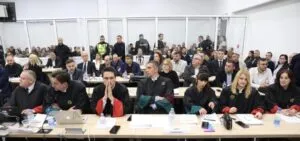
Experts on the Puls fire: the ceiling foam released cyanide as it burned, and the inspector could and should have shut the place down
02.09.2026


02.09.2026

02.09.2026
02.09.2026
02.09.2026
02.09.2026

02.09.2026
02.09.2026
01.09.2026
31.08.2026

02.09.2026

02.09.2026

01.09.2026

02.09.2026

02.09.2026

02.09.2026
02.09.2026
01.09.2026

31.08.2026

02.09.2026

02.09.2026

02.09.2026

02.09.2026
01.09.2026
31.08.2026

09.03.2026

27.02.2026

19.02.2026
02.09.2026
01.09.2026

01.09.2026

23.04.2026

23.04.2026

12.04.2026
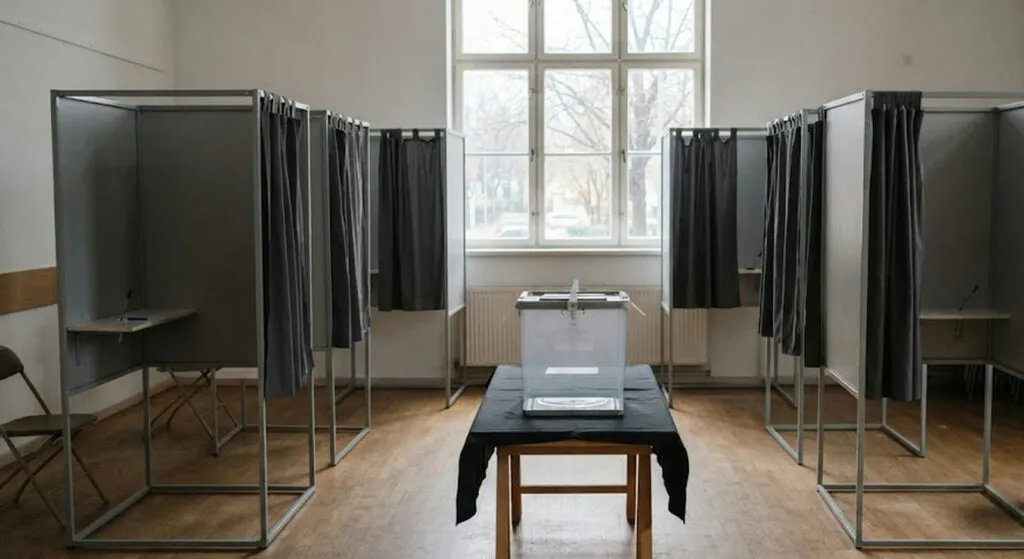
Angela Merkel stood before citizens with a message that would have sounded bizarre ten years ago: we really do have to fight for democracy. The statement came at a rally in Berlin, a week before the state elections in Saxony-Anhalt on 6 September, where Alternative for Germany is leading with around 40 percent.
- I believe we now have to do something again that we have not had to do for decades - really fight for this democracy, stand behind it, be a little brave, stand behind our own words - the former chancellor said.
The numbers behind the appeal
The latest ZDF Politbarometer puts the AfD at 40 percent. The CDU of the incumbent state premier Sven Schulze has 23. The Left is at 13, the SPD at nine, the Greens at six, and the FDP and Sahra Wagenknecht's alliance at three percent each - below the threshold. The poll was conducted between 25 and 27 August on a sample of 1,053 voters.
Another survey gives the AfD as much as 42 percent, against 22 for the CDU. At that kind of gap, depending on how many parties clear the threshold, the question opens of whether the AfD could approach an absolute majority of seats. Its candidate for premier is 35-year-old Ulrich Siegmund, who is trying to put the party at the head of a German state for the first time.
What Merkel admitted, and others avoid
The most important sentence of her appearance was not the call for courage. It was the admission that the AfD's rise can no longer be explained by the peculiarities of the former East Germany.
- It has become an all-German phenomenon - Merkel said.
The party remains strongest in the east, but in recent years it has also grown in the western states. Merkel stressed that the majority of Germans do not vote for the AfD - and then immediately described where the party has actually won: it has managed to impose the topics around which almost the entire political debate now turns. In her words, the AfD has partly succeeded in "determining all our conversations from morning to night", which is why less and less is heard about what the other parties are actually offering.
That is the defeat that is not measured in percentages. When one party writes the daily agenda, the others are playing on its ground even when they attack it.
A party under surveillance that doubled its support
The state office for the protection of the constitution classified the local AfD branch as a "confirmed right-wing extremist endeavour" back in November 2023. After an extensive analysis it concluded that the state AfD's political activity strikes at the fundamental principles of the German constitutional order, including the protection of human dignity and the democratic principle.
The party rejects this and claims the security services are being used as a political weapon against it. Legal proceedings have been launched against the classification, with the main stage currently on hold while decisions in related federal-level cases are awaited.
And in the meantime - the classification did not stop the party. In Saxony-Anhalt the AfD has practically doubled its support within a few years. That is the figure worth noticing: the institutional label "extremist" not only failed to repel voters, it ran in parallel with their doubling.
Why this is read from here too
For decades Germany was the country that held the line of what is permissible in politics on this continent, and the yardstick everyone else was measured against. When that line moves in the country that drew it, the question stops being German. If the constitutional protection office and mainstream politics together cannot turn a trend around, what exactly is left as a mechanism?
The voters will answer that on 6 September - not the analysts.
The latest 10 news from this category
Three drones at one airport, a hit substation in Brandenburg and two states that already know who is guilty. Only...
When Moscow wants to prove why it does not want a ceasefire, it reaches for our nineties. The Balkans is...
Pashinyan announced an EU membership bid and five years away from the CSTO. The Kremlin responded calmly - and that...
Football matches cancelled, trams stopped, hotels requisitioned. Operation K was drawn up in 1991 and nobody hoped to use it.
Every day of war is a step backwards for humanity, Modi said. That same day India carried on filling the...

Ankara has held this role twice already, and twice it ended without a lasting deal. Still, when every other channel...
Four years in prison and two rape convictions did not remove him from the procession carrying Harald V's coffin. The...
At least eight dead, 249 rescued, the vessel at 514 metres depth. The captain and seven crew members are under...
Merz promised measures "in the coming days" and confirmed the partners already know what is coming. The response is German...
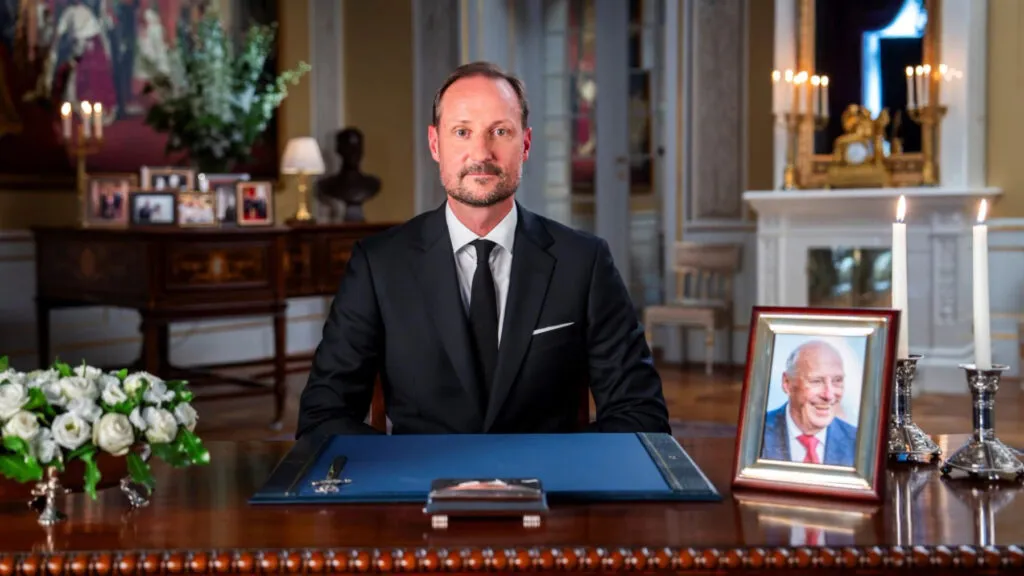
A day after Harald V died, the new king sat down in front of a camera with a photograph of...
This site uses cookies - is that okay? Learn more
Be the first to know when Metla launches something new
Leave your email and we will write when there is a new guide or something new on Metla.
