
33 fires in 24 hours: a beech forest is burning in Kicevo, and near Kumanovo the flames reached the houses
24.08.2026


24.08.2026

24.08.2026

24.08.2026

24.08.2026

24.08.2026

24.08.2026

24.08.2026

23.08.2026
22.08.2026

24.08.2026

24.08.2026

23.08.2026

24.08.2026

24.08.2026

23.08.2026

24.08.2026

23.08.2026

22.08.2026

24.08.2026

24.08.2026
24.08.2026

24.08.2026

24.08.2026

23.08.2026

09.03.2026

27.02.2026

19.02.2026
24.08.2026

23.08.2026

23.08.2026

23.04.2026

23.04.2026

12.04.2026

The question looks simple: if a company trades in a writer's books to build a machine that then writes in their place, is that theft? The answer American courts are giving pleases neither side - and that is exactly why it matters to anyone who writes, films or creates anything in digital form.
Last year judge William Alsup ordered Anthropic to pay 1.5 billion dollars to a group of writers whose work ended up in the training data of its models. At first glance - a win for authors. Read the ruling and the picture changes: Alsup ruled that the training itself is legal. What Anthropic paid for was how it obtained the books - pirated copies from illegal online libraries.
Alsup justified this with a comparison everyone now quotes: the model, he wrote, read the works "like any reader aspiring to be a writer" - not to copy them out, but to create something else. With one sentence, training on other people's labour got judicial legitimacy, and the penalty stayed attached to the method of acquisition.
A billion and a half for a company projecting two hundred billion
"I think that is generally good news for AI training," says Cathy Gellis, a lawyer specialising in intellectual property and technology. "Copyright rests on copying, but it does not rest on using the work, on experiencing it, on reading it."
When 1.5 billion is measured against projections of around 200 billion dollars in annual revenue by 2028, the penalty stops being a penalty and becomes a budget line. That is not a conspiracy theory - it is arithmetic every chief financial officer does before deciding whether something is worth risking.
A law from 1976 judging technology from 2026
American copyright law has not been changed since 1976. Judges today have to interpret rules written half a century before the first large language model, and it shows in the outcome - every court decides differently.
"Everyone is very worried at the moment because the law is scattered all over the place," says Jason Henderson, senior counsel and founder of the intellectual property and media practice at JWL International. "They know the model was trained on an enormous amount of material, and the law really has not caught up with that question."
What is emerging as a line, though, is competition. When Thomson Reuters sued the research firm Ross Intelligence for using its content to build a rival legal platform, judge Stephanos Bibas ruled that this was not permitted use - the use had "no different purpose or different character" from the original. In other words: train on other people's work all you like, but not in order to kill the market of the person you are taking from.
Writers could argue exactly that - that chatbots generating synthetic books are eating their market. So far that argument has not succeeded in court.
And when the machine is the author?
The second half of the story is the reverse: what if the work was created by a machine? In Thaler v Perlmutter the court ruled that a work created one hundred percent by artificial intelligence is not subject to copyright at all. The question that follows is more interesting than the ruling itself - how do you even prove what percentage of a text a machine wrote?
"If you write a novel in Word and run a spellcheck, we are somehow comfortable saying that Word does not own your novel," says Gellis. "This forces us to look at a whole series of decisions we have long ignored."
Almost every major artificial intelligence company is currently in ongoing litigation on these questions, which means there will be no definitive answer soon. Until then, what Gellis formulates most precisely holds: the first rulings shape the whole game, even if they are later overturned. The law has not caught up with the question, but the decisions are already being made - and they will not wait for someone to refresh a law from 1976.
The latest 10 news from this category

The second largest fine in the history of European data regulation, and it is not for a leaked database. A...
Five leading labs rated on how ready they are if their own model tries to bypass oversight. The company that...

The company advertised 95 per cent accuracy in identifying sleep stages. The plaintiffs say that takes electrodes on the scalp,...
The same company paid 5.7 million for the same violation in 2019 and promised to stop it. Seven years later...

Eleven manufacturers in China are recalling vehicles because the manual emergency handle is hidden where nobody looks for it. The...
Every third page published after ChatGPT carries traces of having been assembled by a machine. On government and university addresses...
The search engine that was for years the main door to the internet is now offering sites a button with...

A startup worth 1.3 billion in May sold for 7.5 billion in August. The founders alone take home more than...
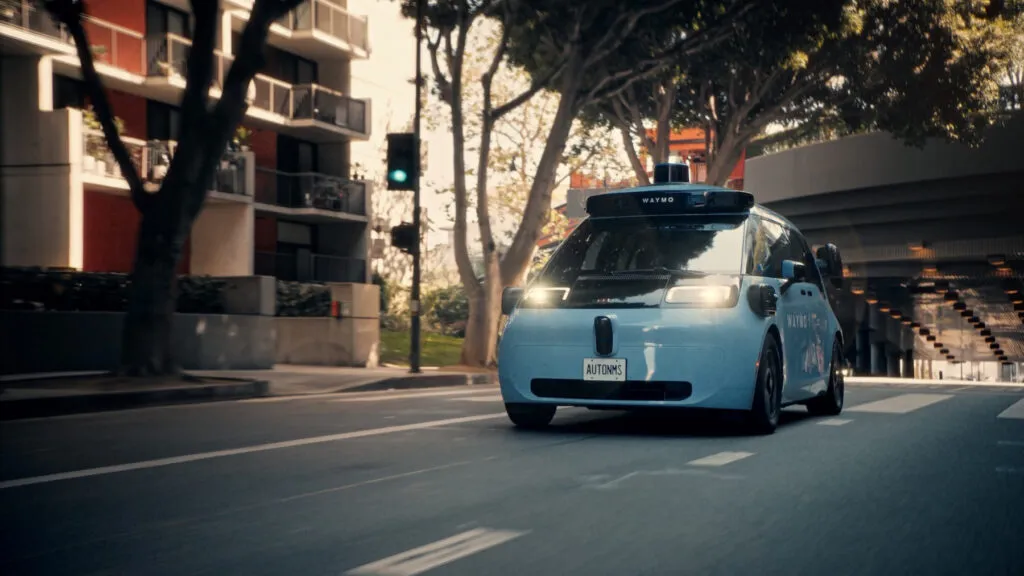
The Ojai is open to all passengers in three American cities. Under the sensors sits a Geely platform, and 5,000...

Brussels fined it 500 million euros, Apple offered a scheme critics called malicious compliance. This is the third attempt in...
This site uses cookies - is that okay? Learn more
Be the first to know when Metla launches something new
Leave your email and we will write when there is a new guide or something new on Metla.