

"That's not my job": the trial of the 13 Puls police officers restarted from scratch, and witnesses describe help being refused
22.09.2026


22.09.2026
22.09.2026

22.09.2026
22.09.2026

22.09.2026

22.09.2026
22.09.2026

21.09.2026

20.09.2026

22.09.2026

22.09.2026

21.09.2026

22.09.2026

22.09.2026

22.09.2026

22.09.2026

21.09.2026

20.09.2026

22.09.2026

22.09.2026

22.09.2026
22.09.2026

22.09.2026

22.09.2026

09.03.2026

27.02.2026

19.02.2026

22.09.2026

21.09.2026

21.09.2026

23.04.2026

23.04.2026

12.04.2026

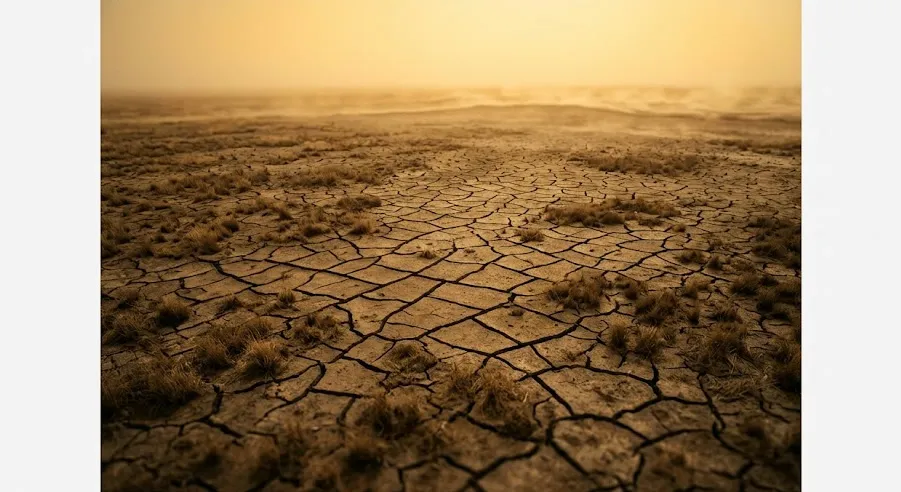
Europe is the continent warming fastest in the world. The number is brutal: 2.4 degrees Celsius above pre-industrial levels - twice the global average of 1.4 degrees. In some regions - eastern and south-eastern Europe, the Alps - temperatures are rising by 0.5 to 1 degree per decade. On Svalbard, the most extreme case, that is 1.5 to 2 degrees per decade.
There are three reasons, and they are all connected. First: Arctic ice melting. The dark surfaces of ocean and ground exposed beneath melting ice absorb far more solar energy than reflective ice does. That creates a self-reinforcing warming cycle - known as the "albedo effect". The Arctic has already warmed by 3.2 degrees above pre-industrial levels.
The second reason, paradoxically: fewer aerosols. Since the 1980s, Europe's stricter environmental rules have significantly reduced industrial particulate emissions in the air - good news for people's health and for the air quality of cities. But those same particles used to reflect solar energy back. Fewer aerosols = more sun reaching the ground. Clean air, warmer planet.
Third: the heat dome - a barometric formation of high atmospheric pressure that traps warm North African air over western Europe and blocks colder Atlantic systems. That is why summer heat periods are now more intense and longer than they were 20 years ago.
The consequences are already visible. Last year at least seven people died of heatstroke during a ten-kilometre race in Paris. The UK hit 34.8 degrees, France 36, Portugal 40. The last 11 consecutive years are the hottest ever measured. The Balkans? There is no reason to be spared. Macedonian summers above 40 degrees, with nights above 25, are the new normal, not the extreme.
What comes next? According to Ben Clarke at Imperial College London: "As the ice melts, heat absorption intensifies, which further warms the waters." Translation for the ordinary reader: this is not stopping, it is accelerating. Every political conversation about climate policy is happening inside a frame that reality is already breaking. And that is not "alarmism" - that is what the thermometer is showing.
The latest 10 news from this category
Washington, Copenhagen and Nuuk are signing off on a military presence on an island of 56,000 people - and the...
Phones in Krāslava rang by themselves, the fighters took off, and what exactly triggered the alert - nobody is saying....
In Mecklenburg the CDU finished on 4.9 percent and, for the first time in the history of the Federal Republic,...

Tisza took 16 years of power off Fidesz and won 141 of 199 parliamentary seats. Orbán now says Brussels is...
With 75 percent of protocols counted, the governing party leads in 208 of the 225 single-mandate districts. A parliament of...
He never sat on the throne, and the emirate is lowering its flags for ten days. Sometimes the surname says...

Three options on the table in Washington - military pressure, economic strangulation or a deal - and the president frames...

The party of Adenauer and Kohl slid to the electoral threshold in Mecklenburg, the AfD is already demanding the chancellor's...
Two prime ministers in the same Union, the same month, completely opposite diagnoses of who is provoking whom. There is...
A broken aircraft in a field usually ends up in a police note. This one ended up with federal investigators,...
This site uses cookies - is that okay? Learn more
Be the first to know when Metla launches something new
Leave your email and we will write when there is a new guide or something new on Metla.
