
"That's not my job": the trial of the 13 Puls police officers restarted from scratch, and witnesses describe help being refused
22.09.2026


22.09.2026
22.09.2026
22.09.2026
22.09.2026
22.09.2026

22.09.2026

22.09.2026

21.09.2026

20.09.2026

22.09.2026

22.09.2026

21.09.2026

22.09.2026

22.09.2026

22.09.2026

22.09.2026

21.09.2026

20.09.2026

22.09.2026

22.09.2026

22.09.2026
22.09.2026

22.09.2026

22.09.2026

09.03.2026

27.02.2026

19.02.2026
22.09.2026

21.09.2026

21.09.2026

23.04.2026

23.04.2026

12.04.2026

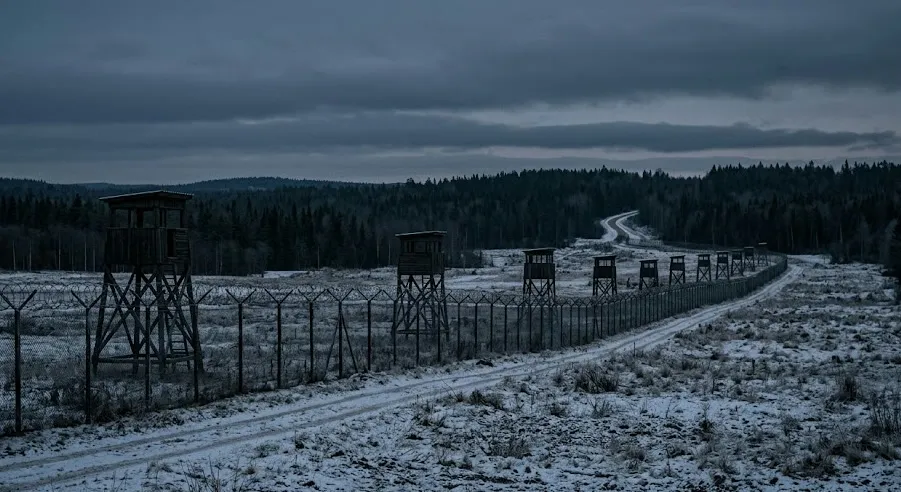
Europe is openly talking about the worst case, and this isn't the rhetoric of marginal analysts - it's the language of defence ministers and intelligence chiefs. Russia is bogged down on Ukrainian terrain, and that's why European capitals fear Putin will try a new path - by spreading the conflict outside Ukraine.
The signals are concrete. Last week air raid sirens went off in Lithuania after suspicious Russian drones approached via Belarus. Moscow threatened to bomb „decision-making centres" in Latvia, accusing the country of hosting Ukrainian drone operators. The Russian Defence Ministry published address lists of companies in eight European countries allegedly cooperating with Ukraine on drone production, with threats of „unpredictable consequences."
Sweden's defence minister Pal Jonson summed it up: „Security in Europe has fallen apart over the past 24 months, and we see a Russia ready to take greater operational risks." Previous threats of US withdrawal from NATO weakened the strategic protection of the eastern flank, and Moscow understands that well.
What can Putin realistically do? According to intelligence analyses, two options: vertical escalation (raising the intensity of violence, nuclear rhetoric, potential limited use) or horizontal escalation (opening a new front - a Baltic state, an island in the Baltic Sea, NATO Arctic territory). The goal: to „freeze" the Ukrainian conflict on terms more favourable to Moscow.
The math Putin is looking at is harsh. Western estimates: Russia is losing around 35,000 soldiers a month. That's more than the Kremlin can recruit without forced mobilisation - a step that would cost it politically. „If you start mobilisation just for this war, you're sending a message that you're not winning," said Kaja Kallas, the EU's high representative for foreign affairs.
Next year's French elections are an additional factor. A candidate friendly to Russia has real chances of winning. The Iranian conflict is pushing oil prices back up, fuelling political instability in Europe and strengthening parties that want to buy Russian energy again and end aid to Ukraine. That's the scenario the Kremlin is planning for - not necessarily militarily, but politically.
For the Balkans, this isn't distant news. If the next 12 months bring a Russian move outside Ukraine, the question for the region becomes immediate: where does the line of stability run? Macedonia, Albania, Northern Greece - on the western side. Serbia, Bosnia and Herzegovina - with a half-in approach that won't be sustainable. The question no politician here wants to ask: have we understood what's happening, or are we just watching it on the news like some foreign film?
The latest 10 news from this category
Washington, Copenhagen and Nuuk are signing off on a military presence on an island of 56,000 people - and the...
Phones in Krāslava rang by themselves, the fighters took off, and what exactly triggered the alert - nobody is saying....
In Mecklenburg the CDU finished on 4.9 percent and, for the first time in the history of the Federal Republic,...

Tisza took 16 years of power off Fidesz and won 141 of 199 parliamentary seats. Orbán now says Brussels is...
With 75 percent of protocols counted, the governing party leads in 208 of the 225 single-mandate districts. A parliament of...
He never sat on the throne, and the emirate is lowering its flags for ten days. Sometimes the surname says...

Three options on the table in Washington - military pressure, economic strangulation or a deal - and the president frames...
The party of Adenauer and Kohl slid to the electoral threshold in Mecklenburg, the AfD is already demanding the chancellor's...
Two prime ministers in the same Union, the same month, completely opposite diagnoses of who is provoking whom. There is...

A broken aircraft in a field usually ends up in a police note. This one ended up with federal investigators,...
This site uses cookies - is that okay? Learn more
Be the first to know when Metla launches something new
Leave your email and we will write when there is a new guide or something new on Metla.