
Black Smoke Over Skopje: A Paint and Varnish Warehouse Burned Inside the Old Steelworks
23.09.2026


23.09.2026

23.09.2026

23.09.2026

23.09.2026

23.09.2026

23.09.2026

23.09.2026

22.09.2026

21.09.2026

23.09.2026

23.09.2026

22.09.2026

23.09.2026

23.09.2026

23.09.2026

23.09.2026

22.09.2026

21.09.2026

23.09.2026

23.09.2026

23.09.2026

23.09.2026

23.09.2026

23.09.2026

09.03.2026

27.02.2026

19.02.2026

23.09.2026

22.09.2026

21.09.2026

23.04.2026

23.04.2026

12.04.2026

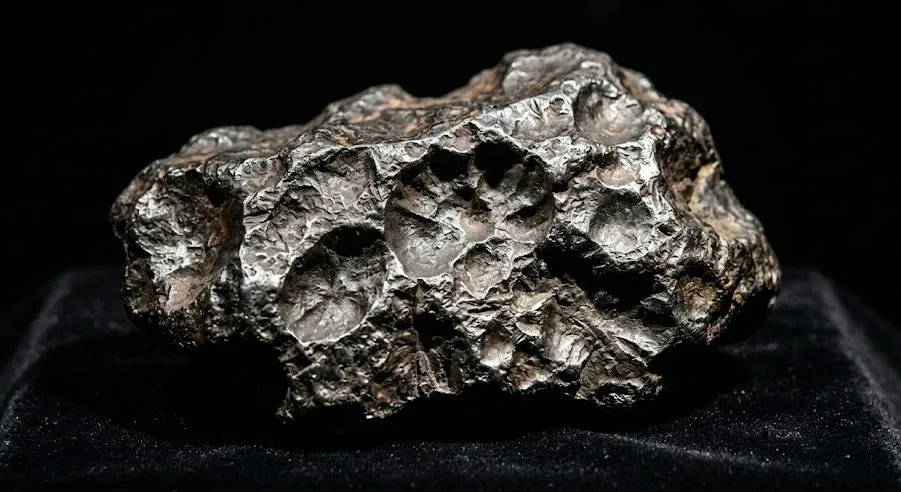
On 26 May 1751, around 6 in the evening, a meteorite fell in the village of Domovec near Hrashchina, in Croatia's Zagorje region. Today, 275 years later, the Croatian Natural History Museum marks it as a pivotal moment in the history of science - and that is not an exaggeration. It was the first time in history that an official document was compiled with eyewitness statements about a body falling from space onto Earth.
It sounds small. But in the context of the 18th century, it had revolutionary significance. Many scientists at the time did not believe that materials from space could reach the ground - the idea of stones falling from the sky looked like village superstition. The Hrashchina meteorite took those doubts out of science and put them into the documents.
A piece of the meteorite is still preserved in the museum's collection. The meteorite is composed of iron with a high percentage of nickel. The researcher Alois von Widmanstätten analysed the crystal structures in it - structures that today carry his name (Widmanstätten patterns). Later, Neumann lines were also discovered - traces of intense collisions in the asteroid belt.
What does this mean for readers who are not scientists? That every meteorite is a piece of the Solar System's history - older than the planet we live on. When you analyse iron from a meteorite, you are looking at matter that was created before Earth, in stars that exploded billions of years ago. The piece in Zagreb is not „a strange stone". It is a witness to cosmic events.
The museum will hold a free public lecture on Tuesday at 6 in the evening, titled „Geological evidence for the asteroid impact that ended the era of the dinosaurs". Presenter: Zvonimir Drvar, senior curator at the „Nikola Tesla" Technical Museum. When you have the chance to listen for 60 minutes about cosmic impacts that changed the course of life on Earth - this is not an event to miss.
The latest 10 news from this category
Two presidents, the same podium, a few hours apart and two contradictory realities. Macron did not argue about signatures -...
The mechanism he describes - decision before evidence, evidence retrofitted to the decision - is real, and Iraq proved it....

Peter Magyar compared it to a club that puts you in the team without asking, then tells you to bring...

Washington, Copenhagen and Nuuk are signing off on a military presence on an island of 56,000 people - and the...
Phones in Krāslava rang by themselves, the fighters took off, and what exactly triggered the alert - nobody is saying....
In Mecklenburg the CDU finished on 4.9 percent and, for the first time in the history of the Federal Republic,...
Tisza took 16 years of power off Fidesz and won 141 of 199 parliamentary seats. Orbán now says Brussels is...
With 75 percent of protocols counted, the governing party leads in 208 of the 225 single-mandate districts. A parliament of...
He never sat on the throne, and the emirate is lowering its flags for ten days. Sometimes the surname says...
Three options on the table in Washington - military pressure, economic strangulation or a deal - and the president frames...
This site uses cookies - is that okay? Learn more
Be the first to know when Metla launches something new
Leave your email and we will write when there is a new guide or something new on Metla.