The defence in the Puls case has called 244 witnesses, and the nightclub owner's detention runs out on Saturday
01.10.2026


01.10.2026
01.10.2026

01.10.2026
01.10.2026
01.10.2026
01.10.2026

01.10.2026

30.09.2026
29.09.2026

01.10.2026

01.10.2026
30.09.2026

01.10.2026

01.10.2026
01.10.2026

01.10.2026
30.09.2026

29.09.2026
01.10.2026

01.10.2026

01.10.2026
01.10.2026
01.10.2026

01.10.2026

09.03.2026

27.02.2026

19.02.2026

01.10.2026

01.10.2026
30.09.2026

23.04.2026

23.04.2026

12.04.2026

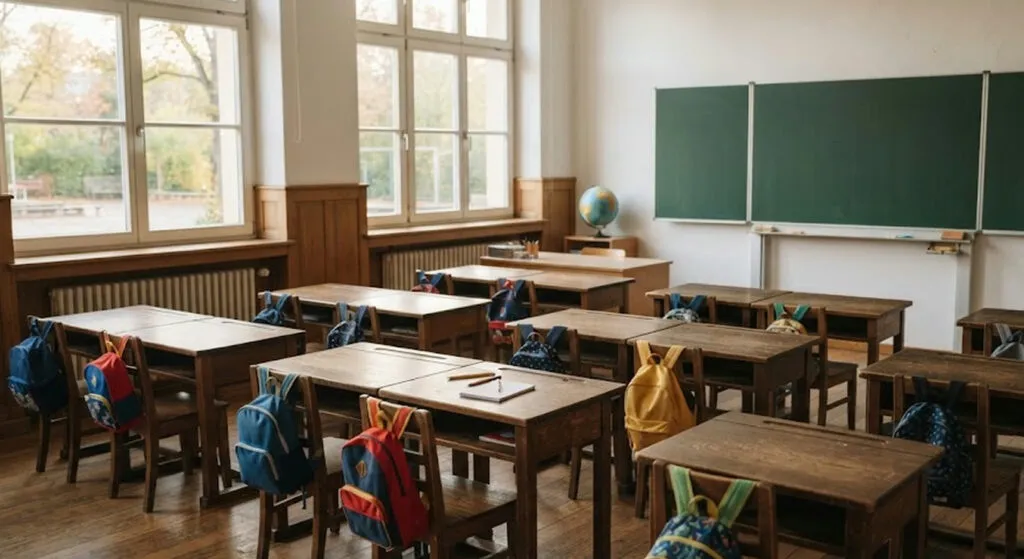
As of today, covering the face is banned in all Italian schools. President Sergio Mattarella has signed the decree from Giorgia Meloni's right-wing government, and the rule is short: pupils' faces must remain recognisable. In practice that means the end of Islamic veils that cover the whole face, such as the burqa and the niqab.
But the veil is only the headline. The deeper cut comes from the 2027/2028 school year: in the first year of each level of schooling, no more than 30 percent of pupils may be children of foreign origin who do not speak Italian well enough. The quota applies to children without Italian citizenship, who were not born in Italy and did not attend an Italian nursery for at least two years. In secondary schools, pupils need at least three years of schooling in Italy to stay out of the quota.
Parents who struggle seriously with Italian could be required to attend language courses, if that is making communication with their child's school difficult. The measures were introduced by emergency decree, and parliament has to confirm them within 60 days.
The question the decree does not answer is simple: what happens to the child who ends up outside the quota? Do they go to another school, another class, the other side of the city? Children who chose neither the language nor the country they are growing up in become a number in a spreadsheet.
For decades Italy has been one of the first destinations for people from the Balkans going abroad to work. Every family that left with a school-age child knows what the first day is like in a classroom where you don't understand the language. From 2027, that child in Italy will face a quota as well as the language.
The political context is clear. Meloni has led a coalition of the hard right and conservatives since 2022, won on a promise of a tougher line on migrants, and her party Brothers of Italy (Fratelli d'Italia) still leads the polls ahead of elections expected next year. The pressure on her, though, is not coming from the left but from further right: the new party National Future (Futuro Nazionale) of former general Roberto Vannacci wants an even harsher approach to migration. When the right is competing with an even harder right, someone has to pay the price - and this time it is children at their school desks.
The latest 10 news from this category

A flight from Dubai with 174 people on board, a knife in the cockpit and a plane suddenly losing altitude....
The state that was preparing to execute a woman for the first time in more than 200 years took the...
Russian dissidents as bargaining chips, and on the other side oil, minerals and maybe a Nobel Prize. It sounds like...
Born at 26 weeks, with brain damage, epilepsy and cerebral palsy - and no progress at all. The Netherlands faced...
A birthday tribute to the late Berlusconi, turned into a warning that the world is closer to a new major...
Prosecutors say he threw someone else's phone into the Danube, and he himself asked to lose his protection. How many...
The world's youngest king died at 34 and left an heir on paper. The clan decided otherwise, so a kingdom...
Seoul says there was an agreement to stay quiet; Kyiv says there wasn't. Caught between them are two captured soldiers...
The Nobel laureate can't get home, and her supporters are driving in convoys demanding an election date. Maduro is gone...
Two of the three incendiary devices ignited, and German services investigating sabotage across Europe are also checking leads to Poland...
This site uses cookies - is that okay? Learn more
Be the first to know when Metla launches something new
Leave your email and we will write when there is a new guide or something new on Metla.