
Prosecutors set out the sequence in Radišani: the driver cut off 19-year-old Nikola, then left without helping
10.08.2026


10.08.2026

10.08.2026

10.08.2026

10.08.2026
10.08.2026
10.08.2026

10.08.2026

09.08.2026

08.08.2026

10.08.2026

10.08.2026

09.08.2026

10.08.2026

10.08.2026

10.08.2026

10.08.2026

09.08.2026

08.08.2026

10.08.2026

10.08.2026

10.08.2026

10.08.2026
09.08.2026

08.08.2026

09.03.2026

27.02.2026

19.02.2026

10.08.2026

09.08.2026

08.08.2026

23.04.2026

23.04.2026

12.04.2026
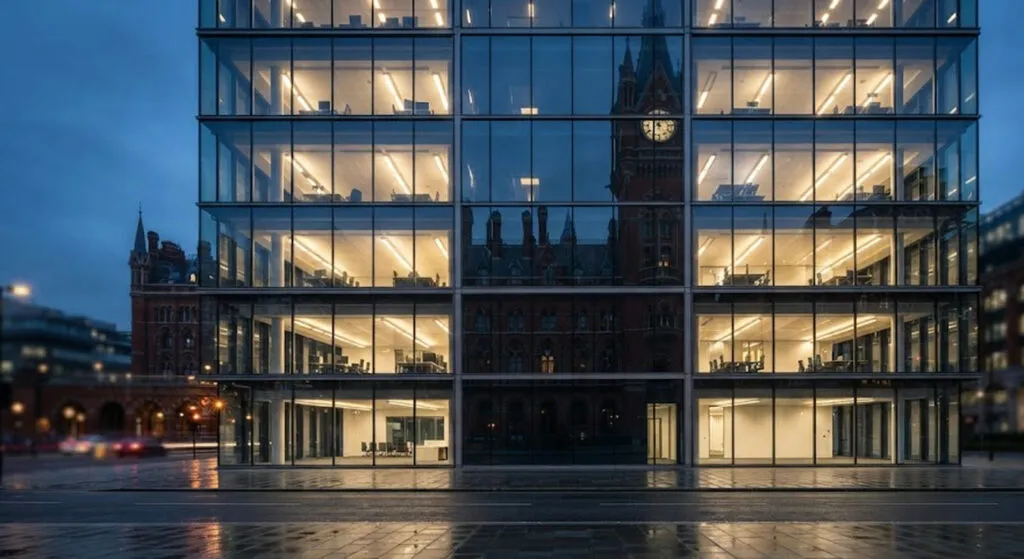
Twenty-odd years ago, King's Cross in London was a place parents did not let their children go. Today it is an address venture capital funds fight over - literally. One fund, according to talk on the London scene, won a deal with a founder because it promised him an office right there. Asked about it, the fund neither confirmed nor denied: „We stop at nothing" to win over and support founders, „including helping them find office space".
The figures behind that scene are serious. Around 3,600 AI startups operate in London today, having raised about 12.1 billion dollars of the 14.8 billion raised in the city overall, according to Dealroom data. Since the start of June, firms in this sector have leased over a million square feet of office space in London, an analysis by the agency Knight Frank shows. The office vacancy rate in the conventional segment is 0.9 percent. Not a typo - less than one percent.
From heroin to some of the most expensive offices in Europe. Hussein Kanji, an investor at Hoxton Ventures, remembers a different King's Cross: „In the eighties, cocaine and heroin made that area the main drug market," he says, recalling syringes in tree hollows and gangs on the streets. „In 1982, the local church was occupied for twelve days straight." Then came a property investor with a vision, and today, Kanji says, it is „the UK's AI hotspot. What a change."
The change was not accidental. It all started in 2016 when DeepMind, freshly bought by Google, moved there. The others followed the scent of talent. Today the same district holds OpenAI, Meta, Isomorphic Labs, Synthesia, and Anthropic has opened a 158,000-square-foot office. Prime rents have risen 18 percent in three years, says Chris Dunn of Knight Frank - and that is only for the largest deals. Shorter ones are dearer still. „Demand has outstripped supply," he says.
This is where the story becomes European, not just London's. The big subject in the district now is sovereignty. When Anthropic cut off access to Mythos and Fable this summer, some of the firms there reached an uncomfortable conclusion - „better we look after ourselves", says Saul Klein, co-founder of the Phoenix Court fund. His co-founder Robin Klein puts it more plainly: it was „a small but sharp reminder that Europe cannot simply rent its AI capabilities; it has to build and hold something of its own".
The question he then poses is one worth hearing for everyone in this part of the continent: will Britain build the infrastructure, the compute, the energy and the capital for that independence to be lasting - „rather than merely hosting branch offices of American labs". A country with 3,600 startups and King's Cross rents is still asking whether it is a hub or a subsidiary. Where does that leave everyone else?
At least one answer is more encouraging than it sounds. Laura González Flórez, chief of staff at Synthesia, explains that around two thirds of the company's engineers work remotely. „From London we can hire and work, with no problem at all, with people from anywhere, from Slovenia to Portugal," she says. In other words: the King's Cross address is paid for by investors and the proximity of the airport, and the code gets written everywhere.
There is another side to the coin, and it is called the war for people. When Anthropic entered London, it advertised a range of 260,000 to 630,000 pounds a year for a machine learning research engineer - while the average salary for the same job in London is around 102,000 pounds. Six times the upper limit. Domestic founders now have to raise bigger rounds just to stay in the game for the same people.
Simon Kohl, founder of Latent Labs, has offices in both London and San Francisco, and the London one is growing faster. „The mood now looks less like London trying to catch up with others and more like London becoming one of the default places for a serious AI company," he says. Zain Ali, founder of the law firm Centuro, sets out the real test: whether significant global companies will be founded, funded and grown in Britain. If that continues, he says, King's Cross „will not just be an AI hub. It will become one of the country's most important strategic assets."
From a distance, the lesson is quieter and more durable than any of these quotes. One district became a world hub because one serious firm moved in ten years ago, and everything else stuck around it. That is not a brilliant strategy - it is patience multiplied by gravity.
The latest 10 news from this category

NextSlide turns notes and documents into slides. A company worth more than entire stock exchanges bought it quietly, and is...

Sequoia came in with a billion, the banks added another 200 million. The founder promises thousands of reactors a year...

While everyone throws billions at generative AI, Greece's Omilia argues most customer questions don't need any of it. Its revenue...
A company founded in Nigeria that financed cars for drivers with no access to credit is now worth 2.1 billion...
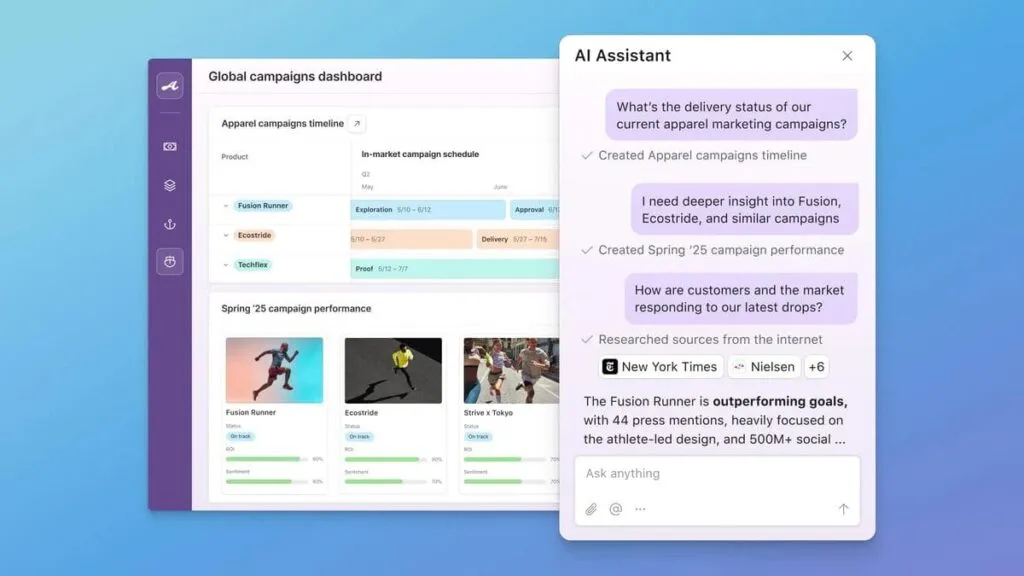
The company did not collapse - it has 480 million in revenue and 500,000 customers. It simply stopped being worth...
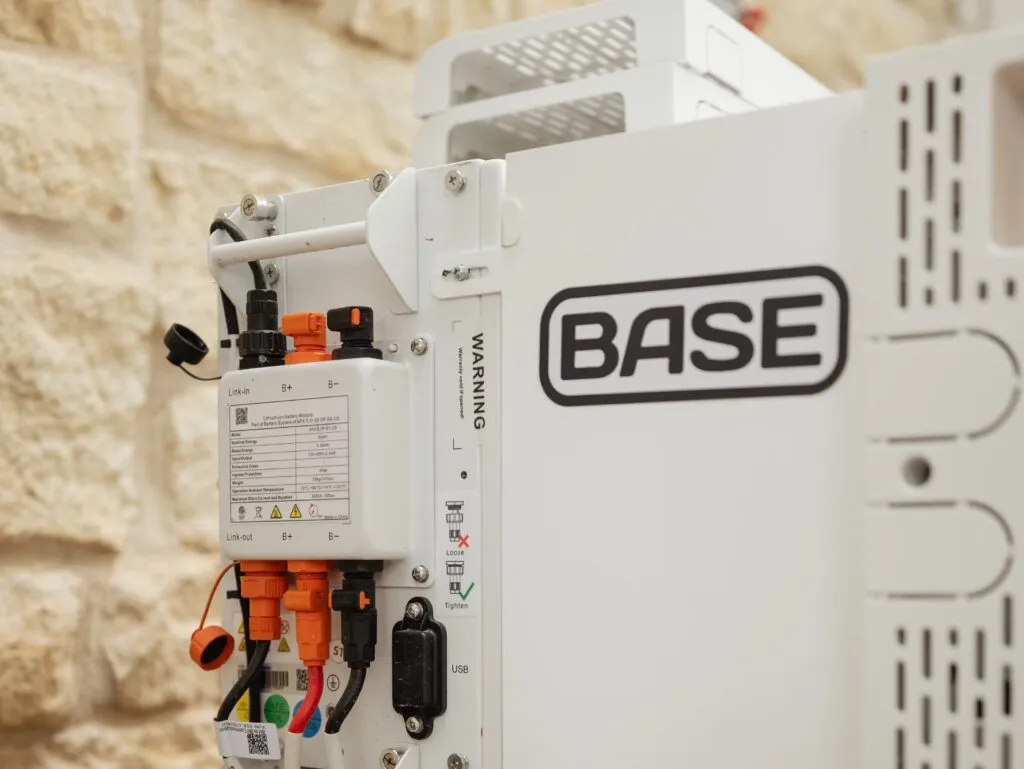
Instead of buying land next to the grid, the company puts the battery at the customer's house and then sells...
A company whose business rests on people driving their own cars is now building a platform where the human is...

There is more money for young founders than ever. Forgiveness for mistakes - none at all, and every wrong step...

Two studies mapped how fraud is manufactured inside tech firms. The conclusion isn't that founders are bad people, but that...
A startup that raised 29 million is selling for 200. The market is no longer growing on new users, but...
This site uses cookies - is that okay? Learn more
Be the first to know when Metla launches something new
Leave your email and we will write when there is a new guide or something new on Metla.