

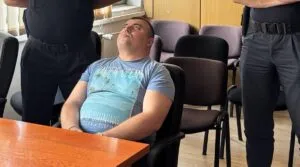
The Two Survivors of Staro Nagoricane Testified: "He Beat Me for a Full Hour" - and the Experts Wrote That the Risk of Repetition Is High
01.09.2026


01.09.2026
01.09.2026
01.09.2026
01.09.2026
01.09.2026
01.09.2026
01.09.2026
31.08.2026
30.08.2026

01.09.2026

01.09.2026

31.08.2026

01.09.2026

01.09.2026
01.09.2026
01.09.2026

31.08.2026

30.08.2026
01.09.2026

01.09.2026
01.09.2026

01.09.2026
31.08.2026

30.08.2026

09.03.2026

27.02.2026

19.02.2026
31.08.2026
30.08.2026

29.08.2026

23.04.2026

23.04.2026

12.04.2026
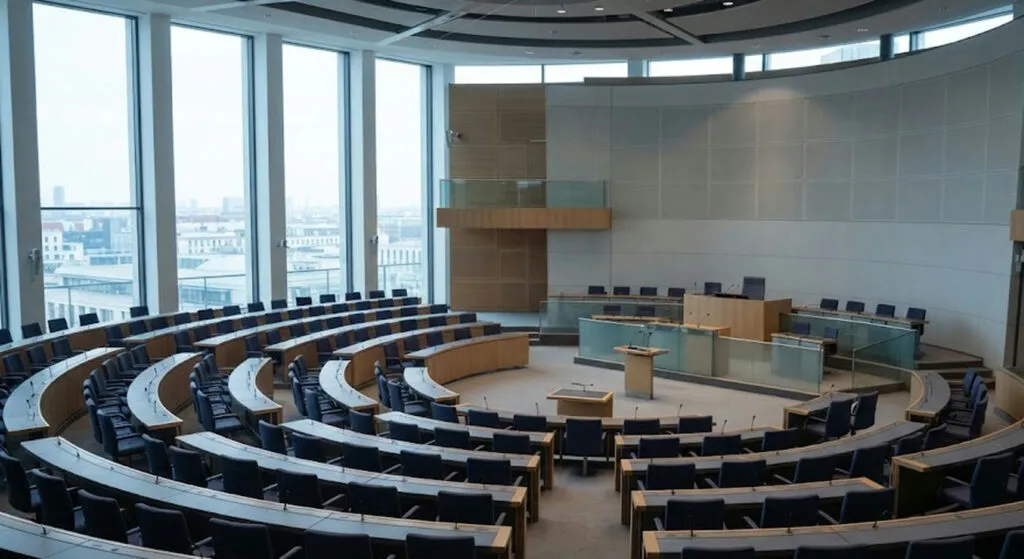
Kosovo may finally get a president. After nearly two years in which its institutions ran on empty, the party of caretaker prime minister Albin Kurti and the opposition LDK have agreed to back a joint candidate. If the deal holds, the deadlock that kept the country stuck is over.
The proposed candidate is Bekim Sejdiu, a 51-year-old law professor at the University of Pristina. He previously served as Kosovo's ambassador to Turkey and consul general in New York. The post he is getting is largely ceremonial, which is the point of the story in itself: two years were spent on a job with no executive power.
The arithmetic that kept the country stuck
Kurti's party holds 53 of 120 parliamentary seats. The LDK has 18 and is the third largest. For a government, Kurti is short only a handful of MPs from the minority parties. For a president, however, a two-thirds majority is needed - 80 votes - and that number was the wall every attempt so far ran into.
Together with the minority parties, the two sides can now assemble those 80 votes. "We hope and believe that the Republic of Kosovo, as it has done many times in the past, will again find a way to move forward and face the great challenges ahead of us," Sejdiu said at a press conference after the deal.
The 7 June vote was the third national election in under 18 months, and it was held precisely because a president could not be elected. That entire electoral machine turned around one post with no executive power. The cost was borne by citizens, not by the parties that failed to agree.
Kosovo is among the poorest countries in Europe and wants EU membership. Brussels has repeated more than once that without stable institutions there are no reforms, and without reforms there is neither money nor progress. Political instability blocked both directly.
The sessions at which a parliamentary speaker is to be elected, the new government confirmed and the head of state voted in have not yet been scheduled. The deal exists, the date does not. In the Balkans, that is a gap that can last for months.
The latest 10 news from this category
Three employees killed in the afternoon, a helicopter manhunt through the night, two days of mourning. We will learn the...
Candles, torches and kissed flags in at least five towns. Glorifying a man convicted of genocide is a criminal offence...
Ten thousand pieces of evidence, 591 witnesses and a final conviction for genocide. Belgrade calls him a general and is...
Convicted of genocide, he died in detention in The Hague. And over the next 24 hours the government and the...
The man convicted of genocide in Srebrenica died in custody in The Hague. The same day, the head of Montenegro's...
He died in UN custody, aged 84, under a final life sentence for genocide. And in parts of the region...
The second most senior figure in the Croatian state briefing his own diplomats on what to convey abroad. On the...
The deputy head of Russia's Security Council accused Western states of double standards, invoking Kosovo. The point was not the...
Three agencies are working the case, and the conclusion was published ahead of them. Kosovo police rejected the claims. What...
The maize dried out, soy yields halved, dairy cattle are going up for sale. The problem is not this summer...
This site uses cookies - is that okay? Learn more
Be the first to know when Metla launches something new
Leave your email and we will write when there is a new guide or something new on Metla.
