

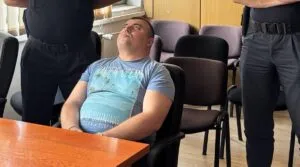
The Two Survivors of Staro Nagoricane Testified: "He Beat Me for a Full Hour" - and the Experts Wrote That the Risk of Repetition Is High
01.09.2026


01.09.2026
01.09.2026
01.09.2026

01.09.2026

01.09.2026

01.09.2026
01.09.2026

31.08.2026
30.08.2026

01.09.2026

01.09.2026

31.08.2026

01.09.2026

01.09.2026

01.09.2026

01.09.2026

31.08.2026

30.08.2026

01.09.2026

01.09.2026

01.09.2026

01.09.2026
31.08.2026

30.08.2026

09.03.2026

27.02.2026

19.02.2026
31.08.2026

30.08.2026

29.08.2026

23.04.2026

23.04.2026

12.04.2026
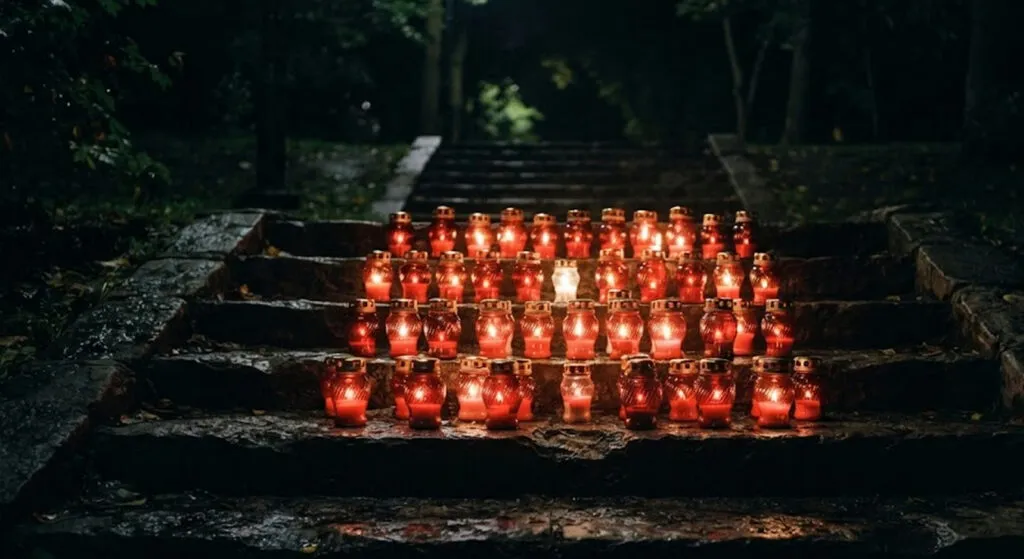
Several thousand people gathered in Pale in Bosnia and Herzegovina to pay tribute to Ratko Mladic - the man sentenced to life imprisonment for genocide in Srebrenica. They lit candles and torches, chanted his name, sang songs in his honour. Some touched a large framed photograph of him, and some kissed the Serbian flag.
Mladic died on 27 August in a hospital in The Hague, aged 84, while serving his life sentence. The international tribunal convicted him in 2017 of genocide, crimes against humanity and violations of the laws of war. That is not a political assessment but a final verdict from a court whose jurisdiction every state in the region recognised.
The gatherings were not only in Pale
Similar gatherings were held in Zvornik, Visegrad, Foca, Novi Grad and elsewhere in the Serb entity. In Zvornik nationalist slogans were shouted, among them "Knife, wire, Srebrenica" - a sentence that is not a slogan but a description of a crime. Banners with Mladic's face appeared in several towns.
In Pale, the war veterans' organisation publicly called on residents to light candles. A church memorial service was also held, as part of the town's patron saint celebration. Pale was the political centre of the Bosnian Serbs during the war from 1992 to 1995 - the administration led by Radovan Karadzic sat there.
The law exists. The question is who applies it
And here is the crucial part of this story. The 2021 criminal code of Bosnia and Herzegovina prohibits the glorification of anyone convicted of genocide or war crimes. The prosecution has already filed indictments connected to the public glorification of Mladic.
So the law is not an abstraction, nor a proposal. It exists, it is in force, and it has already been applied. And yet, on one and the same day, in at least five towns, thousands of people break it openly, in front of cameras, with torches in their hands. Who will answer for it? And what is an article of law worth if it activates several months later, when the violation is being filmed live?
Kissing the Serbian flag at these gatherings is a direct echo of the gesture by Serbian president Aleksandar Vucic in May 2023, when he kissed the flag after the UN General Assembly adopted a resolution on the Srebrenica genocide. The resolution designated 11 July as an international day of remembrance. When the highest office in a state demonstrates the protocol, the rest repeats itself.
The Balkans have a long practice of this - everyone counts their own victims and forgets everyone else's. But this is not a dispute about interpretation. Srebrenica is a legally established genocide, not a point of view. And while the court in The Hague finished its work nine years ago, institutions in the region are still deciding whether to begin theirs at all.
The latest 10 news from this category
Three employees killed in the afternoon, a helicopter manhunt through the night, two days of mourning. We will learn the...
Kurti and the LDK have agreed on Bekim Sejdiu. Two years of stuck institutions and three election cycles over a...
Ten thousand pieces of evidence, 591 witnesses and a final conviction for genocide. Belgrade calls him a general and is...
Convicted of genocide, he died in detention in The Hague. And over the next 24 hours the government and the...
The man convicted of genocide in Srebrenica died in custody in The Hague. The same day, the head of Montenegro's...
He died in UN custody, aged 84, under a final life sentence for genocide. And in parts of the region...

The second most senior figure in the Croatian state briefing his own diplomats on what to convey abroad. On the...
The deputy head of Russia's Security Council accused Western states of double standards, invoking Kosovo. The point was not the...

Three agencies are working the case, and the conclusion was published ahead of them. Kosovo police rejected the claims. What...

The maize dried out, soy yields halved, dairy cattle are going up for sale. The problem is not this summer...
This site uses cookies - is that okay? Learn more
Be the first to know when Metla launches something new
Leave your email and we will write when there is a new guide or something new on Metla.
