

Kratovo man stabs police officer mid-intervention: prosecutors want the 40-year-old detained
15.09.2026


15.09.2026

15.09.2026

15.09.2026

15.09.2026

15.09.2026

15.09.2026

15.09.2026

14.09.2026

13.09.2026

15.09.2026

15.09.2026

14.09.2026

15.09.2026

15.09.2026

15.09.2026

15.09.2026

14.09.2026

13.09.2026

15.09.2026

15.09.2026

15.09.2026

15.09.2026

15.09.2026

14.09.2026

09.03.2026

27.02.2026

19.02.2026

15.09.2026

14.09.2026
14.09.2026

23.04.2026

23.04.2026

12.04.2026

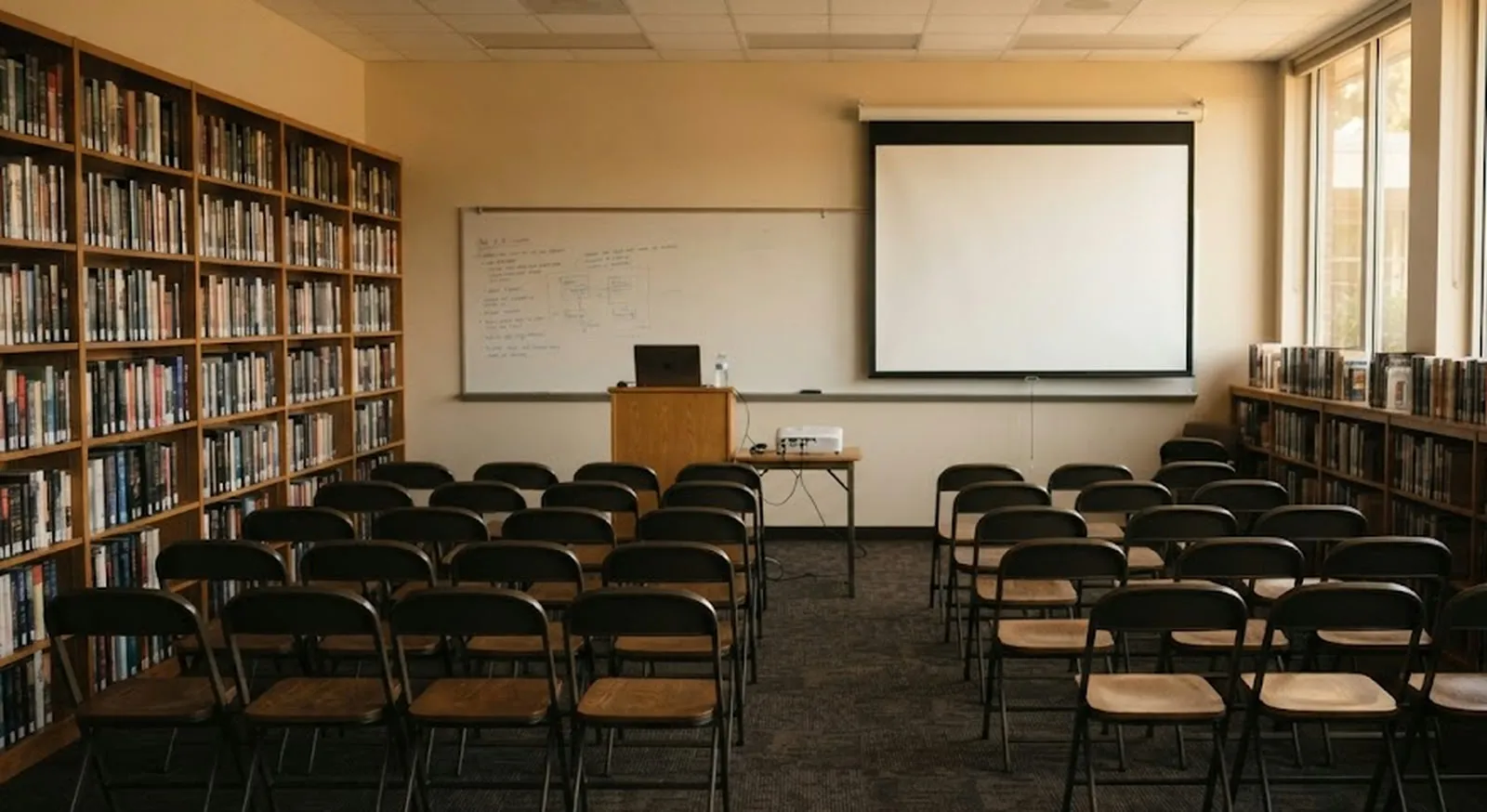
In a room at a library in south Philadelphia, twenty or so adults are sitting on children's chairs, on a colourful rug that teaches kids that M is for moon. None of them is here for the alphabet. They came for a workshop called "Avoiding artificial intelligence", where librarian Charlie Bailey shows them step by step how to turn off Apple Intelligence and Gemini on their own phones.
"I was inspired by people's sense of frustration at having these tools imposed on them," Bailey says. "Tools nobody asked for, and suddenly they are everywhere in our lives."
The class lasts an hour. First an explanation of how conversational models work, why someone might want to use them and why someone might want to avoid them. Then - through all the major platforms and devices in turn, with instructions on the projector, how to switch off each individual feature. "As a librarian, I think it is important to see this as advancing digital literacy and helping people take back control," Bailey says. "Especially when the design looks like it is forcing usage."
The idea spreads faster than the technology it avoids
Bailey took the idea from Hannah Sirois, a librarian in Maine, after she published a piece about her own workshop. Following the post, dozens of librarians from around the world contacted her. "This has never happened to me with anything I have done," Sirois says. "Nobody has ever written to me asking: can you give me your slides for an introduction to computers."
At the library in Bangor where she works, a dozen people usually turn up to her regular classes. For the first AI avoidance workshop she had to close registration at 30 people, open a waiting list and set up a live stream. With the stream, around 70 people attended each of the first two workshops. In Philadelphia, the library's Instagram post gathered over 2,000 likes and 220 shares, when its usual posts do not get past a few dozen. Bailey had to schedule a second session.
"As an information professional, it is good to see that people are sceptical," he says. "It was good to see how many people share this feeling."
This is not a fight against technology - it is a fight for a button
The most interesting part of the workshop is not the slides, but the moment people start giving each other tips. One participant explained that adding the string "&udm=14" to a Google search makes AI-generated results disappear. Bailey wrote it on the board, next to the wifi password for the teen network.
"You have to go through everything to buy a house in today's world, and in two years a data centre could sprout up next to it," says one of those present. Another participant says AI is being pushed on her at work and that every time she thinks about the environment - but immediately adds that she is not against the technology itself: "I am not against it when it comes to medical breakthroughs."
Sirois says the same thing from the other side. She herself points out how useful optical character recognition is when scanning old documents at the library. The argument, then, is not about whether the technology is good. The argument is about who decides when it gets switched on.
"I think forcing these tools onto people's devices is the last straw," she says. "Awareness has been growing for a long time that these companies have too much influence over us and that we are not using these products the way we would want to."
There is something here worth noticing. This is not a protest by technophobes, nor an academic debate. These are libraries - institutions whose job is to give people access to information - spontaneously starting to teach how to switch off something nobody asked for. When the place that has spent decades teaching you how to get connected starts teaching you how to disconnect, that is not a story about artificial intelligence. It is a story about who holds the switch.
The latest 10 news from this category
A scientist at the same company puts the probability of human extinction above 10 percent within the next decade. The...

The president called in while the event was running, and the man who makes the chips answered that there would...

No virus attached, no suspicious file. Just a box that looks like the "I am not a robot" check and...

A researcher quit because the firms are gambling with our lives. Instead of denying it, Anthropic confirmed it - with...
Write a sentence, get a game. Until now it worked only in New Zealand, now in Belgrade too. Creators on...

When the two biggest firms in an industry ask for rules on how fast anyone may run, the rules rarely...

Not a single password fell. What fell was the assumption that a request from a government domain is automatically a...

The biggest names in mathematics have signed a letter against the AI labs. The dispute is not whether the machine...

Five campaigns, 200 million exchanges, and the defences fell to a request for a Japanese translation. The industry that harvested...

The hackers were inside for a whole year. The company confirmed it only after a journalist found his own licence...
This site uses cookies - is that okay? Learn more
Be the first to know when Metla launches something new
Leave your email and we will write when there is a new guide or something new on Metla.
