
Sixteen Arrests in Twenty-Four Hours, All for Drugs: The Police Are Working - But Where Are All These People Coming From?
20.09.2026


20.09.2026

20.09.2026
20.09.2026
20.09.2026
20.09.2026

20.09.2026

20.09.2026
20.09.2026

20.09.2026

20.09.2026

20.09.2026

19.09.2026

20.09.2026

20.09.2026

20.09.2026

20.09.2026

19.09.2026

18.09.2026
20.09.2026

20.09.2026

20.09.2026
20.09.2026

20.09.2026

20.09.2026

09.03.2026

27.02.2026

19.02.2026

20.09.2026

19.09.2026

18.09.2026

23.04.2026

23.04.2026

12.04.2026

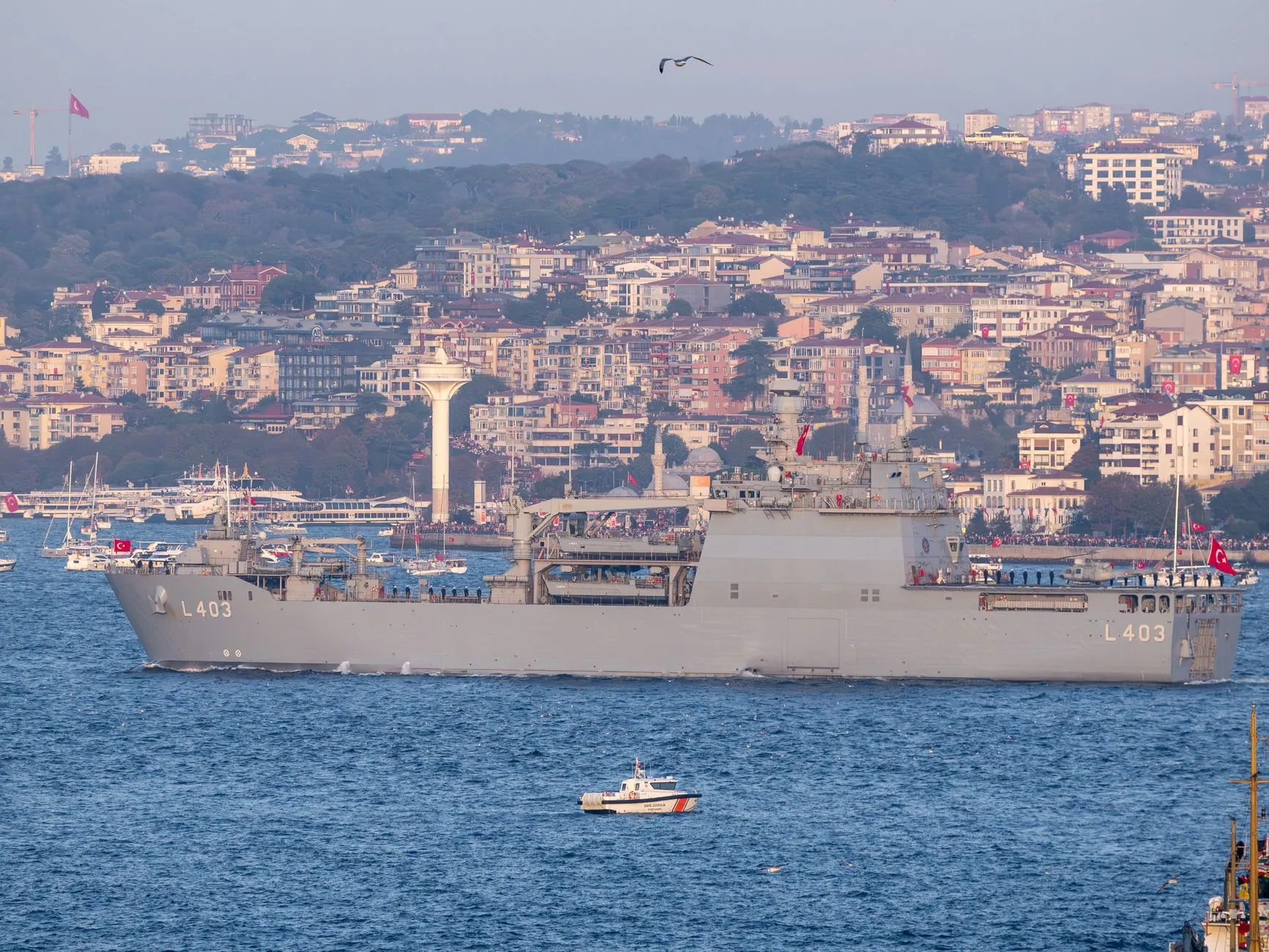
Four and a half years after Russia attacked Ukraine, the Black Sea is one of Europe's most important security frontiers. And, paradoxically, almost empty of warships. The reason is neither strategy nor a lack of will. The reason is a document signed exactly 90 years ago in Montreux, Switzerland.
Six states border the Black Sea: Turkey, Bulgaria, Romania, Georgia, Ukraine and Russia. The first three are NATO members, the rest are not, and two of them are at war with each other. Yet access to that entire sea runs through a single throat - the Dardanelles and the Bosphorus, in the very heart of Istanbul.
Seven hundred metres that decide everything
At its narrowest, the Bosphorus is just 700 metres wide. For comparison, the Strait of Hormuz is around 33 kilometres across. Thomas de Waal of Carnegie Europe puts it without any hedging: „Whoever controls the Turkish straits controls, to a certain degree, trade in the Black Sea and holds an enormous military advantage.“
Darya Isachenko of the German Institute for International and Security Affairs adds that a strong military position in the Black Sea is not Russia's ultimate goal but a means - for geopolitical ambitions well beyond the region and for maintaining great-power status.
What the Convention says
In 1936, representatives of around a dozen states gathered in Montreux and returned sovereignty over the straits to Turkey, after decades of international supervision imposed following the Ottoman Empire's defeat in the First World War. The agreement still stands today.
In peacetime, the straits are open to passenger and commercial traffic. Warships of the Black Sea states move relatively freely, while fleets from outside face limits on tonnage, size and duration - a maximum stay of 21 days.
In wartime the rules are stricter. If Turkey remains neutral, warships of the belligerent parties may not pass. That very article determined the region's fate from February 2022 onwards.
The article that helped Ukraine survive
A few days after the Russian invasion, Turkey invoked Article 19 and applied the wartime restrictions. From that moment, neither Russia nor Ukraine could freely reinforce their fleets in the Black Sea. The only exception was vessels whose home base was there - those could return.
De Waal told a German outlet that the Montreux Convention and early Turkish policy were absolutely crucial to Ukraine's survival. Around 30 Russian ships were left outside the Black Sea. That is one reason Ukraine, with no real navy, managed to hold the advantage at sea - with drones and improvisation, against a document written when drones did not exist even in science fiction.
Western allies felt the same constraint from the other side. In 2024 Britain donated two mine hunters, which could not enter the Black Sea because Turkey classifies them as warships. Ankara's message to its allies, in de Waal's reading, is short: leave the Black Sea to us, we will handle it.
Why nobody wants to reopen the treaty
De Waal describes the Convention as fairly archaic - it still refers to the League of Nations, which has not existed for eight decades. „But I think nobody wants to touch it“, he adds, because that would open a Pandora's box in which everything would have to be renegotiated with Russia.
For Turkey, Montreux ranks among the republic's foundational treaties. Isachenko boils it down to three words: sovereignty, security and status. Whoever reopens the Convention reopens all three.
This part of the story is closest to readers in the region. Two Balkan states - Bulgaria and Romania - are Black Sea countries and NATO members, and yet their sea is opened and closed by Ankara, on the basis of a text older than all their present-day state arrangements. When a country occupies the geographical position that gives it leverage, that leverage goes unnegotiated for centuries.
For ninety years the Montreux Convention has survived wars, leaders and generations. It remains a rare multilateral construction everyone still respects - including Russia, which dislikes it but accepts it. In these times, that is an almost unusual achievement.
The latest 10 news from this category
Two prime ministers in the same Union, the same month, completely opposite diagnoses of who is provoking whom. There is...
A broken aircraft in a field usually ends up in a police note. This one ended up with federal investigators,...
Beijing will easily find another supplier. The harder question is what Washington is actually testing: whether private Chinese companies will...
The law lets Washington hit the five biggest buyers of Russian oil with tariffs of up to 100 per cent....
Measures imposed over the war in Ukraine are now being offered as currency in an entirely different dispute. If the...

A smaller dose and more needles does not mean a safer vaccine, it means an ineffective one. Science has had...
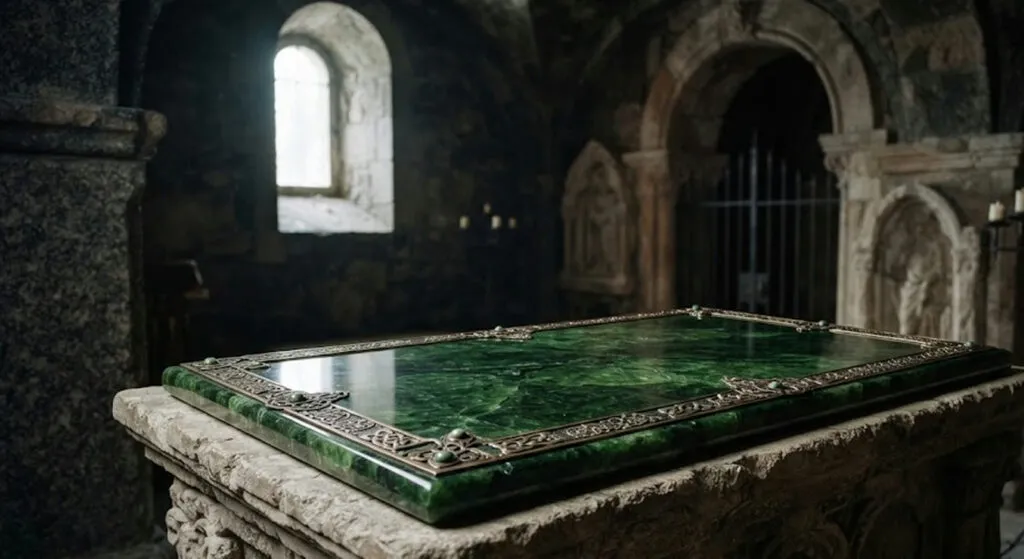
Harald designed the sarcophagus himself, and it is shaped like a ship. The stone is 400 million years old and...

Von der Leyen proposed a status that does not exist in European law, the Canadians distanced themselves, and Washington announced...

The French candidate called the war in Ukraine a slaughterhouse and pointed out it has already lasted longer than the...
Four decades in politics, but the headline the world wrote was about her brother and his sixteen wives. When the...
This site uses cookies - is that okay? Learn more
Be the first to know when Metla launches something new
Leave your email and we will write when there is a new guide or something new on Metla.