
"That's not my job": the trial of the 13 Puls police officers restarted from scratch, and witnesses describe help being refused
22.09.2026


22.09.2026

22.09.2026

22.09.2026

22.09.2026

22.09.2026
22.09.2026

22.09.2026

21.09.2026

20.09.2026

22.09.2026

22.09.2026

21.09.2026

22.09.2026

22.09.2026

22.09.2026

22.09.2026

21.09.2026

20.09.2026

22.09.2026

22.09.2026

22.09.2026

22.09.2026

22.09.2026

22.09.2026

09.03.2026

27.02.2026

19.02.2026

22.09.2026

21.09.2026

21.09.2026

23.04.2026

23.04.2026

12.04.2026

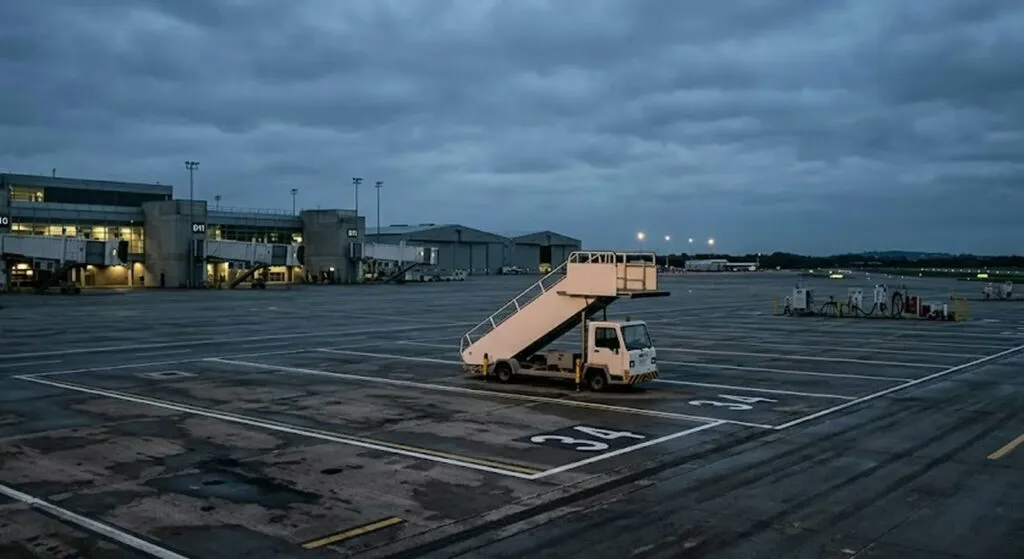
Donald Trump went to Beijing with a plan - to convince Xi Jinping to back American pressure on Iran. He came back with the answer nobody in the White House wanted to hear: China is no longer interested in being a junior partner for U.S. Middle East policy. This is not just a diplomatic setback - it is a strategic signal that will shape the next several months.
The evidence was in the reception itself. Xi Jinping did not personally meet Trump at the airport. Chinese state media gave the American delegation's arrival far less coverage than other diplomatic visits. These are not coincidences - they are messages, and people who work in diplomatic choreography read them fluently.
Former CIA analyst Larry Johnson and Colonel Lawrence Wilkerson called the mission "essentially a failure." In their view, Beijing made clear that it sees the Iran crisis very differently from Washington. China believes the real problem is not Tehran - it is American policy that has been destabilizing the Middle East for years.
Worse, according to diplomat Chas Freeman, "months of normal negotiations and message-setting" simply never happened before the meeting. Trump's team apparently tried to make up for that with personality - presidential energy, glowing endorsements, direct questions. In Beijing, that does not work. Chinese diplomats operate inside structures with decade-long memory and do not react to American showmanship.
What does this mean for the Balkans? First - the meeting confirms what Europe is already absorbing: the United States no longer dictates the world order alone. China has its interests, Russia has its, and those interests are increasingly independent of Washington. For regions like the Balkans - which have traditionally flinched whenever Washington speaks - this opens a new kind of space. Not absolutely better, not absolutely worse, just different. The question is who uses that space first.
For Iran, this is a victory. If Beijing really refuses to follow the American pressure campaign, Tehran gets strategic oxygen. The maximum-pressure strategy depended on isolation - and that wall is cracking. The open question is whether Trump will accept this as the new reality, or whether he will try to win back momentum with even more pressure. History suggests the second option. And then things get complicated.
The latest 10 news from this category
Washington, Copenhagen and Nuuk are signing off on a military presence on an island of 56,000 people - and the...
Phones in Krāslava rang by themselves, the fighters took off, and what exactly triggered the alert - nobody is saying....
In Mecklenburg the CDU finished on 4.9 percent and, for the first time in the history of the Federal Republic,...
Tisza took 16 years of power off Fidesz and won 141 of 199 parliamentary seats. Orbán now says Brussels is...
With 75 percent of protocols counted, the governing party leads in 208 of the 225 single-mandate districts. A parliament of...

He never sat on the throne, and the emirate is lowering its flags for ten days. Sometimes the surname says...

Three options on the table in Washington - military pressure, economic strangulation or a deal - and the president frames...
The party of Adenauer and Kohl slid to the electoral threshold in Mecklenburg, the AfD is already demanding the chancellor's...
Two prime ministers in the same Union, the same month, completely opposite diagnoses of who is provoking whom. There is...
A broken aircraft in a field usually ends up in a police note. This one ended up with federal investigators,...
This site uses cookies - is that okay? Learn more
Be the first to know when Metla launches something new
Leave your email and we will write when there is a new guide or something new on Metla.