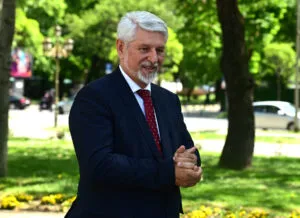
A New Criminal Complaint Against Jakimovski: A Building Permit Based on a Plan Struck Down Back in 2018
16.09.2026


16.09.2026
16.09.2026
16.09.2026
16.09.2026
16.09.2026
16.09.2026

16.09.2026

15.09.2026

14.09.2026
16.09.2026
16.09.2026

15.09.2026

16.09.2026
15.09.2026
14.09.2026

16.09.2026
16.09.2026

16.09.2026

16.09.2026

15.09.2026
15.09.2026

09.03.2026

27.02.2026

19.02.2026
16.09.2026

15.09.2026
14.09.2026

23.04.2026

23.04.2026

12.04.2026

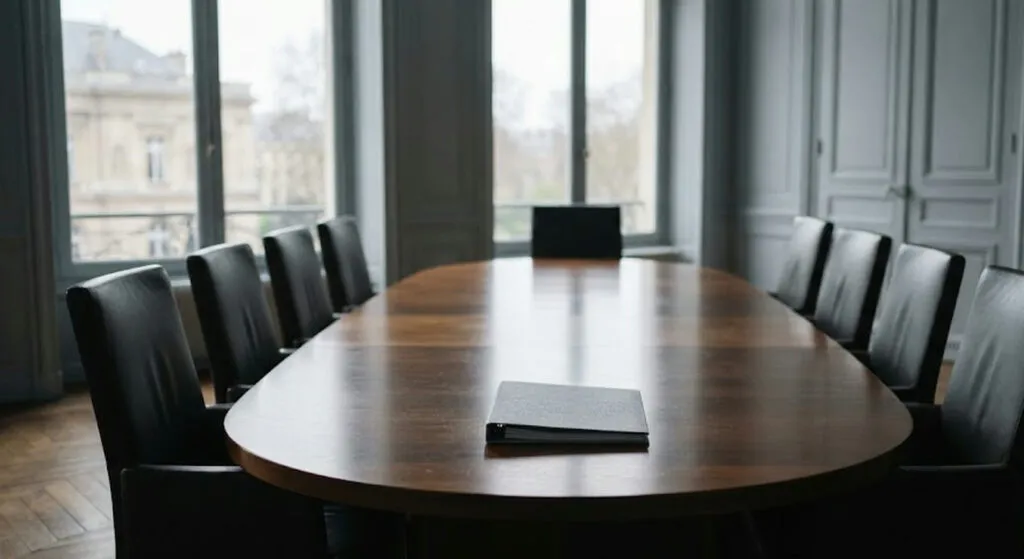
Sanctions against Russia were meant to be the hardest instrument the European Union has. Three and a half years on, they are up for trade - and not because of Russia, but because of a few French citizens imprisoned in Azerbaijan.
France has asked Brussels to remove Alisher Usmanov, the Russian-Uzbek oligarch the Union lists as close to Vladimir Putin, from its sanctions register. The request caught diplomats off guard. One of them described it in a single word: astonishing. Paris had never previously pushed for easing sanctions on Russian oligarchs - on the contrary, it presented itself as one of the firmest wings in the Union.
Why France is suddenly advocating for a Russian oligarch
The answer has nothing to do with Russia or the war in Ukraine. According to the European financial press, Paris is trying to strike a deal with Azerbaijan over the release of several imprisoned French nationals, and striking Usmanov off the list is one of the cards on the table. A sanction imposed over aggression against one state is being offered as currency to settle an entirely different international dispute.
A French diplomat defends this with a formulation that says everything on its own: France has a specific national security interest and wants to accommodate international partners who approached it regarding Usmanov. That same source points out that France remains among the most determined in tightening pressure on the Russian war machine. Those two sentences sit together badly.
Croatia and Italy went over to the French side
This is the part that touches our region most. Croatia and Italy backed the French request - formally in order to reach a compromise and prevent sanctions against everyone else linked to Russia from collapsing. The majority of member states remain against. So a neighbouring EU country, which at every summit explains the importance of a united European stance towards Moscow, found itself on the side of relief when the moment came.
Whether that is pragmatism or capitulation depends on who is holding the microphone. But one senior European diplomat put the question directly: a move like this rewards not only Russia but the practice of jailing European citizens. Several countries fear a precedent is being set - a third state holds your people, you concede.
A mechanism anyone can take hostage
Renewing this sanctions regime requires unanimity from all 27 member states. Which means a single government can block the entire package. France and Slovakia did exactly that - demanding concessions over sanctioned Russian billionaires. Nearly 2,600 individuals and entities linked to Russian aggression found themselves facing automatic expiry of the measures. The rescue was a temporary extension of just seven days, enough to keep talking.
Slovakia opened the subject by seeking the removal of two names - Usmanov and Mikhail Fridman. Until now such requests came from governments openly closer to Moscow, above all Hungary and Slovakia. Now Paris has joined them. And Luxembourg immediately let it be known that if Usmanov goes, it will ask for Fridman too. That is what it looks like when one concession opens the counter.
Kyiv is watching and remembering
Volodymyr Zelensky called on European partners not to give way, with an argument that is hard to dispute: the oligarchs are the load-bearing structure of Putin's system and must feel consequences. For as long as the war lasts, he said, they must find peace nowhere in the world.
The question that remains is not about Usmanov. The question is whether sanctions imposed over one thing can be traded away for something entirely different - and what that means for every future Union decision requiring unanimity. The Balkans know this mechanism by heart: when one hand can stop the whole package, every problem becomes a matter for bargaining. Except this time the word is not held by Skopje or Sofia, but by Paris.
The latest 10 news from this category
El Nino in the Pacific shifts the currents that decide where snow falls. An area that usually gets a metre...
The easiest way to dismiss an uncomfortable argument is to point at who is making it. But that does not...
The appeals court ruled the entire trial must start over. The son of Norway's queen is waiting for it on...
Trump scaled back the military exercises to ease the tension, and Wonsan answered in the form of projectiles. What does...

The sanctions list got a seven-day extension instead of one measured in months, a move diplomats themselves call unprecedented. Two...
Switzerland offered a table for talks on Ukraine, Moscow replied that the table stopped being neutral once Bern adopted EU...
The will says one thing, a committee of twenty-one men decided another. The queen mother says the army pulled the...
A country that was Europe's byword for stability for decades now has a parliament split into two blocs by a...
Sixteen years in power, defeat at a regular election, five months of quiet - and now the election result is...
When an institution with a legal department and a palace apparatus has to publish a list of its verified accounts,...
This site uses cookies - is that okay? Learn more
Be the first to know when Metla launches something new
Leave your email and we will write when there is a new guide or something new on Metla.