
Sixteen Arrests in Twenty-Four Hours, All for Drugs: The Police Are Working - But Where Are All These People Coming From?
20.09.2026


20.09.2026

20.09.2026

20.09.2026

20.09.2026

20.09.2026

20.09.2026

20.09.2026
19.09.2026
18.09.2026

20.09.2026

20.09.2026

19.09.2026
20.09.2026

20.09.2026

20.09.2026

20.09.2026
19.09.2026

18.09.2026

20.09.2026

20.09.2026

20.09.2026

20.09.2026

20.09.2026

20.09.2026

09.03.2026

27.02.2026

19.02.2026

20.09.2026
19.09.2026

18.09.2026

23.04.2026

23.04.2026

12.04.2026

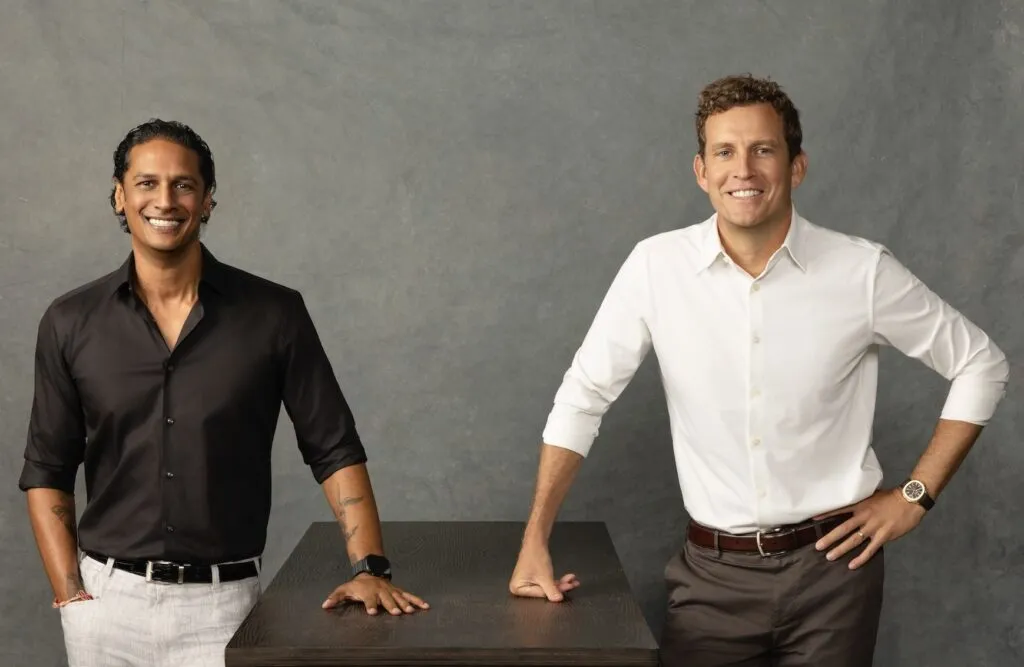
There is a company whose product is not an app, nor a chip, nor a model. Its product is - other companies. UP.Labs, now operating under the name Vantora, has raised 100 million dollars from the investment fund Silversmith Capital Partners. It is its first outside investment since being founded in 2022.
The model is simple and, looked at closely, fairly old. Vantora builds startups to order for large corporations. The clients are not an audience - they are the first investors and the first customers at the same time. The list includes Alaska Airlines, Porsche (the first partner, since 2022), J.B. Hunt, Wabash and TDG, the parent company of Ashley Furniture, plus partners from industrial manufacturing and from the oil and gas sector who prefer not to be named.
What changed this year is where those startups end up. Until now they were built to go to market. Now the partner has the option of absorbing the new company into its own operations and keeping it. Founder and chief executive John Kuolt calls that "our own merger and acquisition pipeline" - a nicer way of saying the corporation pays for the development, then takes the product and shares it with nobody.
Why they changed at all. Kuolt says the old model made them miss the best ideas. "We were missing the highest-value problems, which had the greatest potential precisely because of that," he says. He gives a concrete example involving J.B. Hunt: "They said - there's no way you're taking this out into the world - and so we dropped the idea." Under the new model such ideas are no longer dropped, because they never go outside in the first place.
That reversal pushed the company deep into what the industry calls physical artificial intelligence - software that runs machines, trucks, factories and aircraft rather than text on a screen. Vantora's projects so far come precisely from the automotive, aviation and logistics sectors.
It is worth noticing what that means for anyone wanting to enter the same game. When innovation moves inside large corporations and emerges only as their internal system, nothing is left for anyone else to buy, license or copy. The old cycle - a startup grows, proves itself, then gets bought by a big player - at least left traces in public. This one does not leave even that.
A 100 million dollar investment in a company that builds companies on somebody else's behalf is also a clear message about where power is moving. Not to whoever has the idea, but to whoever has the trucks, the planes and the factories the idea can be run on.
The latest 10 news from this category

Sold for two billion, blocked by the state, bought back by its own investors - and now worth twice as...
An eight-year-old firm that started out mining crypto has tripled its value in ten months. It did not discover anything...
The price of uranium has jumped 75 percent in five years, and the list of countries that mine it reads...
Exein raised 270 million dollars and its valuation jumped thirtyfold in two years. The European regulation coming into force in...
A startup valued at 94 million dollars changed hands, and both sides said openly what was being bought - not...
A technology sold for decades as the answer to the climate is now taking money from the defence industry. The...
The board voted, the founder kicked the administrators out of Slack and held out for three days. What does a...

Three months ago the company raised 60 million. Now it is worth almost ten times that, and its product is...

After Ohridska Banka, Sparkasse has gone after a second one. The approvals come from Podgorica, Belgrade and Frankfurt. The market...

They had offers and visas to stay in the US. They went back to Munich because the numbers worked better...
This site uses cookies - is that okay? Learn more
Be the first to know when Metla launches something new
Leave your email and we will write when there is a new guide or something new on Metla.