

Senior prosecutor's office in Bitola searched: unofficially, the trail leads to Markovski's passport
07.10.2026


07.10.2026

07.10.2026

07.10.2026
07.10.2026

07.10.2026

07.10.2026

07.10.2026

06.10.2026

06.10.2026

07.10.2026

07.10.2026

06.10.2026

07.10.2026

07.10.2026

07.10.2026

07.10.2026

06.10.2026

05.10.2026

07.10.2026

07.10.2026

07.10.2026

07.10.2026

07.10.2026

06.10.2026

09.03.2026

27.02.2026

19.02.2026

07.10.2026

06.10.2026

05.10.2026
06.10.2026

05.10.2026

04.10.2026

23.04.2026

23.04.2026

12.04.2026

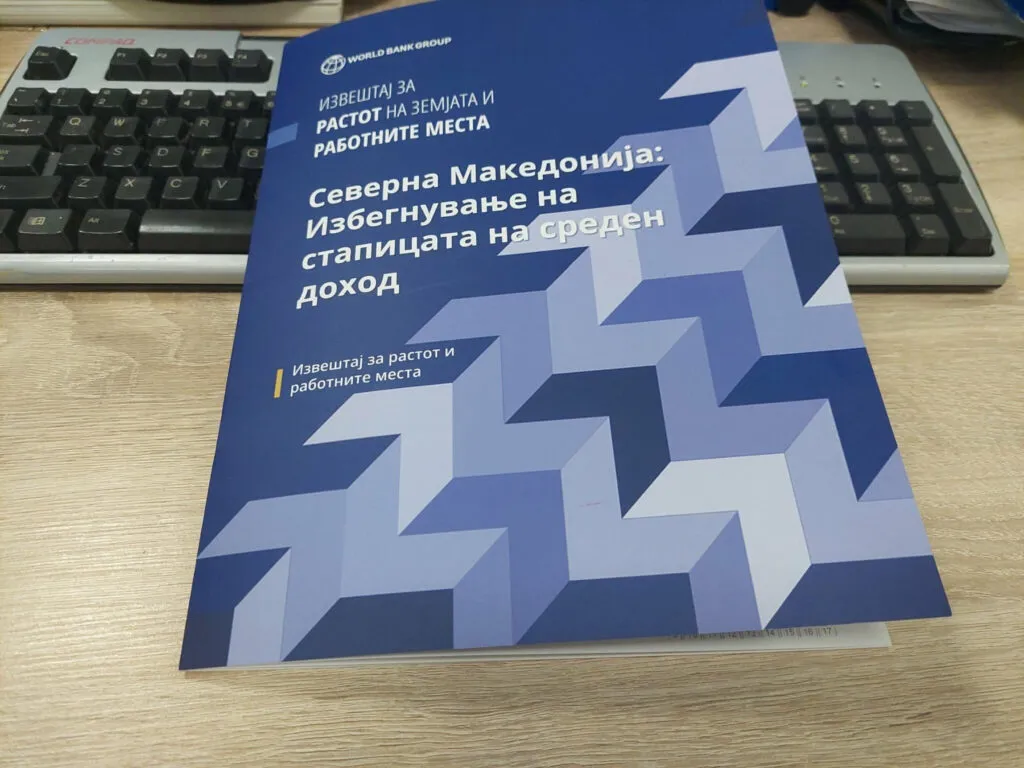
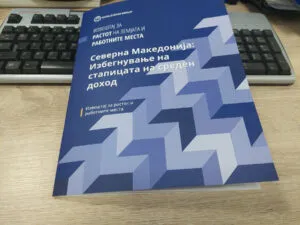
The World Bank presented its report on growth and jobs in Skopje, and the message is an uncomfortable one: Macedonia made a big leap after independence, and then stopped. In less than two decades the country moved from lower- to upper-middle income, but for the past 17 years it has stayed stuck on that plateau.
If nothing changes, average annual growth will slow to 2.4% through 2050. At that pace, by the middle of the century Macedonia would reach only 55% of average EU income. A comprehensive reform package could lift growth to 3.8%, create 53,000 jobs for people who are currently outside the labour market, and improve wages and conditions for another 196,000 workers.
The neighbours are closing the gap faster
The regional comparison is the most painful number. Over the past decade Albania, Serbia and Montenegro narrowed their income gap with the EU by seven to ten percentage points. Macedonia - by just four, to around 42% of the Union's average GDP per capita.
According to the World Bank, the current growth model is hitting its limits: private consumption, low-value-added foreign investment with high imports, and exports concentrated on a small number of markets and products. The report lists three structural weaknesses: low productivity and low investment; distorted markets with weak competition; and human capital that is underused, shrinking and increasingly expensive.
The people who aren't there
Women's participation in the labour market is 19 percentage points lower than men's. 24% of young people are neither working nor in education or training. About 22% of employees are overqualified for the job they do. There is real success too: unemployment, according to senior economist Sanja Madzarevic-Sujster, is now around 11%, compared with around 35% two decades ago, and poverty has been cut to almost a third.
Prime Minister Hristijan Mickoski called the report a good basis for reforms and pointed out that over the past 27 months average growth has been above 3.5%, higher than in the EU. But he himself warned of a number that sounds worse than any report: today there are 709,000 registered employees, growth of five percent needs at least 800,000, and in 15 to 20 years, he fears, the number could fall below 500,000.
The World Bank and the government are looking at the same hole - the people who aren't there. The difference is the tone: the bank talks about the risk of stagnation, the government about stability. If the neighbours can close the gap with the EU faster, what is holding Macedonia back - and who is going to carry out the reforms everyone is now applauding?
The latest 10 news from this category

The prime minister says pensioners have nothing to worry about. The Fiscal Council calculates a hole worth 5.2% of GDP....

The statistics say price growth is slowing. The customer at the table sees something else: alcoholic drinks up 5.7%, food...

A post with over a million views showed what Amazon pulls out of every order. One pair of leggings -...

Their first idea had no future, so the three founders torched it. The second hit over a million dollars in...
While every piece of software pushes an assistant you never asked for, the foundation behind the free office suite says...

Cheap fuel has a price, and now it is landing in the budget. Mickoski did not say where the cuts...
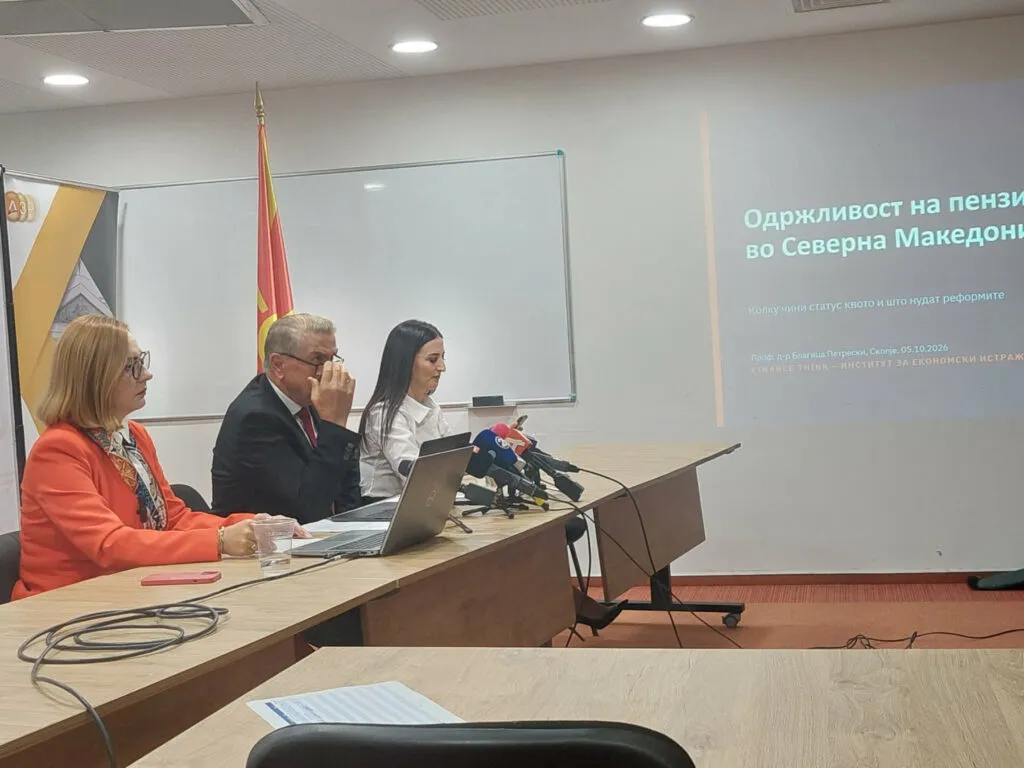
The budget already covers 41 percent of the Pension Fund, and by the mid-2040s there will be fewer contributors than...
The proposal would indirectly cut the number of days off to 13. An analysis of how much companies actually lose...

Brussels forced OpenAI to release a watermark the company had ready back in 2024. Macedonia isn't in the EU, so...

Andreessen Horowitz is leading the round, and the box promises your data stays with you alone and that it will...
This site uses cookies - is that okay? Learn more
Be the first to know when Metla launches something new
Leave your email and we will write when there is a new guide or something new on Metla.