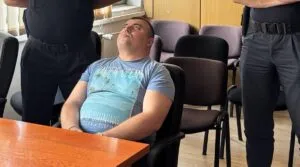
The Two Survivors of Staro Nagoricane Testified: "He Beat Me for a Full Hour" - and the Experts Wrote That the Risk of Repetition Is High
01.09.2026


01.09.2026

01.09.2026
01.09.2026
01.09.2026

01.09.2026

01.09.2026

01.09.2026

31.08.2026

30.08.2026

01.09.2026

01.09.2026

31.08.2026

01.09.2026

01.09.2026

01.09.2026

01.09.2026

31.08.2026

30.08.2026
01.09.2026

01.09.2026

01.09.2026

01.09.2026
31.08.2026

30.08.2026

09.03.2026

27.02.2026

19.02.2026
31.08.2026
30.08.2026

29.08.2026

23.04.2026

23.04.2026

12.04.2026
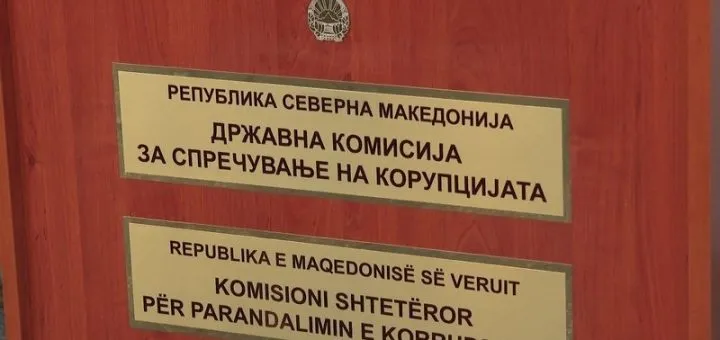
The State Commission for Prevention of Corruption read the Law on Financing of Political Parties and found holes. Not one - a series. And not after somebody filed a complaint, but on its own initiative, as part of the anti-corruption plan for reviewing legislation in 2026.
The most important objection concerns Article 10, the one governing how the state budget splits money between parties. The commission's president, Adem Čučulj, phrased the question carefully but unambiguously: "It is legitimate to ask whether this kind of distribution is proportional and whether it provides fair and equal opportunities to all participants."
Money that grows, rules that do not change
The commission points to something rarely said out loud: the funds for financing parties are public money, and they are continuously increasing. That is why, the commission says, it needs to be re-examined whether the provision is purposeful, appropriate and fair, and whether it achieves the goal it was adopted for at all.
When the distribution of public money favours those already in power or already large, that is not an accident in the law - it is a design. Whether that is the case here, the commission does not claim. It only asks. But the fact that the state anti-corruption body had to open the question itself says a great deal about who has not wanted to open it until now.
A membership fee with no sanction
Article 14 governs the membership fees paid by party members. According to the commission, the provision lacks a preventive mechanism, and if somebody exceeds the prescribed level of the fee, the law's misdemeanour provisions foresee no sanction whatsoever.
That means a limit exists, but there is no consequence for breaking it. In party financing, that is a channel that opens itself.
Donations and registers
On Article 16, which sets the total amount of an individual donation from natural and legal persons, the commission asks for the legal gap to be removed and the provision to be aligned with the Electoral Code. Two laws are talking about the same money and they do not match.
Article 17 is even more interesting. It requires parties to make their donation registers available - via a website "or in another appropriate manner". The commission says it is not clear what that other appropriate manner is, which leaves room for subjective interpretation. Particularly, as it points out, for parties that have no website at all.
In other words: a party can claim the register was available, and nobody can prove it was not.
What the commission asks for in the end
In the report it will submit to the competent institutions, the commission recommends that Article 26 include an obligation for parties to submit their annual financial statements to the commission itself, in order to align with the Law on Prevention of Corruption and Conflict of Interest.
So, at the moment, the anti-corruption body does not have to receive the financial accounts of the parties whose funding it oversees. That recommendation says more about the state of things than any of the others.
The recommendations now go to the institutions. The law is amended by parliament. Parliament is made up of parties. Who is going to vote for stricter rules on their own funding?
The latest 10 news from this category
Dalibor Kitanovikj placed Ratko Mladic among "generals of the heavenly army". The Government wants him to withdraw the post. The...

Three institutions, three different speeds. The competition commission already said yes, the media regulator now says wait, and the financial...
When the party of a sitting minister publicly pays tribute to a convicted war criminal, asking whether that is the...
How many applied, how many turned up for testing, how many passed. The ministry has that data in the same...
Three weeks of hospital treatment, a return to Skopje Prison on 26 August, and already an emergency transfer back. The...
The party claims the Pehchevo initiative failed because an opposition figure was behind it. The council there voted unanimously.
Tetovo Clinical Hospital sits under the health ministry. The director says there is nothing political about it - and in...
The fire was out, there was not a trace of it for a full day - then it flared again....
The isotope is brought from Istanbul, and talks are underway with Sofia. Filipche demands an immediate fix, VMRO-DPMNE answers with...
Legally the denial holds - Article 22 applies to every employer. But the question that created the story is not...
This site uses cookies - is that okay? Learn more
Be the first to know when Metla launches something new
Leave your email and we will write when there is a new guide or something new on Metla.