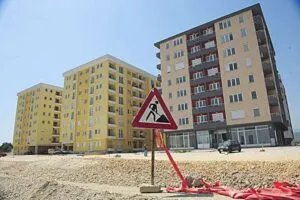
A New Criminal Complaint Against Jakimovski: A Building Permit Based on a Plan Struck Down Back in 2018
16.09.2026


16.09.2026

16.09.2026

16.09.2026
16.09.2026
16.09.2026

16.09.2026

16.09.2026

15.09.2026

14.09.2026

16.09.2026

16.09.2026

15.09.2026

16.09.2026

15.09.2026

14.09.2026

16.09.2026

16.09.2026

16.09.2026

16.09.2026

15.09.2026
15.09.2026

09.03.2026

27.02.2026

19.02.2026

16.09.2026

15.09.2026

14.09.2026

23.04.2026

23.04.2026

12.04.2026


Hungary goes to the polls today in an atmosphere of great uncertainty and sharp polarization. For the first time in 16 years, voters have a real opportunity to bring about a change of government in the country whose leader Viktor Orban has governed longer than any other EU member state leader.
The latest polls reveal a clear generational divide that could prove decisive for the outcome. According to a survey by the Publikus institute, Peter Magyar's Tisza party has the support of 53% of voters who have already decided, while Prime Minister Orban's Fidesz receives 39%. Among all respondents, Tisza leads with 38% versus 29% for Fidesz, while around 25% have yet to make up their minds.
Magyar has managed to establish himself as Orban's main challenger, running a campaign focused on fighting corruption, modernizing the state, and returning Hungary to European values. His party enjoys the trust of the majority of voters under 35.
Orban, on the other hand, is trying to solidify his base with a promise of a 14th pension payment, aimed at the oldest voters. "We offer security and care for the elderly, while the opposition promises risky experiments," the prime minister declared.
However, analysts warn that even in the event of an opposition victory, the return to liberal democracy will be neither quick nor simple. Over the past 16 years, Fidesz has deeply embedded itself in the state apparatus - from the Constitutional Court and the chief prosecutor to the media regulator. Without a two-thirds majority, a new government would struggle to change the constitutional mechanisms through which Fidesz retains control.
Additional uncertainty stems from the fact that elections in Hungary, while formally free, are not entirely fair due to gerrymandered electoral districts and suspicions of pressure in poorer regions. Turnout will be crucial - the result depends on whether young people will show up in sufficient numbers to overcome the disciplined base of the ruling party.
The latest 10 news from this category

Sanctions imposed over one war are being offered as currency in an entirely different dispute. Most member states are against...
El Nino in the Pacific shifts the currents that decide where snow falls. An area that usually gets a metre...

The easiest way to dismiss an uncomfortable argument is to point at who is making it. But that does not...
The appeals court ruled the entire trial must start over. The son of Norway's queen is waiting for it on...

Trump scaled back the military exercises to ease the tension, and Wonsan answered in the form of projectiles. What does...

The sanctions list got a seven-day extension instead of one measured in months, a move diplomats themselves call unprecedented. Two...
Switzerland offered a table for talks on Ukraine, Moscow replied that the table stopped being neutral once Bern adopted EU...
The will says one thing, a committee of twenty-one men decided another. The queen mother says the army pulled the...
A country that was Europe's byword for stability for decades now has a parliament split into two blocs by a...
Sixteen years in power, defeat at a regular election, five months of quiet - and now the election result is...
This site uses cookies - is that okay? Learn more
Be the first to know when Metla launches something new
Leave your email and we will write when there is a new guide or something new on Metla.