

Kratovo man stabs police officer mid-intervention: prosecutors want the 40-year-old detained
15.09.2026


15.09.2026

15.09.2026

15.09.2026

15.09.2026
15.09.2026

15.09.2026

15.09.2026

14.09.2026
13.09.2026

15.09.2026

15.09.2026

14.09.2026

15.09.2026

15.09.2026

15.09.2026

15.09.2026

14.09.2026

13.09.2026

15.09.2026

15.09.2026

15.09.2026

15.09.2026

15.09.2026

14.09.2026

09.03.2026

27.02.2026

19.02.2026

15.09.2026

14.09.2026

14.09.2026

23.04.2026

23.04.2026

12.04.2026

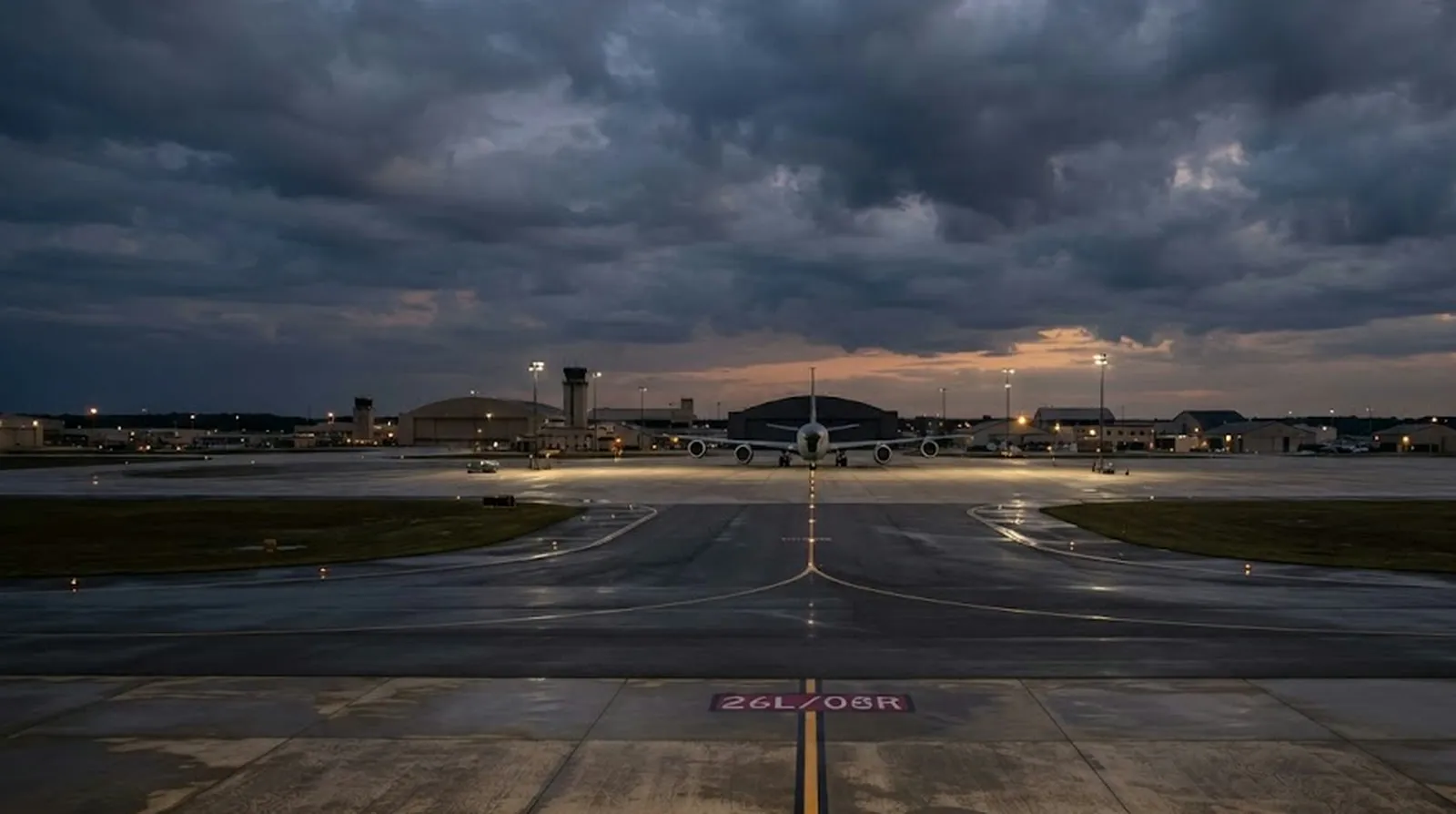
Iran has warned Bulgaria. Not once, not twice - three times. And not through a diplomatic note in an envelope, but publicly, via the spokesman of the Iranian foreign ministry. The reason is simple: Donald Trump thanked the Bulgarian authorities for allowing American aerial refuelling aircraft to use military bases on Bulgarian territory.
That thank-you was enough. Iranian spokesman Esmail Baghaei said Bulgaria will bear responsibility for letting American air operations pass through its space. Then came the sentence that says everything about the tone of the message: „The Bulgarian people know very well that the Iranian people have never had any problems with Bulgaria.”
That is a classic diplomatic construction - separating the people from the government. We have no problem with you, we have one with those who decide in your name. Everyone in the Balkans recognises this sentence, because we have heard it too many times, in too many versions, from too many directions.
Bulgaria says it has nothing to fear
Defence Minister Dimitar Stoyanov dismissed concerns that Iran might strike Bulgarian territory with missiles. His argument is the opposite of the expected one: in his view the security risk has actually fallen since American aircraft moved from civilian airports to military bases.
The logic is understandable - a military base has air defence, a civilian airport does not. But that calculation only works if the adversary aims precisely, and only if it decides to aim at all. Those are two assumptions, not two guarantees.
Baghaei described the Bulgarian decision as part of a broader pattern of cooperation enabling logistical operations against Tehran. In other words: for Iran, a Bulgarian runway is not a neutral point on a map but a link in a chain.
Why this is a Balkan story, not a Middle Eastern one
Bulgaria is a NATO and EU member, and within that framework its decision is entirely legitimate. But geography does not read treaties. A country in the Balkans, with access to the Black Sea, currently appears on the list of states Tehran names explicitly in its warnings. That is a new position for a Balkan neighbour, and it is not a position anyone volunteers for.
Would we react any differently here if one of our own bases suddenly turned up in a sentence like that? The question is less rhetorical than it looks - the Balkans have played the same role for decades, the role of ground that other people's aircraft cross, while the bill for the consequences always arrives locally.
For now it all stays at the level of words. Three warnings, no strikes. But what starts as a press statement rarely stays only a press statement - the Balkans learned that the hard way.
The latest 10 news from this category
Trump scaled back the military exercises to ease the tension, and Wonsan answered in the form of projectiles. What does...

The sanctions list got a seven-day extension instead of one measured in months, a move diplomats themselves call unprecedented. Two...
Switzerland offered a table for talks on Ukraine, Moscow replied that the table stopped being neutral once Bern adopted EU...
The will says one thing, a committee of twenty-one men decided another. The queen mother says the army pulled the...
A country that was Europe's byword for stability for decades now has a parliament split into two blocs by a...
Sixteen years in power, defeat at a regular election, five months of quiet - and now the election result is...

When an institution with a legal department and a palace apparatus has to publish a list of its verified accounts,...

Nobody said they do not trust Washington. Everyone is behaving as though they do not - gold, weapons, the cloud...
The warning reached the president three years before 9/11. The problem was not a lack of information, but that nobody...
In 1976 tradition demanded the future king choose a bride with no past. Thirty years later that same king married...
This site uses cookies - is that okay? Learn more
Be the first to know when Metla launches something new
Leave your email and we will write when there is a new guide or something new on Metla.
