


Kratovo man stabs police officer mid-intervention: prosecutors want the 40-year-old detained
15.09.2026


15.09.2026

15.09.2026
15.09.2026

15.09.2026
15.09.2026
15.09.2026

15.09.2026

14.09.2026
13.09.2026

15.09.2026

15.09.2026

14.09.2026
15.09.2026
15.09.2026

15.09.2026

15.09.2026

14.09.2026

13.09.2026

15.09.2026

15.09.2026

15.09.2026

15.09.2026

15.09.2026

14.09.2026

09.03.2026

27.02.2026

19.02.2026

15.09.2026

14.09.2026
14.09.2026

23.04.2026

23.04.2026

12.04.2026

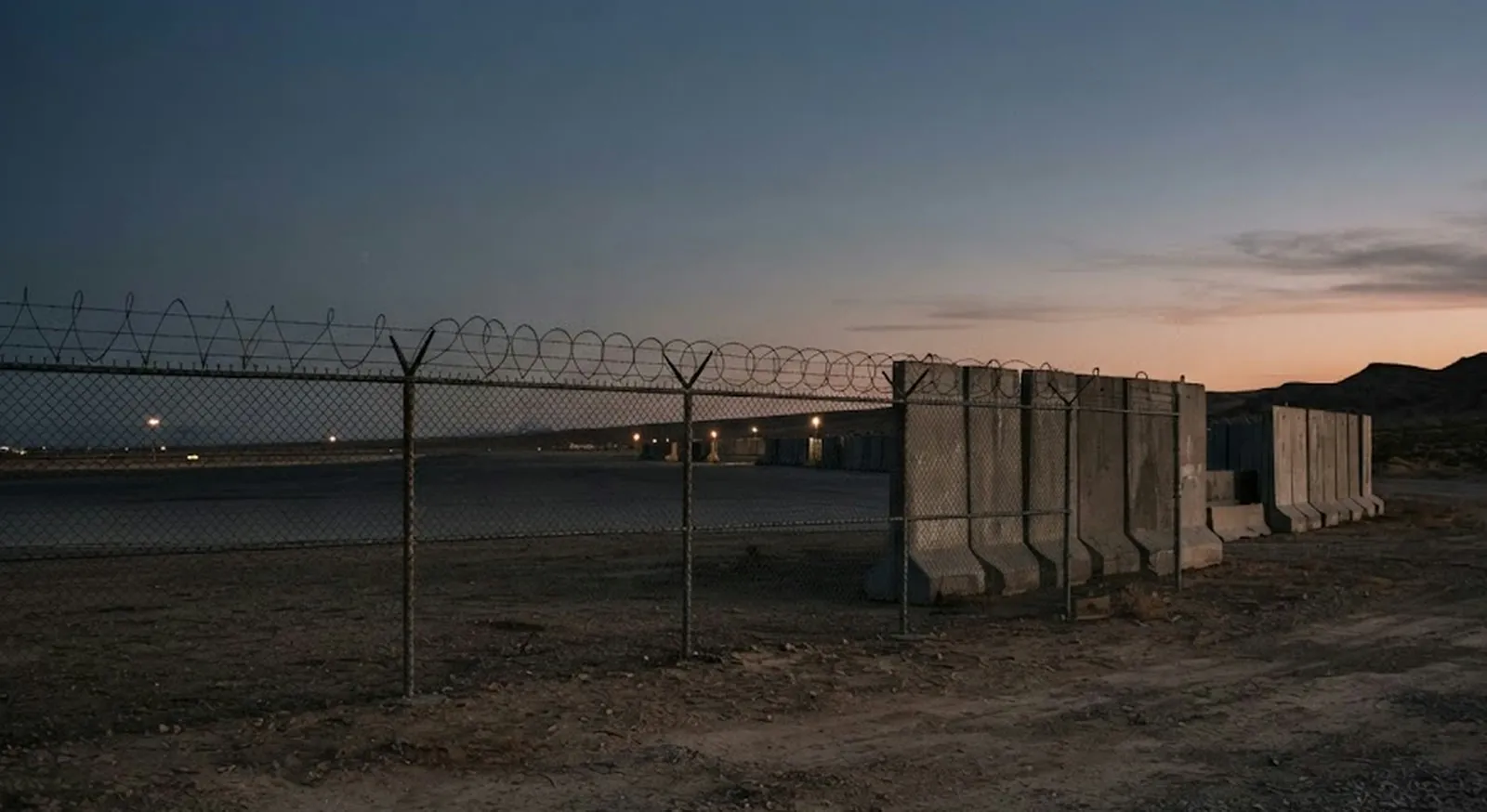
There is one role in every big war that nobody volunteers for: the neighbour. Not the one attacking, not the one being attacked - the one over whose head the missiles fly on their way to somebody else. This season that role went to Jordan.
Iranian missile attacks on Jordan have intensified, and the country's air defence system intercepted three missiles. Earlier, an Iranian strike on an American base in Jordan killed two American soldiers and wounded dozens. The country has declared war on nobody. The country simply lies in the wrong place on the map.
Four thousand soldiers and one bill
Jordan hosts around 4,000 American troops on its territory. Under a 2022 memorandum of understanding, it receives between 1.45 and 1.65 billion dollars in American military and economic assistance each year.
That is the price of an alliance, written out in figures. And like every such price, it is not paid only in the budget. According to an Arab Barometer survey from 2026, just 12 percent of Jordanians view Trump's foreign policy positively. Twelve percent. The government is in one alliance, the population is clearly somewhere else entirely.
Half a country with a different history
More than half of Jordan's population is of Palestinian origin. The country is simultaneously under pressure over Israeli settlement expansion in the West Bank and holds to its 1994 peace treaty with Israel - a treaty that has long been unpopular at home.
So the government has to keep the American alliance, not tear up the deal with Israel, not provoke the Iranians and not enrage its own citizens, all at once. Experts say Jordan has „very limited room for manoeuvre”. That is the diplomatic way of saying it has nowhere to go.
And all of it lands on a state that has plenty of problems even without missiles - high debt, unemployment and an economy that does not tolerate surprises.
A familiar scene
A small country, a large ally, somebody else's conflict passing overhead, and a population that chose neither. The Balkans know this scene by heart - no translation required.
When the big players sit down to make a deal, not one of them will be counting the three intercepted missiles over Amman. That is the bill left with the host - and that is exactly why it is worth writing down now, rather than after it is all over.
The latest 10 news from this category
Trump scaled back the military exercises to ease the tension, and Wonsan answered in the form of projectiles. What does...

The sanctions list got a seven-day extension instead of one measured in months, a move diplomats themselves call unprecedented. Two...
Switzerland offered a table for talks on Ukraine, Moscow replied that the table stopped being neutral once Bern adopted EU...
The will says one thing, a committee of twenty-one men decided another. The queen mother says the army pulled the...
A country that was Europe's byword for stability for decades now has a parliament split into two blocs by a...
Sixteen years in power, defeat at a regular election, five months of quiet - and now the election result is...

When an institution with a legal department and a palace apparatus has to publish a list of its verified accounts,...

Nobody said they do not trust Washington. Everyone is behaving as though they do not - gold, weapons, the cloud...
The warning reached the president three years before 9/11. The problem was not a lack of information, but that nobody...

In 1976 tradition demanded the future king choose a bride with no past. Thirty years later that same king married...
This site uses cookies - is that okay? Learn more
Be the first to know when Metla launches something new
Leave your email and we will write when there is a new guide or something new on Metla.
