Six Men Brawled Outside the Police Station in Kočani: Now They'll Also Check What the Officers Were Doing
17.08.2026


17.08.2026
17.08.2026

17.08.2026

17.08.2026

17.08.2026

17.08.2026

17.08.2026

16.08.2026

15.08.2026

17.08.2026

17.08.2026

16.08.2026

17.08.2026

17.08.2026

17.08.2026

17.08.2026

16.08.2026

15.08.2026
17.08.2026

17.08.2026
17.08.2026
17.08.2026

17.08.2026

16.08.2026

09.03.2026

27.02.2026

19.02.2026
16.08.2026

15.08.2026
14.08.2026

23.04.2026

23.04.2026

12.04.2026
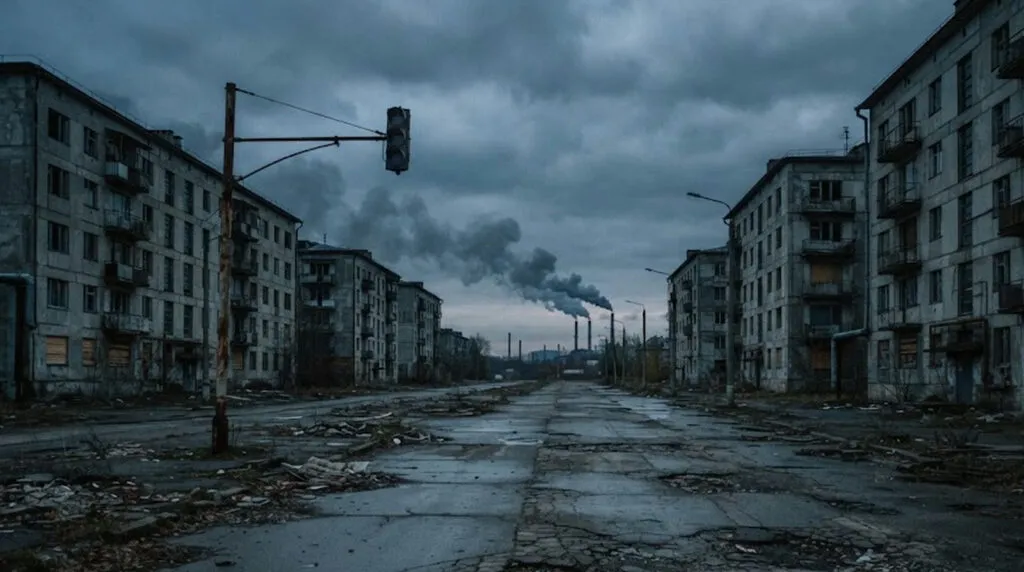
The front is about 20 kilometres from Kramatorsk and slowly closing in. The city is already taking heavy air and artillery strikes. And at exactly that moment, the Ukrainian military decides to change the man who will command the defence of one of the last pillars of the Ukrainian line in Donbas.
The new commander-in-chief of the Ukrainian armed forces, Mykhailo Drapatyi, appointed Emil Ishkulov, former commander of the 80th air assault brigade, as the officer responsible for the defence of Kramatorsk. The information was published by Ukrainian MP Mariana Bezuhla on her Telegram channel.
The detail that makes this personnel decision worth reading is not Ishkulov's CV, but the reason he was not in a post until now. According to Bezuhla, he was the only one who directly warned the previous commander Oleksandr Syrskyi about the risks of the Kursk operation. He was removed immediately afterwards.
„He was the only person who directly pointed out to Syrskyi the risks of the Kursk operation, after which he was immediately dismissed, and the risks were not removed. He is an experienced commander who is respected among the soldiers and who values the truth on the battlefield. Another return of a man who was under repression,” Bezuhla wrote.
Removed for being right
Read that sentence again. An officer warns that an operation carries risk. The risk is not removed - the officer is. And then, when things start falling apart exactly where he said they would, that same man is brought back to hold what is left.
This pattern is not a Ukrainian invention and not a military one. It is an administration behaving like every other administration we know: whoever says something will not work becomes the problem rather than the source. The only difference is that here the cost is not measured in dismissed staff or lost projects, but in a city already counting the distance to the front in kilometres.
Bezuhla calls this „the return of someone who was unjustly repressed” - a polite way of saying the system punished him first and then came back to him because it had no better option. How many times does the same mistake have to repeat before someone reacts before, rather than after?
The latest 10 news from this category
The front line is not moving, the negotiating table is empty, so what remains is striking deeper into the other...
The largest air attack on the Russian capital in two years left six dead and a warehouse burning. But the...
Hundreds of Ukrainian drones hit the Moscow region, and the largest warehouse of Russia's largest online retailer is on fire....

The drone flew in from Moldova, and a Spanish F-18 on a NATO mission shot it down at 5:01am. Romania...
One million three hundred thousand signed contracts, 30,000 killed and wounded a month by Western estimates - and there are...
Over 30,000 killed and wounded a month, a thousand new soldiers a day - and they only plug the holes....

Hamas accepted the 15-point plan, Israel wants genuine disarmament first. When allies agree only on the destination, negotiations come down...
The offer does not ask for an end to the war, or a withdrawal - only that grain ships not...

The door is open for negotiators, while the one thing actually up for negotiation has been declared off limits. A...
Before the war it had almost 60 gigawatts. Today it has twelve. And if the strikes continue at the same...
This site uses cookies - is that okay? Learn more
Be the first to know when Metla launches something new
Leave your email and we will write when there is a new guide or something new on Metla.