
"That's not my job": the trial of the 13 Puls police officers restarted from scratch, and witnesses describe help being refused
22.09.2026


22.09.2026
22.09.2026
22.09.2026

22.09.2026
22.09.2026

22.09.2026

22.09.2026

21.09.2026

20.09.2026

22.09.2026

22.09.2026

21.09.2026

22.09.2026

22.09.2026

22.09.2026

22.09.2026

21.09.2026

20.09.2026

22.09.2026

22.09.2026

22.09.2026

22.09.2026

22.09.2026

22.09.2026

09.03.2026

27.02.2026

19.02.2026

22.09.2026

21.09.2026

21.09.2026

23.04.2026

23.04.2026

12.04.2026

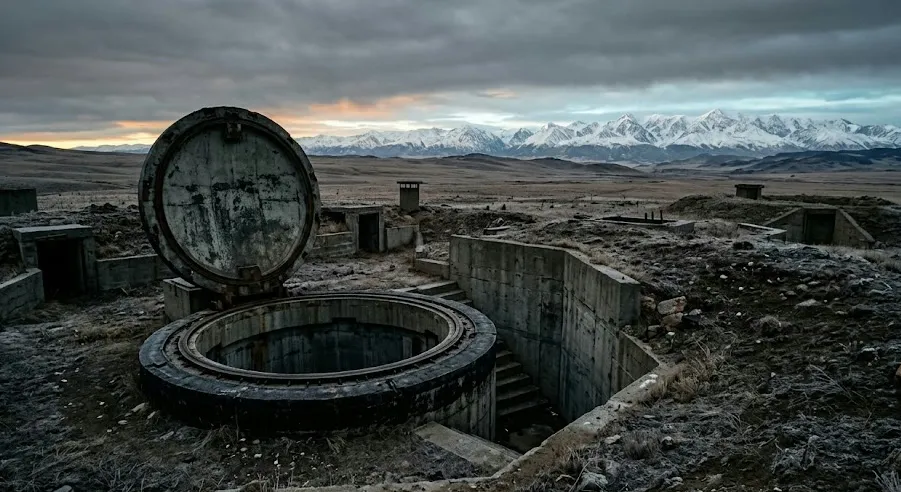
At the meeting of the CSTO's Collective Council (Collective Security Treaty Organisation), Sergei Shoigu, secretary of Russia's Security Council, pulled out the old Russian message: „The West must soberly assess the consequences of its policy toward Russia. I am convinced that the successful testing of 'Sarmat' and the nuclear exercises last week will cool the ardour of Western strategists."
„Sarmat" is the intercontinental ballistic missile presented in Russian military doctrine as one of the central strategic arguments - the possibility of a direct response that does not have to stay confined to a local front. In other words: if NATO intervenes directly, Russia has the capacity to respond with means that recognise no border.
The rhetoric isn't new. Shoigu - now in a civilian role as secretary of the council, after leaving the defence minister post in 2024 - is the expert at it. He described the security situation as „rapidly disintegrating." The main threat, he said, comes from NATO and its member states.
The argument: military budgets. Over 1.5 trillion dollars a year in total among NATO members, with eastern European and Baltic states allocating more than 4% of GDP to defence. That's a quiet admission that NATO, especially after the attack on Ukraine in 2022, has genuinely grown. Not just rhetorically - financially and infrastructurally too.
What does this mean for CSTO member states - Belarus, Kazakhstan, Kyrgyzstan, Tajikistan, Armenia? Moscow is calling on them to „quickly assess risks and strengthen coordination." That's diplomatic language for: stay close, stay loyal. Given that Armenia has visibly drifted away from Russia in the past two years and is moving closer to the West, these messages have a subtext.
For the Balkans, which is not part of either bloc, this is a signal that bipolar logic is back. And not as rhetoric, but as military-economic reality. A world in which every state has to choose, even though no one openly tells it to - „choose."
The latest 10 news from this category
Washington, Copenhagen and Nuuk are signing off on a military presence on an island of 56,000 people - and the...
Phones in Krāslava rang by themselves, the fighters took off, and what exactly triggered the alert - nobody is saying....
In Mecklenburg the CDU finished on 4.9 percent and, for the first time in the history of the Federal Republic,...

Tisza took 16 years of power off Fidesz and won 141 of 199 parliamentary seats. Orbán now says Brussels is...
With 75 percent of protocols counted, the governing party leads in 208 of the 225 single-mandate districts. A parliament of...
He never sat on the throne, and the emirate is lowering its flags for ten days. Sometimes the surname says...

Three options on the table in Washington - military pressure, economic strangulation or a deal - and the president frames...
The party of Adenauer and Kohl slid to the electoral threshold in Mecklenburg, the AfD is already demanding the chancellor's...
Two prime ministers in the same Union, the same month, completely opposite diagnoses of who is provoking whom. There is...

A broken aircraft in a field usually ends up in a police note. This one ended up with federal investigators,...
This site uses cookies - is that okay? Learn more
Be the first to know when Metla launches something new
Leave your email and we will write when there is a new guide or something new on Metla.