


Kratovo man stabs police officer mid-intervention: prosecutors want the 40-year-old detained
15.09.2026


15.09.2026

15.09.2026

15.09.2026

15.09.2026
15.09.2026

15.09.2026

15.09.2026

14.09.2026

13.09.2026

15.09.2026

15.09.2026

14.09.2026

15.09.2026

15.09.2026

15.09.2026

15.09.2026

14.09.2026

13.09.2026

15.09.2026

15.09.2026

15.09.2026

15.09.2026

15.09.2026

14.09.2026

09.03.2026

27.02.2026

19.02.2026

15.09.2026

14.09.2026

14.09.2026

23.04.2026

23.04.2026

12.04.2026

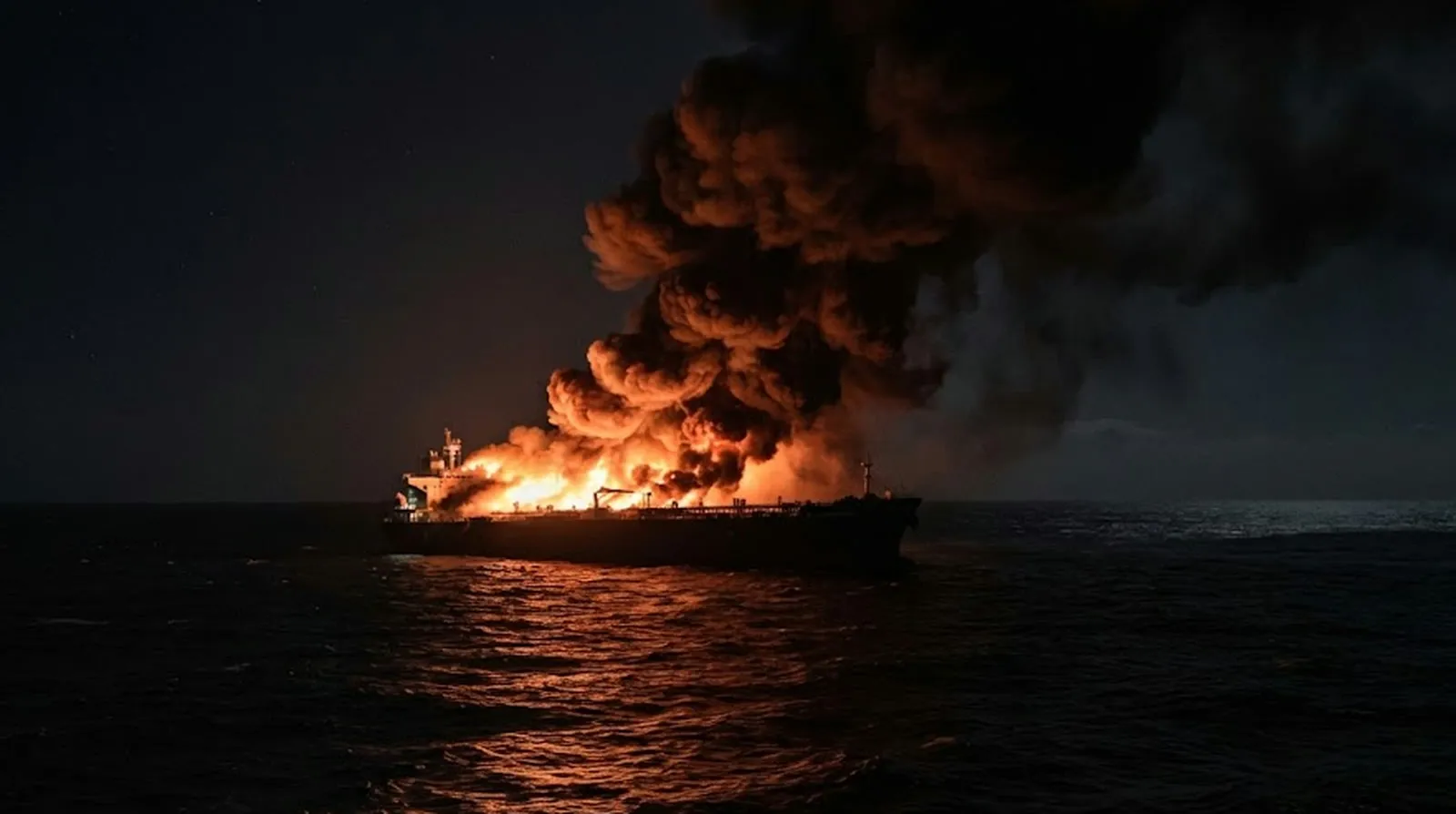
Another oil tanker is burning in the Red Sea, another projectile that found its target in one of the busiest maritime chokepoints in the world. The Houthis from Yemen say they hit two Saudi tankers - the Encelia and the Layla - with ballistic and cruise missiles, in the name of a naval blockade against Saudi Arabia. What began as a local war in a poor Arab country has long since grown into a risk measured in barrels and in petrol prices across half the world.
According to maritime security sources, the tanker Encelia was directly hit around 70 nautical miles southwest of the Saudi port of Al Shuqaiq, somewhere around 20:00 GMT. A fire broke out on the ship, which the crew managed to put out. The UK Maritime Trade Operations agency (UKMTO) reported that the captain had reported „an unknown projectile that caused a fire on the ship, extinguished by the crew”. For now there are no reported casualties or ecological damage.
The numbers are what tell the real story. Five tankers changed their route at once after the Houthis warned them to avoid Saudi ports, and two of them named the Suez Canal as their new destination. With every attack like this, ship insurance jumps, the routes get longer, and in the end someone pays the cost - usually not the one who fires.
The Red Sea is not an abstract dot on the map. Through it passes part of the oil and goods that reach European ports too, the Balkan ones included. When the sea becomes a risk zone, the effect does not stay in Yemen - it travels with every ship that has to go around, to wait, or to pay more to get through.
And the world, as usual, looks with one eye. The great powers condemn when the tanker is theirs, and stay silent when it is not. The Houthis know well that control over a single narrow chokepoint is worth more than any declaration - a lesson the Balkans, with their bridges, crossings and corridors, understands without translation.
The question that remains is not whether there will be another attack like this, but how long we will keep pretending that these flames on a distant sea have nothing to do with us. Every tanker hit is a reminder that the global economy hangs on a few narrow passages - and that a single rocket is enough to shake the whole chain.
The latest 10 news from this category
Between 2,300 and 3,000 North Korean soldiers have died in Kursk so far. Kim Jong Un has found an export...
A NATO fighter jet downed an unmanned aircraft over Lithuania minutes after midnight, and citizens got the warning on their...
The train was empty, the locomotive damaged, nobody hurt. But Boris Johnson and a group of European security advisers had...
453 drones in one night, 405 shot down - and the forty-eight that got through land somewhere. Poland's prime minister...

Trump's son-in-law told an audience in Kyiv the deal is done - if Ukraine withdraws. And added that the battlefield...
A barren volcanic rock in the middle of a strait 28 kilometres wide changed the oil market in a single...
Hostomel, Odesa, Kryvyi Rih - targets that are not the front line but the supply chain. A war against the...

We don't want war with Europe, but here is exactly how that war would start. He said both sentences in...

When an army recalls its special forces with a 12-hour deadline, that is not a rota but a signal. The...

Port infrastructure in Makhachkala and the theatre building caught fire, the governor said. Moscow claims it shot down 448 drones...
This site uses cookies - is that okay? Learn more
Be the first to know when Metla launches something new
Leave your email and we will write when there is a new guide or something new on Metla.
